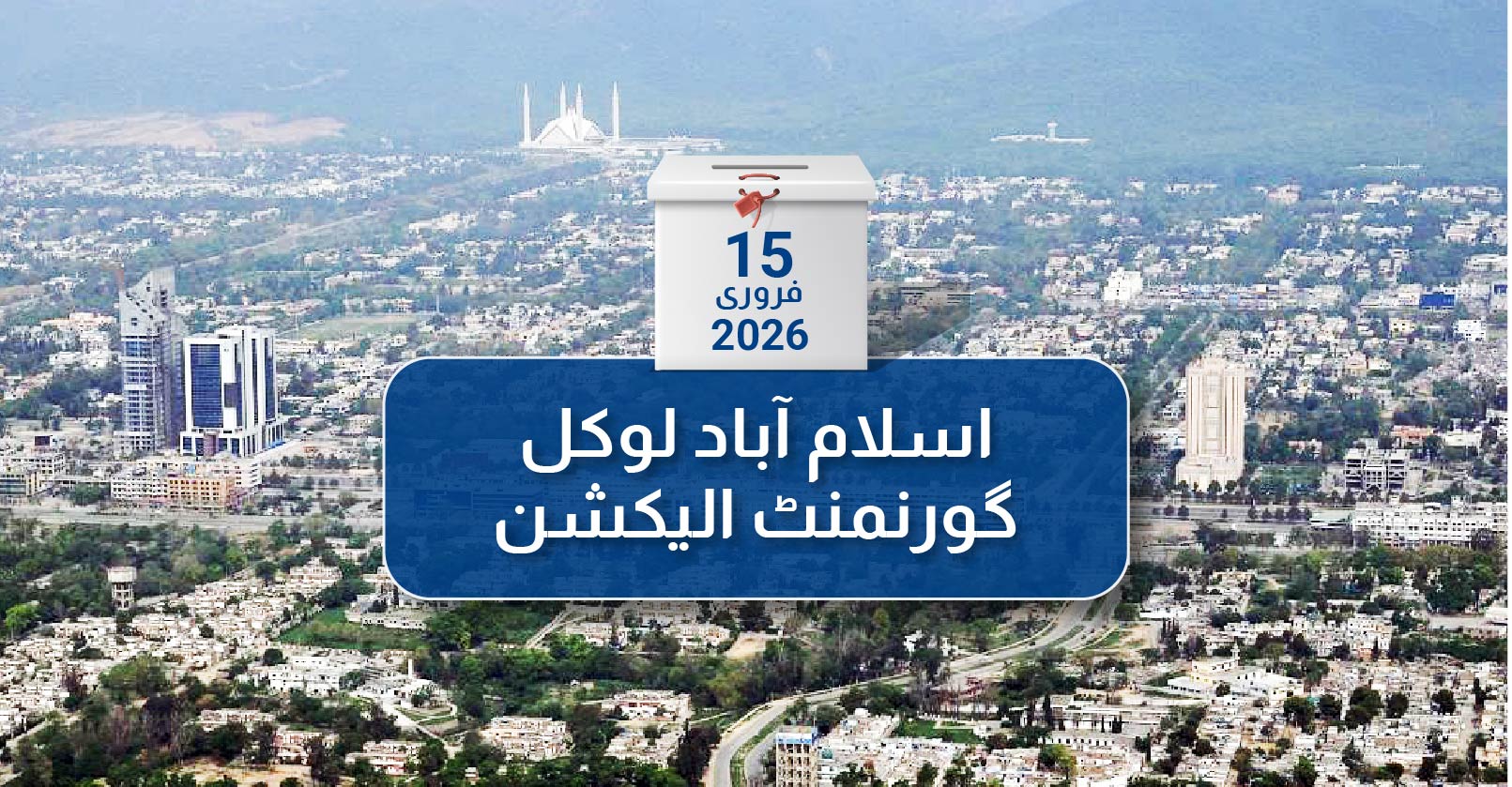
In almost two months, over 1.2 million voters registered in the Islamabad Capital Territory (ICT) are expected to elect their local government (LG) representatives, provided the election schedule is not suspended again, as happened in the previous three attempts.
The upcoming election in the capital city will differ significantly from the 2015 LG elections. The following overview explains the voting process to help ICT residents prepare in advance.
What is the current LG structure in ICT?
The ICT Local Government Act, 2015 (as amended up to 2024) establishes a two-tier system, including a grassroots tier comprising 125 Union Councils (UCs), and a secondary tier consisting of Metropolitan Corporation Islamabad (MCI). The elected Chairman of the UC and the Mayor of MCI are the executive heads of these tiers, respectively.
According to Section 11 of ICTLGA 2015, each UC comprises 13 members:
- Nine general members
- One woman member
- One youth member
- One peasant/worker/businessperson/technocrat member
- One non-Muslim member
These 13 members will elect a Chairman and Vice Chairman from among themselves.
As per the notification issued by the Federal Ministry of Interior dated July 30, 2024, the MCI will consist of 187 members, including:
- 125 UC Chairmen
- 41 women
- Six youth members
- Six non-Muslim members
- Six peasant/worker members
- Three technocrat members
MCI members will elect from among the UC Chairmen a Mayor and three Deputy Mayors.
Read how the LG system in the federal capital has evolved since 1969
How were the elections conducted in 2015?
In the 2015 ICT LG elections, the entire membership of a UC was directly elected by the voters. Each voter received six ballot papers, including one each for Chairman and Vice Chairman, a general member, women members, a youth member, a peasant/worker member, and a non-Muslim member.
On the other hand, the entire secondary tier was elected indirectly. UC Chairmen elected reserved seats in the MCI, after which all UC Chairmen and reserved members elected the Mayor and Deputy Mayors.
What will be different in the 2026 elections?
If held as scheduled, the 2026 ICT LG elections will involve a major change in how voters choose their representatives.
Instead of six ballots, each voter will receive one ballot paper only to elect a general councilor for their ward. Each UC is divided into nine general wards.
Once elected, the nine general members of each UC will elect through secret ballot four reserved-seat members (woman, youth, peasant/worker/businessperson/technocrat, and non-Muslim) during the first meeting of the Union Council.
After elections on the reserved seats, the 13 members will elect from among themselves a Chairman and a Joint Chairman.
Read about the legal controversy over the process of indirect elections at UC level
How will the Islamabad Mayor be elected?
Once elected, the 125 UC Chairmen automatically become general members of the MCI. They will then elect reserved-seat members, including women, youth, peasants/workers, non-Muslims, and technocrats,
These elections will be conducted on the basis of “present and voting”, meaning only UC Chairmen who attend and cast their vote will participate in the process.
After the completion of reserved seats, the MCI will elect from among the UC Chairmen a Mayor and three Deputy Mayors. Â Previously, the Mayor could be elected from the entire membership, but the 2024 amendment has restricted this office to UC Chairmen only. The last Mayor of Islamabad, Ansar Aziz, was elected to MCI on a technocrat seat.