Should regulatory authorities be legally bound to ensure their decisions align with the commitments made in a political party’s election manifesto once it forms government?
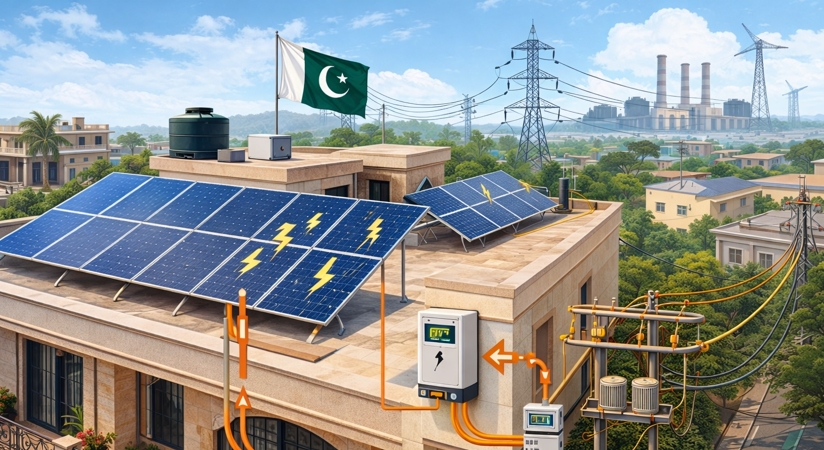
This question has arisen following a recent decision by the National Electric Power Regulatory Authority (NEPRA) that has sparked debate over the future of net metering and distributed solar policies in Pakistan.
On February 9, 2026, the authority notified the NEPRA (Prosumer) Regulations, 2026 that replaced the NEPRA (Alternative & Renewable Energy) Distributed Generation and Net Metering Regulations, 2015.
What has changed between 2015 and 2026 regulations?
The 2015 regulations were more incentive-driven for rooftop solar power generators as they operated under a net metering model, where electricity exported to the grid was netted off against imported units and surplus units were compensated at the consumer’s off-peak tariff.
In contrast, the 2026 regulations are more regulator-controlled and financially less generous for rooftop solar power producers as they introduce a net billing system, where imported electricity is billed at the retail tariff while exported electricity is paid at the national average energy purchase price, significantly reducing export compensation.
What did PML-N promise reg solar power in its manifesto?
In its election manifesto for GE-2024, the Pakistan Muslim League (N) (PML-N) highlighted that it heralded “net-metering to encourage roof top solar power” and pioneered renewable energy by setting up first wind and solar power plants during its 2013–2018 tenure.
For 2024-2029, the manifesto pledged to continue “solar revolution” and keep “encouraging rooftop and distributed solar power plans, along with incentivizing local production of solar panels and related equipment.”
It also committed to continuing the nationwide 10,000MW solar initiative launched by the PML-N-led government in 2022. Incentives for local production of solar panels and related equipment were also promised.
How do manifesto and NEPRA regulations clash?
NEPRA’s recent regulatory measures have raised concerns among consumers and parliamentarians alike. Treasury and opposition lawmakers, while drawing government’s attention to the issue, said changes in solar policy would affect the financial viability of rooftop solar systems and slow the adoption of distributed solar energy.
In response to the emerging debate, Prime Minister Shehbaz Sharif has intervened and directed the Power Division to file an appeal to NEPRA to protect the contract of existing solar consumers.
Federal Minister for Power, while responding to a calling attention notice in the National Assembly, confirmed seeking a review, but defended the move saying it affected only wealthier consumers who are in minority, disregarding his party’s manifesto that does not make any such distinction.
What is the institutional context of this policy debate?
NEPRA is a statutory regulatory authority responsible for licensing power sector entities, determining tariffs, enforcing service standards, protecting consumer interests, and resolving sectoral disputes. It comprises a chairperson and four members appointed by the federal government and is expected to function independently within its statutory mandate.
However, there has been debate over how autonomous it is as a regulatory body. In 2016, a ruling by the Chairman Senate raised concerns regarding executive influence over regulatory bodies, including NEPRA. More recently, international assessments, including a World Bank report on Pakistan’s power sector governance, have emphasized the importance of maintaining regulatory autonomy.
But the question remains should regulatory autonomy be also insulated from people’s mandate?