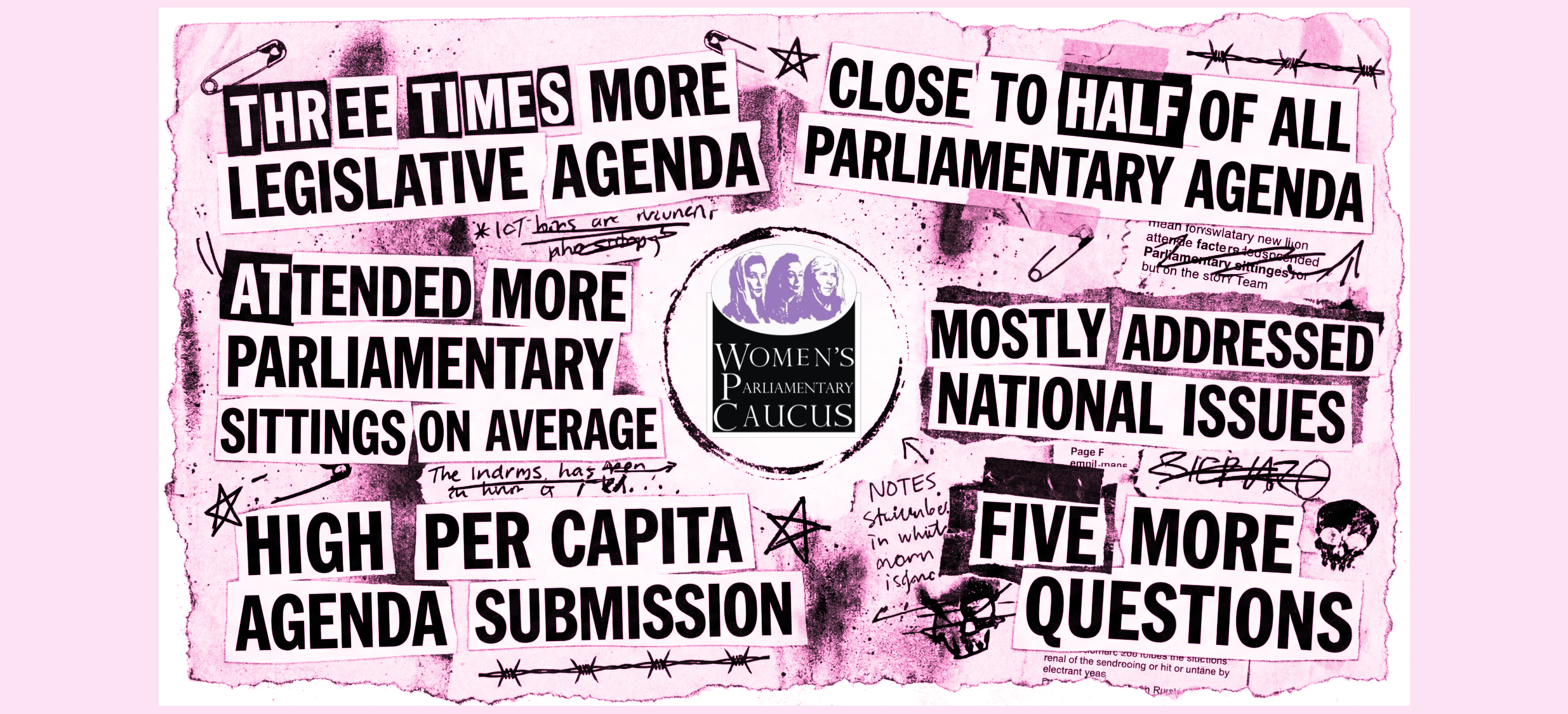
Female MNAs submitted 1,206 agenda items solely in their own name during the second parliamentary year of the 16th National Assembly. Subject-matter analysis shows that 72% of these items addressed national-level policy including economic policy, taxation, national security, and governance. Constituency and local issues accounted for 18%. Gender-specific legislation accounted for only 6%.
How this is measured
FAFEN developed a subject-matter typology specifically to test whether female MNAs’ agenda is disproportionately concentrated on gender-specific issues. Each agenda item is coded against a set of policy categories — national policy, constituency issues, gender-specific, and procedural/cross-cutting — based on the content of the item as recorded in Orders of the Day and verbatim proceedings. The coding was done from official National Assembly records for the period 1 March 2025 to 28 February 2026.
Why this matters in parliamentary terms
Parliamentary effectiveness is measured not only by volume of participation but by its range. A member who engages only with a narrow set of issues, however important, has a more limited legislative footprint than one who engages with the full spectrum of national policy. The assumption that female MNAs in Pakistan focus on women’s rights and social welfare to the exclusion of other policy areas is widespread in public discourse. The data do not support it. Female MNAs raised economic policy, security issues, taxation, and parliamentary procedure in proportions far exceeding their engagement with gender-specific legislation. This subject-matter breadth is evidence that women in Pakistan’s parliament are not niche legislators. They are engaging with the same policy questions as their male colleagues, in addition to, not instead of, legislation that directly addresses women’s rights and social protection.
Source: FAFEN Women Parliamentarians Performance Report 2025–2026, Table 1. Data period: 1 March 2025 – 28 February 2026.