Before the ECP can finalize any new election rule, Pakistan’s election law requires it to publish the draft and accept public objections for 15 days.
Electoral rules govern some of the most consequential details of Pakistan’s elections including how ballot papers are printed, how votes are counted, how complaints are filed, how candidates are scrutinized. These rules are made not by the Parliament but by the Election Commission of Pakistan (ECP). And before they become final, the law gives every citizen the right to object.
What does the law say?
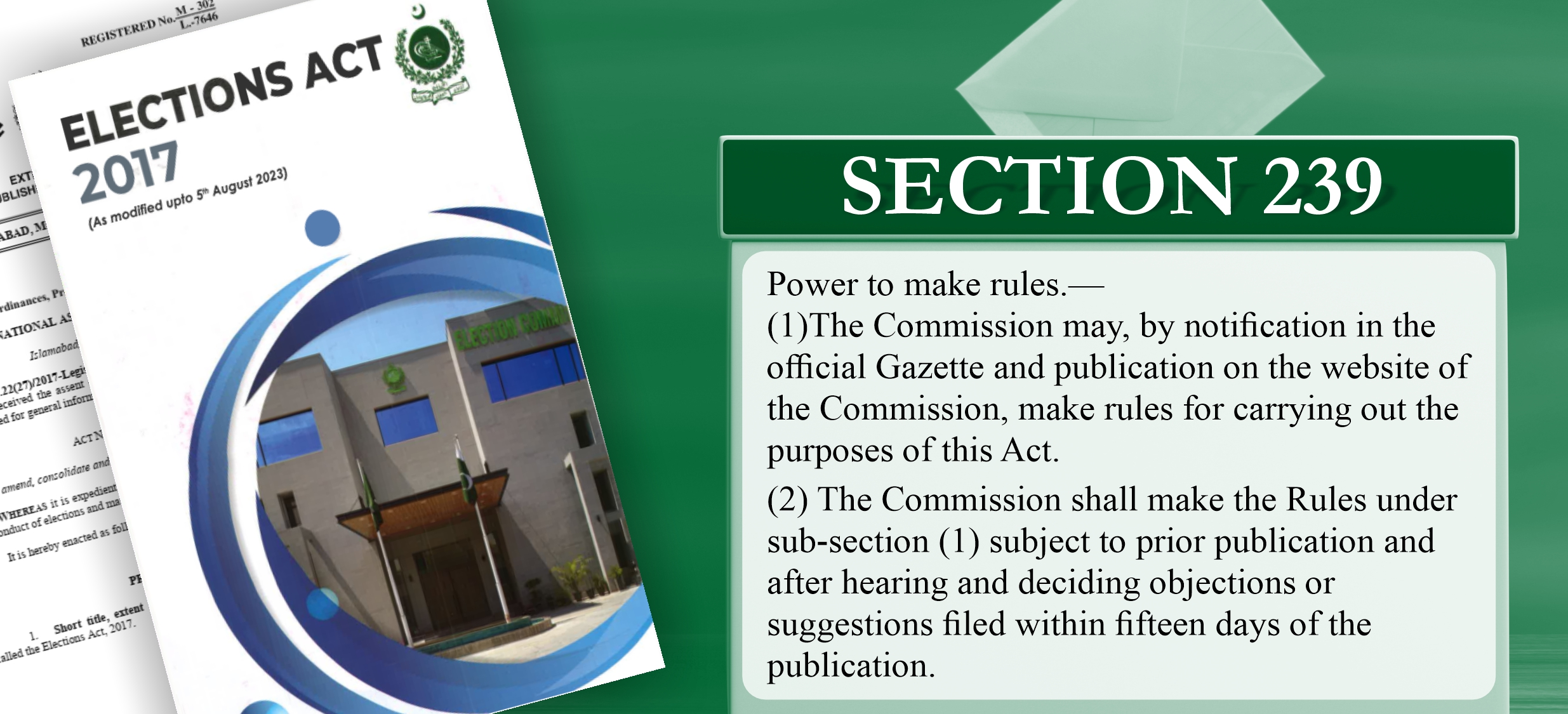
Section 239(1) of the Elections Act 2017 empowers the Commission to make rules for carrying out the purposes of the Act, by notification in the official Gazette and publication on the Commission’s website. Section 239(2) requires the Commission to make those rules subject to prior publication — meaning the proposed rules must be published before they are finalized — and after hearing and deciding any objections or suggestions filed within 15 days of that publication.
A rule made without prior publication and without allowing the 15-day period for objections would not comply with Section 239(2).
Why does this matter?
The fine details of the election process ranging from the admission to the polling stations to the election result forms are provided in the election rules. They define the operational details on which the integrity of election day depends.
The public consultation requirement in Section 239(2) exists because Parliament recognized that rules affecting millions of voters should not be made without public scrutiny. Civil society organisations, legal practitioners, academics, and any interested citizen can file objections or suggestions within the 15-day window. The Commission is legally required to hear and decide those submissions before finalizing the rules.
Monitoring the ECP website for new rule notifications is the practical starting point. The 15-day clock starts from the date of publication.
 Source: Elections Act 2017, Section 239(1)&(2).
This post is part of FAFEN’s series on electoral literacy. Read more of this series here.