
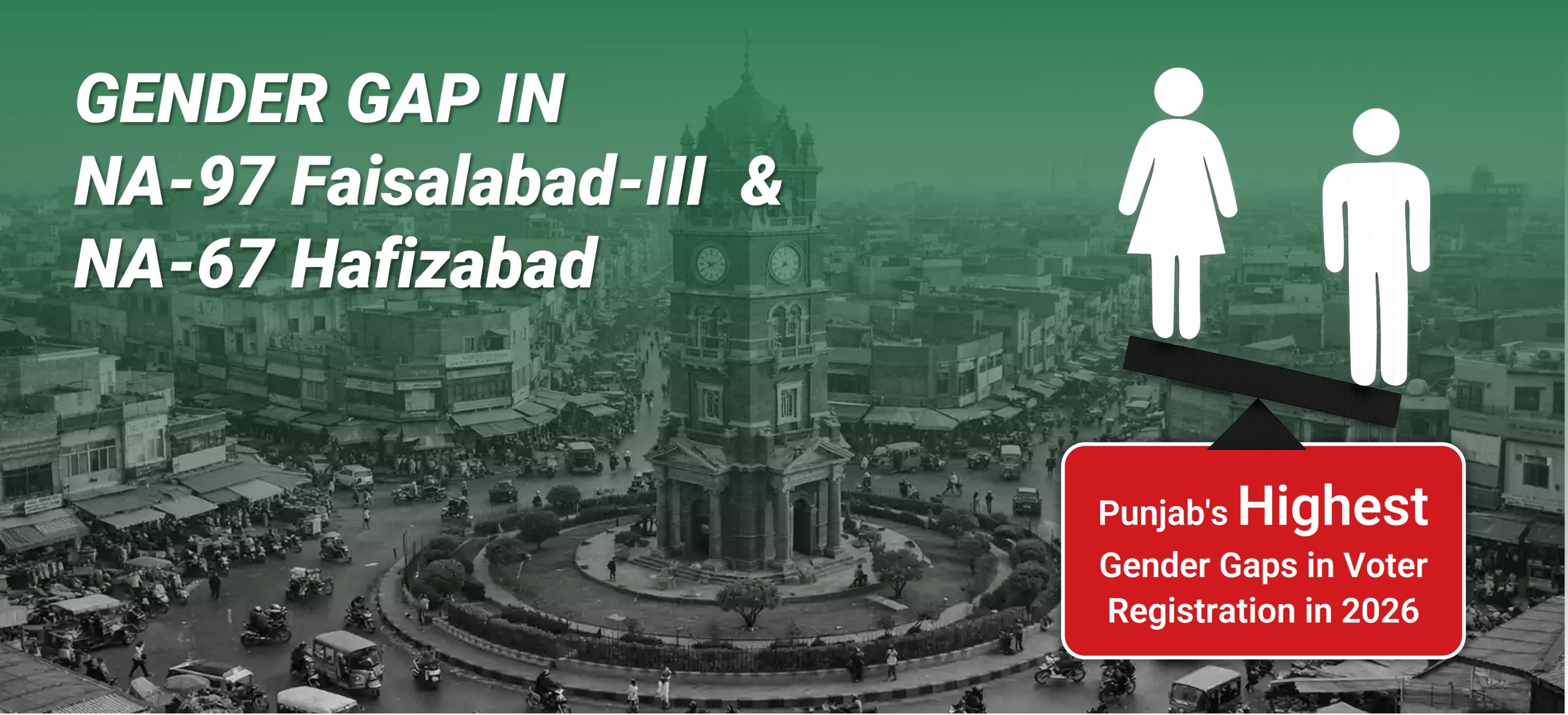
While NA-97 Faisalabad-III recorded Punjab’s highest gender gap in voter registration as a percentage of its total electorate at 10.12%, NA-67 Hafizabad had the largest absolute gap — with 64,490 fewer women registered than men. The two constituencies illustrate why the gender gap in voter registration must be read through both lenses: percentage and absolute count do not always point to the same place, and each measure reveals a different dimension of the same problem.
According to data released by the Election Commission of Pakistan (ECP), a constituency with a smaller electorate can register a higher percentage gap even when the raw number of unregistered women is lower than in a larger constituency. NA-97 Faisalabad-III, with a total electorate of 519,397, had a gender gap of 52,587 — smaller in absolute terms than Hafizabad’s 64,490, but larger as a share of its electorate. NA-67 Hafizabad, with 861,004 registered voters, had the greater absolute shortfall, yet its gap as a percentage of the total electorate stood at 7.49% — well below the figure recorded in Faisalabad-III. Both measures matter. The percentage gap triggers the legal obligations under the Elections Act, 2017. The absolute gap determines the scale of the problem on the ground.
NA-97 Faisalabad-III: highest percentage gap in Punjab
ECP data show that NA-97 Faisalabad-III had 285,992 registered male voters against 233,405 registered female voters as of 2026. Male voters constituted 55% of the registered electorate and female voters 45%. The gender gap of 52,587 — equivalent to 10.12% of the total electorate — was the highest recorded among all National Assembly constituencies in Punjab.
In 2024, the constituency recorded a gender gap of 52,827, equivalent to 10.74% of its then-total electorate of 491,703. By 2026, the gap had narrowed by 240 voters in absolute terms and by 0.62 percentage points. The constituency’s total registered electorate grew by 27,694 voters over this period, with male voters increasing by 13,727 and female voters by 13,967. The near-equal growth in new registrations means the absolute gap held almost flat even as both populations expanded.
NA-67 Hafizabad: largest absolute gap in Punjab
NA-67 Hafizabad had 462,747 registered male voters and 398,257 registered female voters in 2026, for a total electorate of 861,004. The gender gap of 64,490 was the largest in absolute terms among all National Assembly constituencies in Punjab, even as the percentage gap of 7.49% remained below the 10% legal threshold under the Elections Act, 2017.
In 2024, the gender gap in NA-67 Hafizabad stood at 68,817 — equivalent to 8.49% of its then-total electorate of 810,723. By 2026, the gap had narrowed by 4,327 voters in absolute terms and by one percentage point. The constituency’s total registered electorate grew by 50,281 voters between 2024 and 2026, with male voters increasing by 22,977 and female voters by 27,304. The faster growth in female registrations drove the reduction in the absolute gap. Even so, at 64,490, the shortfall remains the largest in Punjab — a reminder that percentage improvement and ground-level progress are not always the same thing.
What the Elections Act requires
The continued presence of a gap of this nature underscores the need for sustained institutional action. Section 47(1) of the Elections Act, 2017 requires the ECP to annually publish disaggregated data of registered male and female voters in each constituency and to highlight the difference in their numbers. Under Section 47(2), the Commission must take special measures in any constituency where this difference exceeds 10 percent, including measures to reduce this variation. Section 47(3) further specifies that these measures shall include action by the National Database and Registration Authority (NADRA) to expedite National Identity Card (NIC) issuance for women in affected constituencies, and by the ECP to enrol them as voters in the relevant electoral area. This provision places a clear, joint institutional responsibility on both NADRA and the ECP to address the gender gap where it crosses the legal threshold.
These measures include targeted voter registration campaigns, NIC facilitation drives, and community-level outreach to address the barriers that continue to limit women’s registration. Consistent implementation of these provisions is critical to ensuring that the downward trend in the gender gap is sustained and accelerated in the electoral rolls ahead of the next general elections.