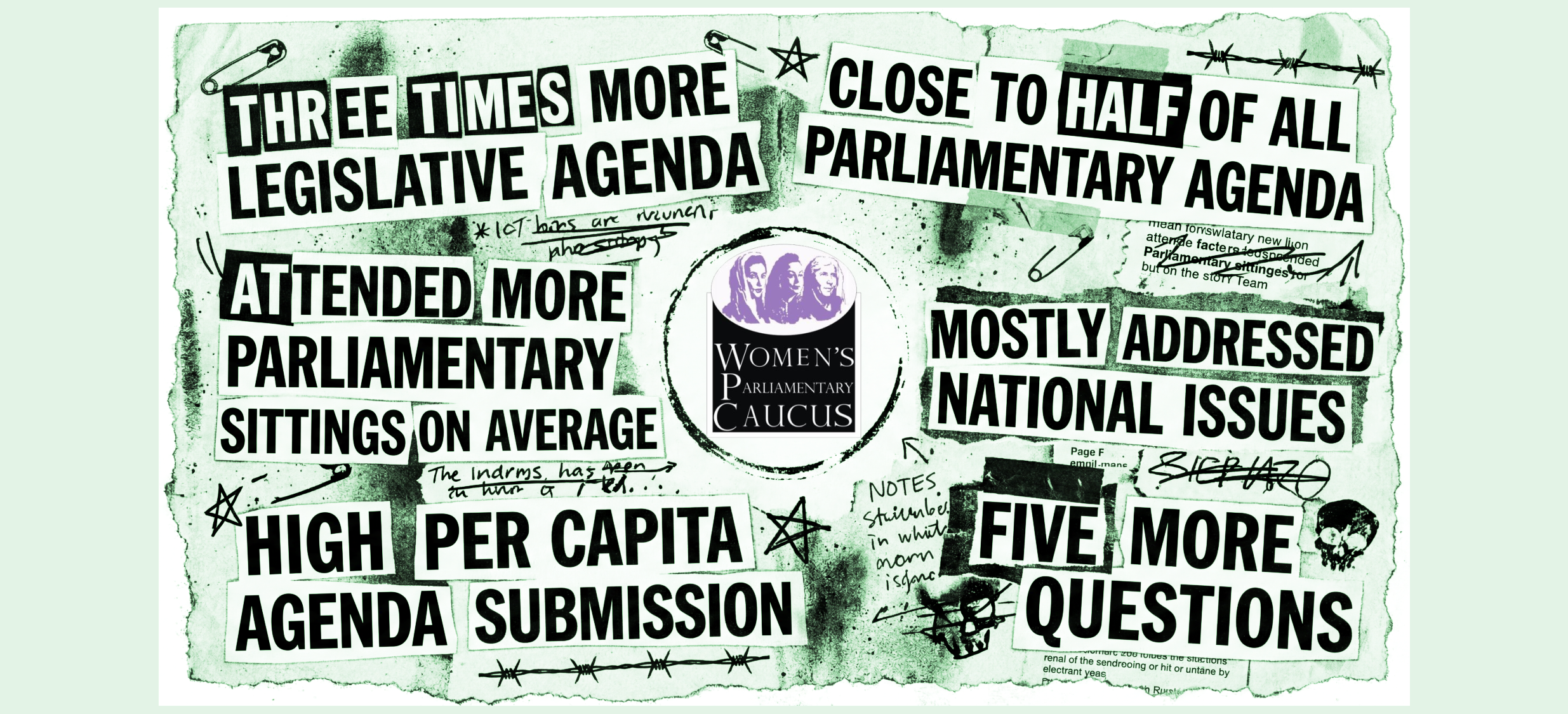
FAFEN’s analysis identified six female MNAs who attended National Assembly sittings regularly during 2025–2026 but recorded a Participation Rate Index of zero — meaning they neither participated in any plenary debate nor submitted any agenda item during the entire parliamentary year.
How this is measured
The Participation Rate Index (PRI) is the ratio of debates participated in to sittings attended. A member with a PRI of zero attended sessions but did not speak on the floor and submitted no agenda items — no questions, no bills, no motions, no calling attention notices. FAFEN cross-references attendance registers, Orders of the Day, and daily bulletin to verify zero-participation records. The analysis covers the full parliamentary year from 1 March 2025 to 28 February 2026. For comparison, 32 male MNAs recorded the same zero-participation profile.
Why this matters in parliamentary terms
A zero-participation profile — where a member is present but never acts — is not, by itself, evidence of disengagement. It is evidence of a gap between physical presence and institutional engagement that requires explanation. In parliamentary analysis, this pattern is associated with several distinct causes: party instructions to remain silent, insufficient support for drafting and submitting agenda, limited familiarity with parliamentary procedure, and social and cultural pressure that discourages women from speaking in a male-dominated chamber. The FAFEN report notes that this is an institutional design question, not merely an individual one. When six female members repeatedly attend the House, meeting attendance requirements—except one whose attendance was recorded at 4 percent—the rest of the MNAs’ attendance ranges between 38 and 91 percent, but are unable to participate in proceedings, the question of what the institution is doing or not doing to facilitate their participation is a legitimate parliamentary accountability question.
Source: FAFEN Women Parliamentarians Performance Report 2025–2026, Section 03. Data period: 1 March 2025 – 28 February 2026.