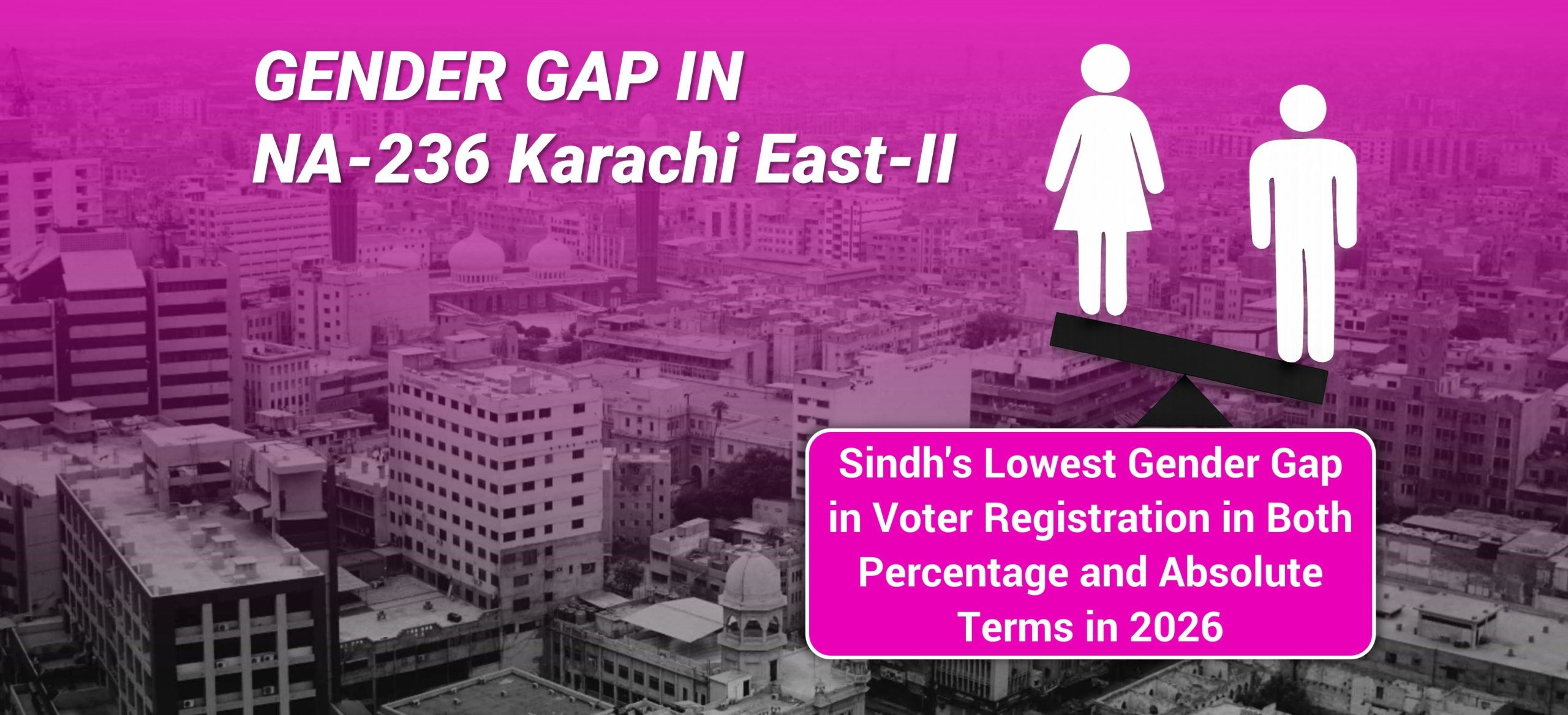
NA-236 Karachi East-II recorded Sindh’s lowest gender gap in voter registration in 2026 by both measures — as a percentage of its total electorate at 2.57%, and in absolute terms with 15,030 fewer women registered than men. Unlike Sindh’s highest-gap constituencies, where the two measures pointed to different constituencies, here both converge on the same constituency, marking it as Sindh’s closest approach to electoral gender parity in the current electoral rolls.
According to data released by the ECP, NA-236 Karachi East-II had 299,543 registered male voters against 284,513 registered female voters as of 2026, for a total registered electorate of 584,056. Male voters constituted 51% of the registered electorate and female voters 49% — the narrowest male-female split recorded in any Sindh constituency examined in this series.
Consistent improvement from 2024
In 2024, the constituency recorded a gender gap of 18,317 — equivalent to 3.38% of its then-total electorate of 542,409. By 2026, the gap had narrowed by 3,287 voters in absolute terms and by 0.81 percentage points. The constituency’s total registered electorate grew by 41,647 voters between 2024 and 2026, with male voters increasing by 19,180 and female voters by 22,467. The faster growth in female registrations sustained the downward trajectory of the gender gap across both measures. The constituency remains well below the 10% threshold under the Elections Act, 2017, and its trajectory suggests continued progress if current registration trends hold.
What the Elections Act requires
The continued presence of a gap of this nature underscores the need for sustained institutional action. Section 47(1) of the Elections Act, 2017 requires the ECP to annually publish disaggregated data of registered male and female voters in each constituency and to highlight the difference in their numbers. Under Section 47(2), the Commission must take special measures in any constituency where this difference exceeds 10 percent, including measures to reduce this variation. Section 47(3) further specifies that these measures shall include action by the National Database and Registration Authority (NADRA) to expedite National Identity Card (NIC) issuance for women in affected constituencies, and by the ECP to enrol them as voters in the relevant electoral area. This provision places a clear, joint institutional responsibility on both NADRA and the ECP to address the gender gap where it crosses the legal threshold.
These measures include targeted voter registration campaigns, NIC facilitation drives, and community-level outreach to address the barriers that continue to limit women’s registration. Consistent implementation of these provisions is critical to ensuring that the downward trend in the gender gap is sustained and accelerated in the electoral rolls ahead of the next general elections.