Nomination scrutiny in Pakistan includes review of a candidate’s financial standing – outstanding bank loans, unpaid taxes, government dues, and utility expenses. Discovery of such liabilities can result in rejection of a nomination paper. The Elections Act 2017 creates a specific protection for candidates who discover these liabilities in good faith.
What does the law say?
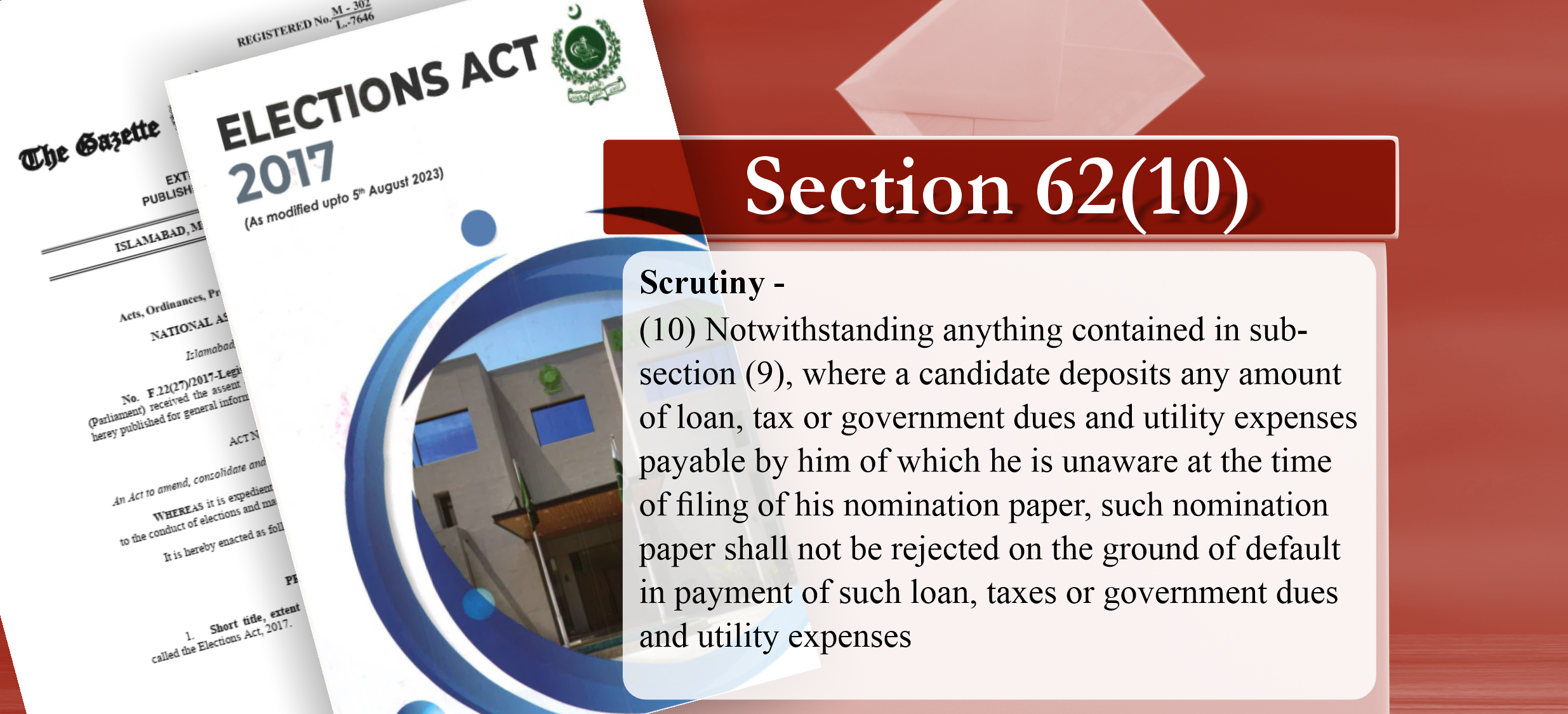
Section 62(10) of the Elections Act 2017 provides that where a candidate deposits any amount of loan, tax, government dues, or utility expenses payable by them – of which they were unaware at the time of filing their nomination paper – the nomination shall not be rejected on the ground of default in payment of such amounts. The protection applies only where the payment is made.
The word “unaware” carries the weight of the provision. It distinguishes between a candidate who knowingly defaulted and one who genuinely did not know the liability existed.
Why does this matter?
The provision addresses a real problem. Pakistani tax and utility records are not always accurately maintained. A candidate may have paid all bills they were aware of, only to discover at scrutiny that the relevant authority has a different record. Without Section 62(10), a candidacy could be rejected for a liability the candidate did not know existed.
A candidate who wishes to invoke this protection must first pay the discovered amount before the Returning Officer reaches a decision on the nomination. A formal application to the Returning Officer, noting the discovery and evidencing the payment, creates the record needed to assert the protection.
Source: Elections Act 2017, Section 62(10).
This post is part of FAFEN’s series on electoral literacy. Read more of this series here.