
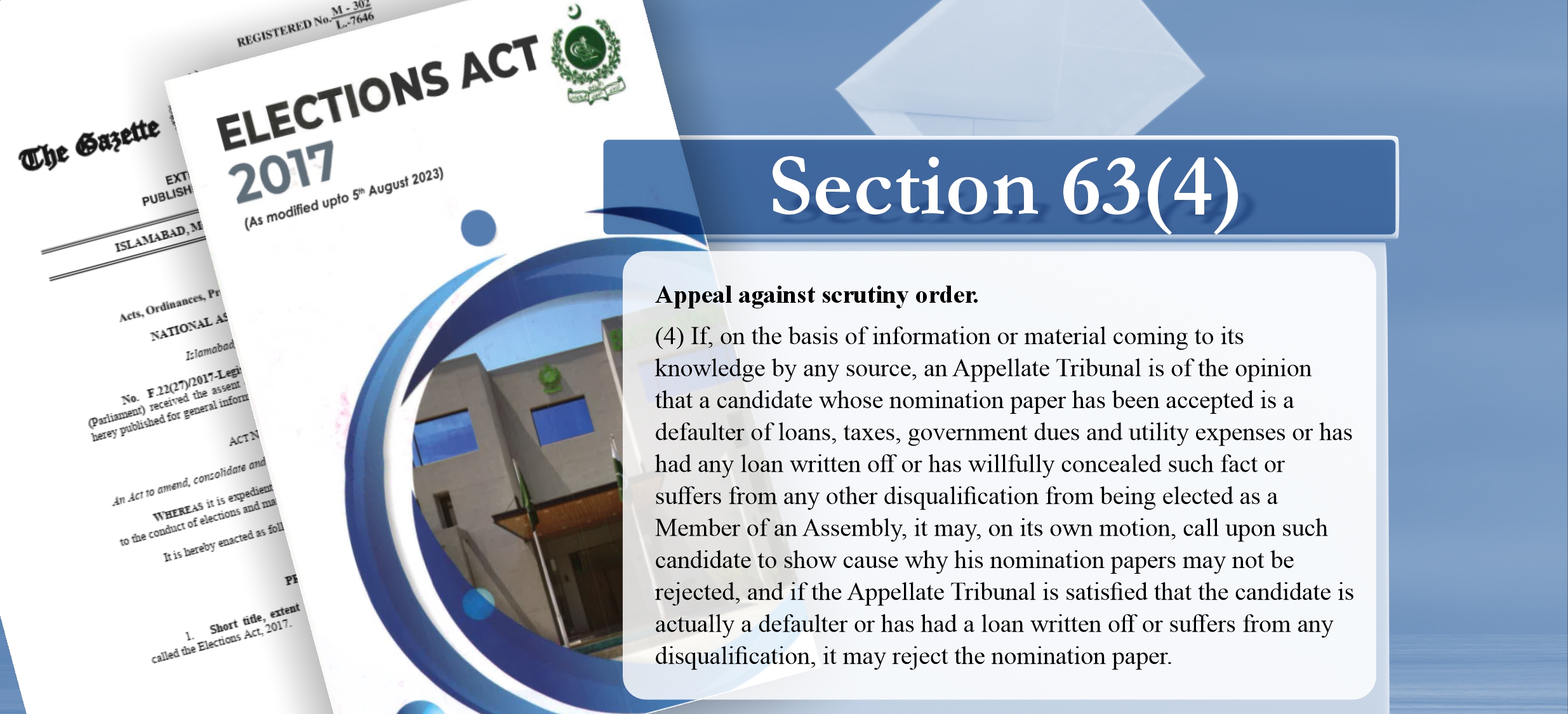
The Appellate Tribunal hearing nomination appeals has the power to act on its own motion against a candidate, if information comes to its attention showing the candidate is a loan or tax defaulter.
The nomination scrutiny process in Pakistan has two stages. The first is before the Returning Officer. The second — for those who appeal — is before an Appellate Tribunal composed of a High Court judge. At this second stage, the Tribunal’s powers extend beyond simply deciding the appeal that was filed.
What does the law say?
Section 63(4) of the Elections Act 2017 empowers the Appellate Tribunal, on information or material from any source, to call upon a candidate whose nomination was accepted to show cause why the nomination should not be rejected. This can be triggered if the Tribunal has reason to believe the candidate is a defaulter of loans, taxes, government dues, or utility expenses, has had a loan written off, has willfully concealed such a fact, or suffers from any other disqualification. If the Tribunal is satisfied that the ground is established, it may reject the nomination, even independently of any filed appeal.
The phrase “information or material from any source” is broad. It can include media reports, information from financial institutions, or publicly available records that come to the Tribunal’s attention during the appeal hearings. The Tribunal is not limited to what the parties have formally submitted.
Why does this matter?
Section 63(4) means that a candidate who survived Returning Officer scrutiny is not necessarily safe. A second layer of examination operates at the appeal stage. Candidates appearing before Appellate Tribunals should be prepared not only to defend their accepted nomination but also to answer any concern the Tribunal raises on its own motion.
 Source: Elections Act 2017, Section 63(4).
This post is part of FAFEN’s series on electoral literacy. Read more of this series here.