The allocation of election symbols among independent candidates follows a three-tier priority rule. When two candidates have equal priority, the result is determined by chance — not by the ECP’s discretion.
Election symbols in Pakistan are significant as they define how voters identify their preferred candidate on the ballot paper, particularly in constituencies where voter literacy is limited. For independent candidates — those not nominated by a registered political party — the symbol allocation process follows a specific legal sequence.
What does the law say?
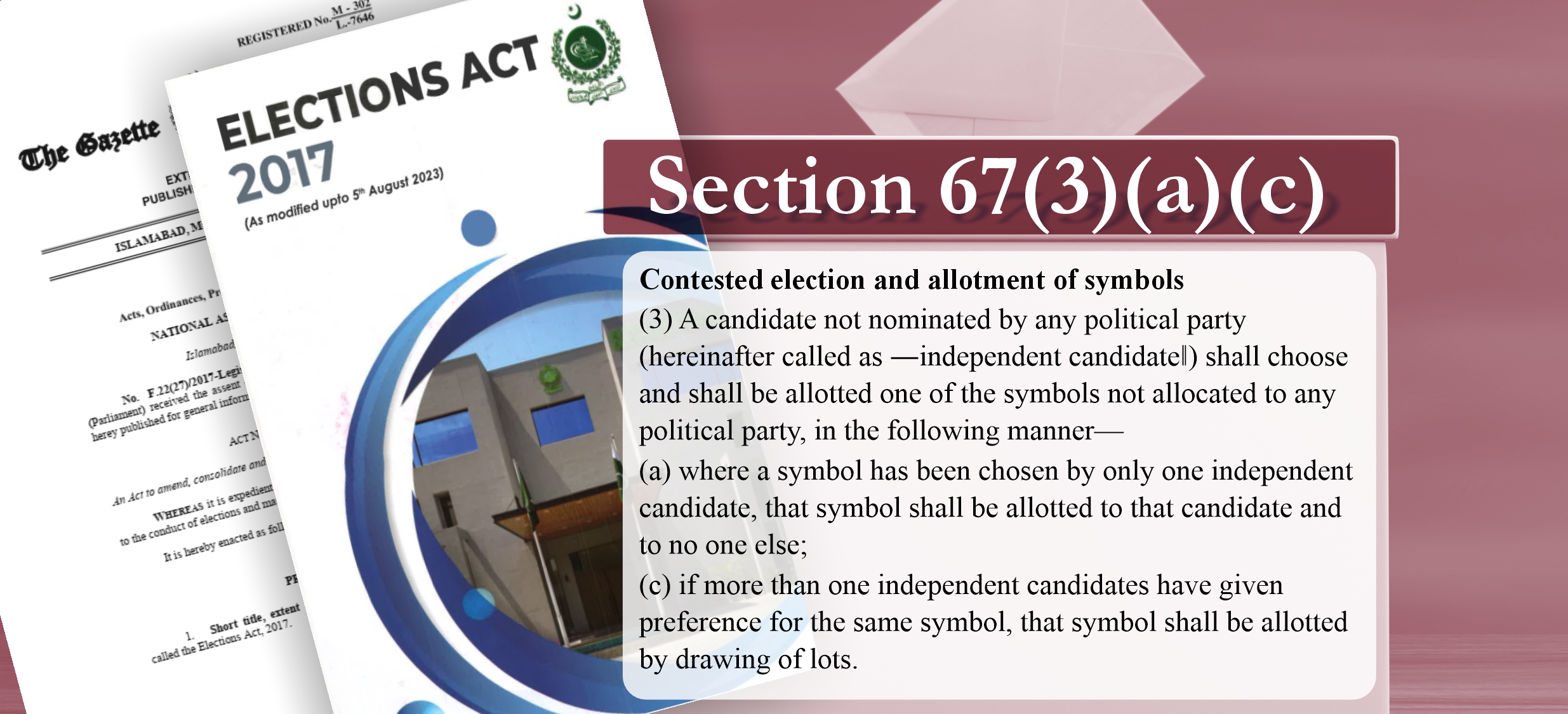
Section 67(3) of the Elections Act 2017 sets the priority order for symbol allocation among independent candidates. First, a symbol chosen by only one independent candidate is allocated to that candidate. Second, if more than one independent candidate prefers the same symbol and one of them is a former Member of the National Assembly or a Provincial Assembly, the former Member receives the symbol. Third, if more than one independent candidate has given preference for the same symbol and neither (or none) is a former Member, the symbol is allocated by drawing of lots under Section 67(3)(c).
No preference based on submission time, alphabetical order, or any other criterion is permitted in place of the lot.
Why does this matter?
The lot provision prevents symbol allocation from becoming a source of political discretion or bias. Independent candidates seeking a specific symbol that is also sought by others should understand that the outcome is determined by chance if neither candidate holds the former-member advantage. Attempting to influence the allocation through any other means is without legal basis.
Source: Elections Act 2017, Section 67(3)(a)–(c).
This post is part of FAFEN’s series on electoral literacy. Read more of this series here.