
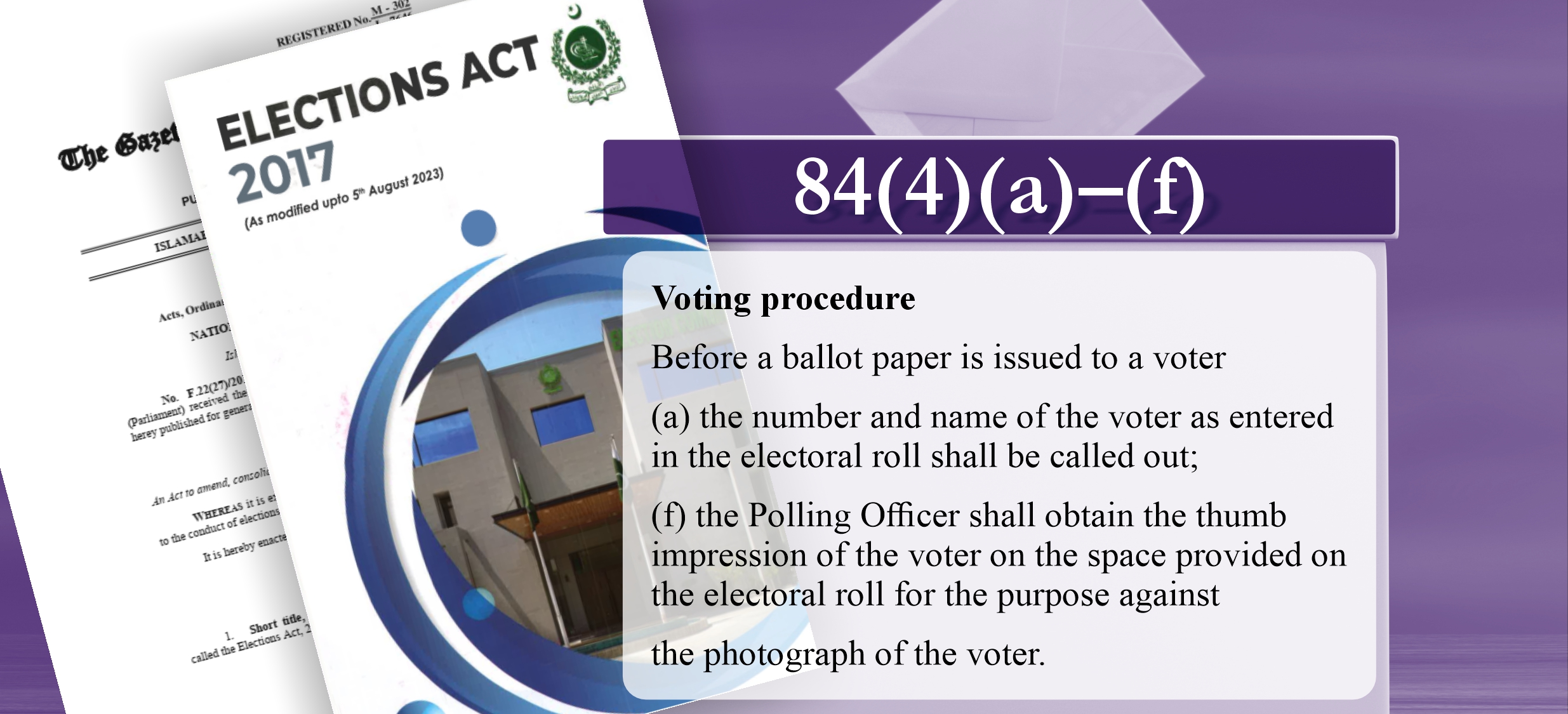
For many first-time voters, the polling station process is unfamiliar and sometimes confusing. Understanding what the Presiding Officer and Polling Officers are doing — and why — removes the uncertainty and helps voters recognise whether the process is being followed correctly. The Elections Act specifies a sequence of steps that must occur before any ballot is placed in a voter’s hands.
What does the law say?
Section 84(4) of the Elections Act 2017 specifies the sequence that must occur before a ballot paper is issued.
- First, the voter’s number and name on the electoral roll are called out.
- Second, the voter’s entry on the roll is struck off to indicate a paper has been issued. The Polling Officer also obtains the voter’s thumb impression on the electoral roll, against their photograph.
- Third, the voter receives an indelible ink mark on a specified finger or thumb. This is a legal requirement, not a custom.
- Fourth, the ballot paper is stamped on its back with the official mark and signed by the Presiding Officer.
- Fifth, the Presiding Officer records on the counterfoil the voter’s roll number, NIC number, an official stamp, their own signature, and obtains the voter’s thumb impression on the counterfoil.
Why does this matter?
Each of these steps serves an accountability function. Calling out the name prevents silent substitution. Striking the entry prevents re-voting. The ink mark prevents voting at another polling station. The stamped and signed ballot prevents use of unofficial ballot papers. The counterfoil links the issued ballot to the voter’s identity and can be audited.
 Source: Elections Act 2017, Section 84(4)(a)–(f).
This post is part of FAFEN’s series on electoral literacy. Read more of this series here.