One of the most contested stages of any election is the counting of the ballots at the polling stations. Claims of manipulation at the counting stage are common in Pakistan. The Elections Act 2017 provides legal protections for transparency at this stage that are worth knowing in full.
What does the law say?
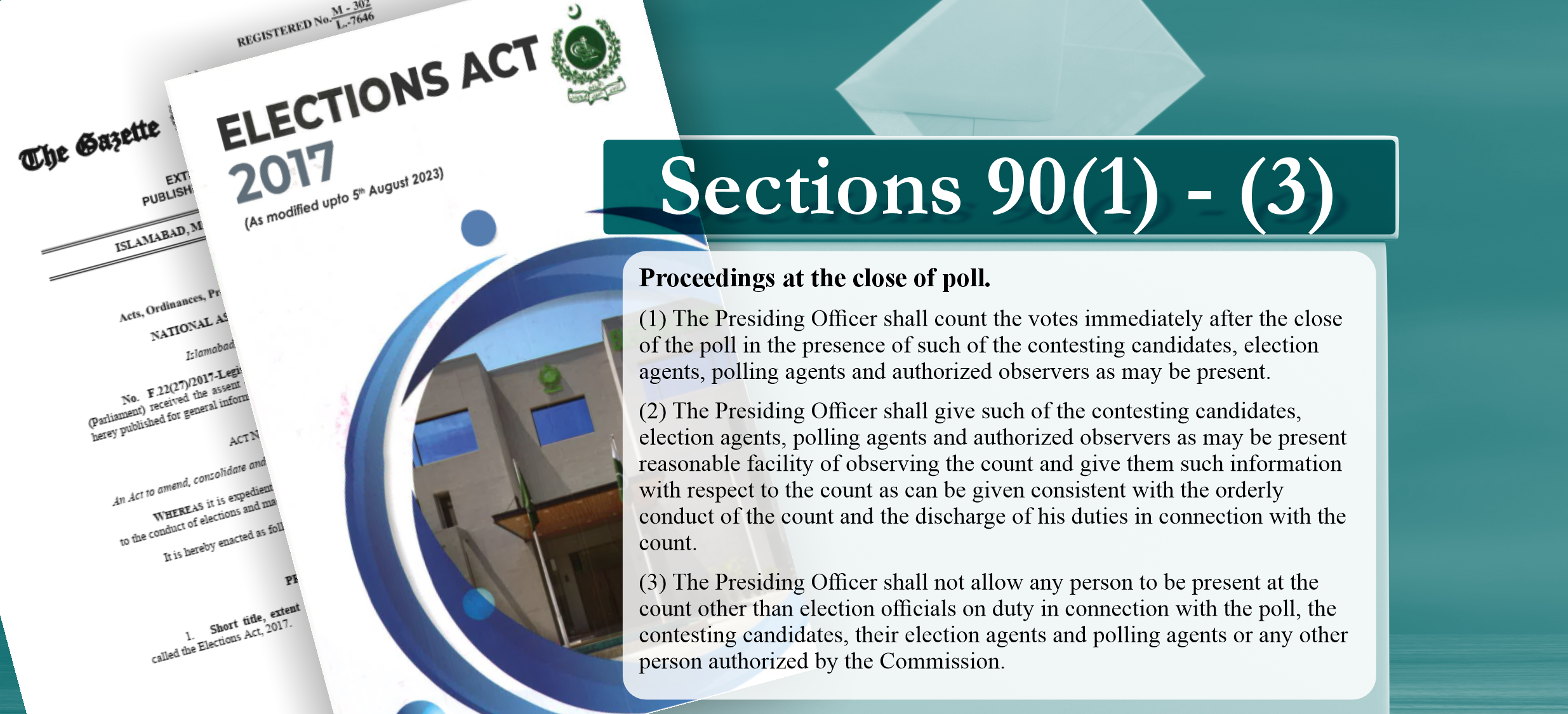
Section 90(1) of the Elections Act 2017 requires counting to begin immediately after the close of the poll, in the presence of the contesting candidates, election agents, polling agents, and authorised observers who are present. Section 90(2) requires the Presiding Officer to give all those present a reasonable facility to observe the count and to provide information about the count consistent with orderly conduct of the process. Section 90(3) prohibits the presence of any person not on the permitted list — which includes election officials on duty, the candidates and their agents, and ECP-authorised observers.
The right to observe is not a courtesy. It is a statutory entitlement. A Presiding Officer who bars a polling agent from watching the count, or who refuses to answer legitimate questions about the process, is in breach of Section 90(2).
Why does this matter?
The counting provisions in Section 90 are designed to produce a publicly witnessed, accountable result at each polling station. When the count is observed by agents of every candidate present, the probability of undocumented manipulation at that stage decreases significantly.
Election observers and polling agents who are asked to leave during counting, or who are physically prevented from seeing individual ballot papers, should document the refusal and formally report it to the Returning Officer and the ECP.
 Source: Elections Act 2017, Sections 90(1)–(3).
This post is part of FAFEN’s series on electoral literacy. Read more of this series here.