
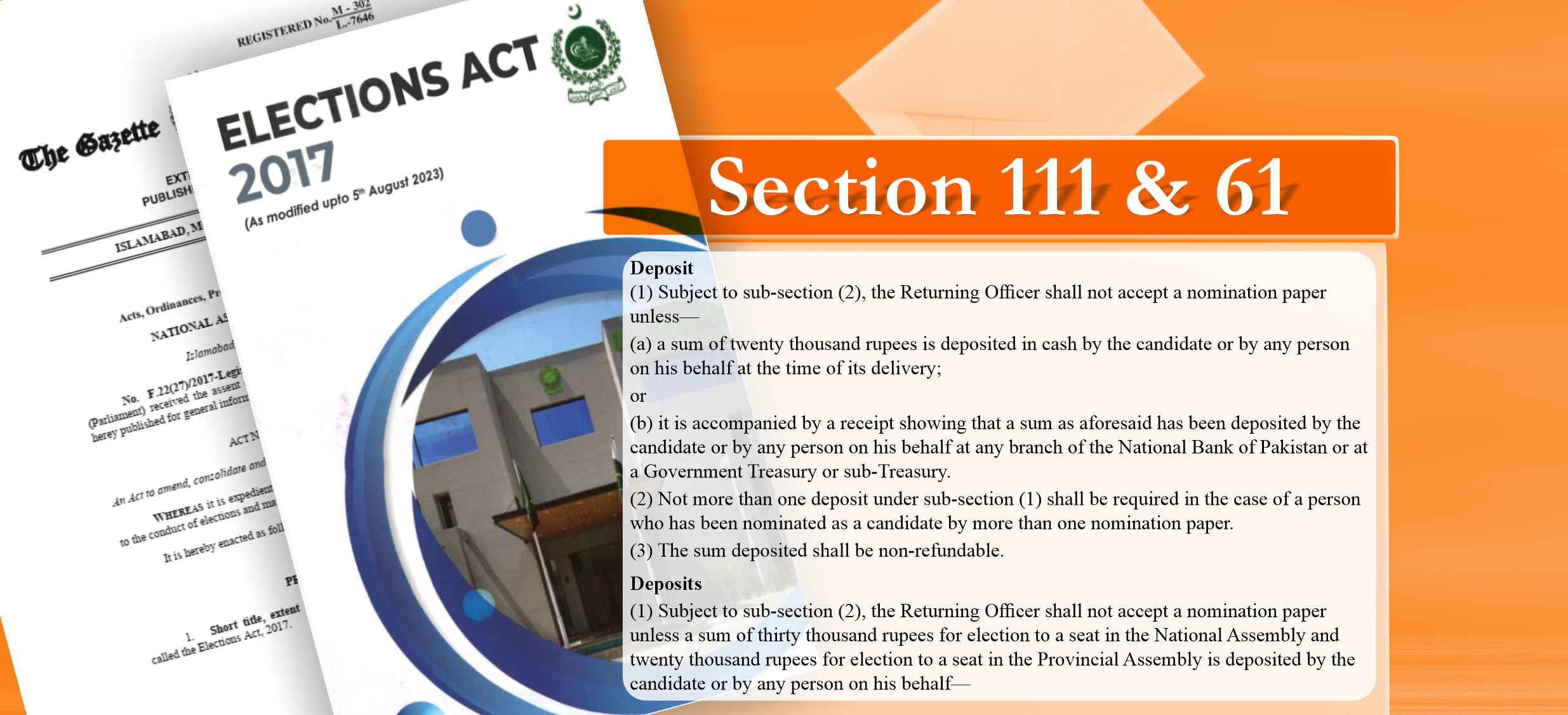
Contesting any election in Pakistan requires a nomination deposit paid to the Returning Officer before a nomination paper is accepted. The amount varies by house: National Assembly, Provincial Assembly, and Senate deposits are each set at different levels. The nomination deposit for Senate candidacy is set at Rs 20,000.
What does the law say?
Section 111 of the Elections Act 2017 sets the Senate candidacy deposit at Rs 20,000. The deposit must be paid to the Returning Officer before the nomination paper is accepted. Â For context, the National Assembly deposit is Rs 30,000, the Provincial Assembly deposit is Rs 20,000, as provided in Section 61. All these deposits are non-refundable. The candidate or their representatives can make these deposits in cash to the Returning Officer, or at any branch of the National Bank of Pakistan or at a federal government treasury or sub-treasury.
Why does this matter?
The non-refundable deposit creates a modest financial filter for electoral candidacy.  It seeks to ensure that only genuinely intending candidates file the nomination papers. It does not prevent wealthy candidates from contesting without regard to viability, but it ensures that all candidates have made a minimal financial commitment.
Source: Elections Act 2017, Section 111; Section 61.
This post is part of FAFEN’s series on electoral literacy. Read more of this series here.