An election petition is not a general complaint about electoral irregularities. It is a formal legal pleading that must meet specific requirements of content and specificity. Section 144 of the Elections Act requires election petitions to specify each alleged corrupt or illegal practice with particulars — and to name the person alleged to have committed it.
 What does the law say?
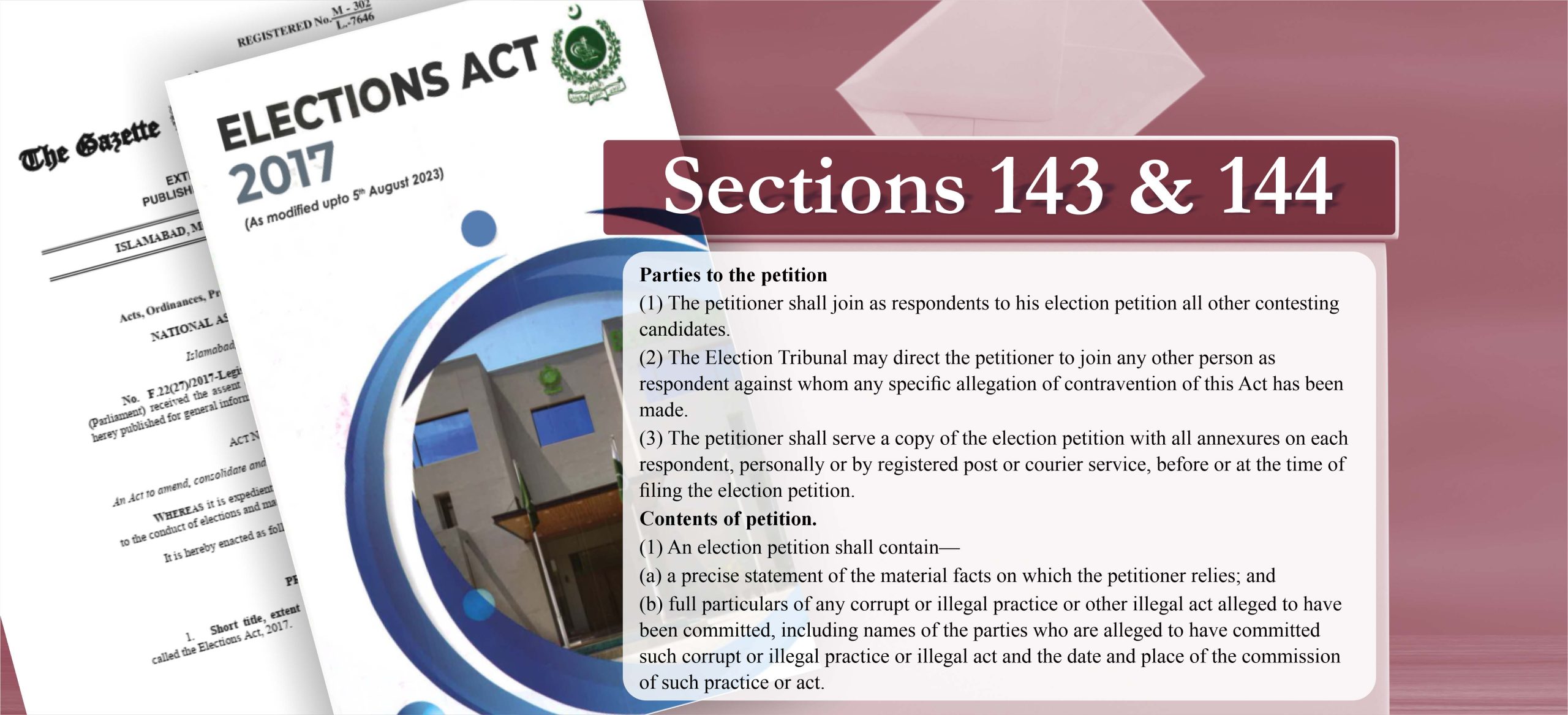
Section 144 of the Elections Act 2017 requires every election petition to state the grounds on which the result is challenged, to set out a full statement of the material facts on which the petitioner relies, and to specifically allege each corrupt or illegal practice relied upon, naming the person alleged to have committed it and providing the full particulars of that practice with such specificity as would, if not denied, constitute a complete cause of action.
A petition that alleges “widespread bribery” without identifying who paid, who received, where, when, and in what amount fails the Section 144 standard.
 Why does this matter?
Section 144’s specificity requirement serves two functions. It ensures that respondents — the returned candidate and any person named — receive fair notice of the case against them. It also prevents the election petitions process from being used as a vehicle for general political grievances rather than specific legal challenges.
Any person considering filing an election petition should work with legal counsel to ensure the petition meets the Section 144 standard before filing. Â FAFEN has documented that a significant number of election petitions filed against GE-2024 outcomes were dismissed on technical grounds such as the one discussed above.
 Source: Elections Act 2017, Sections 143 and 144.Â
This post is part of FAFEN’s series on electoral literacy. Read more of this series here.