
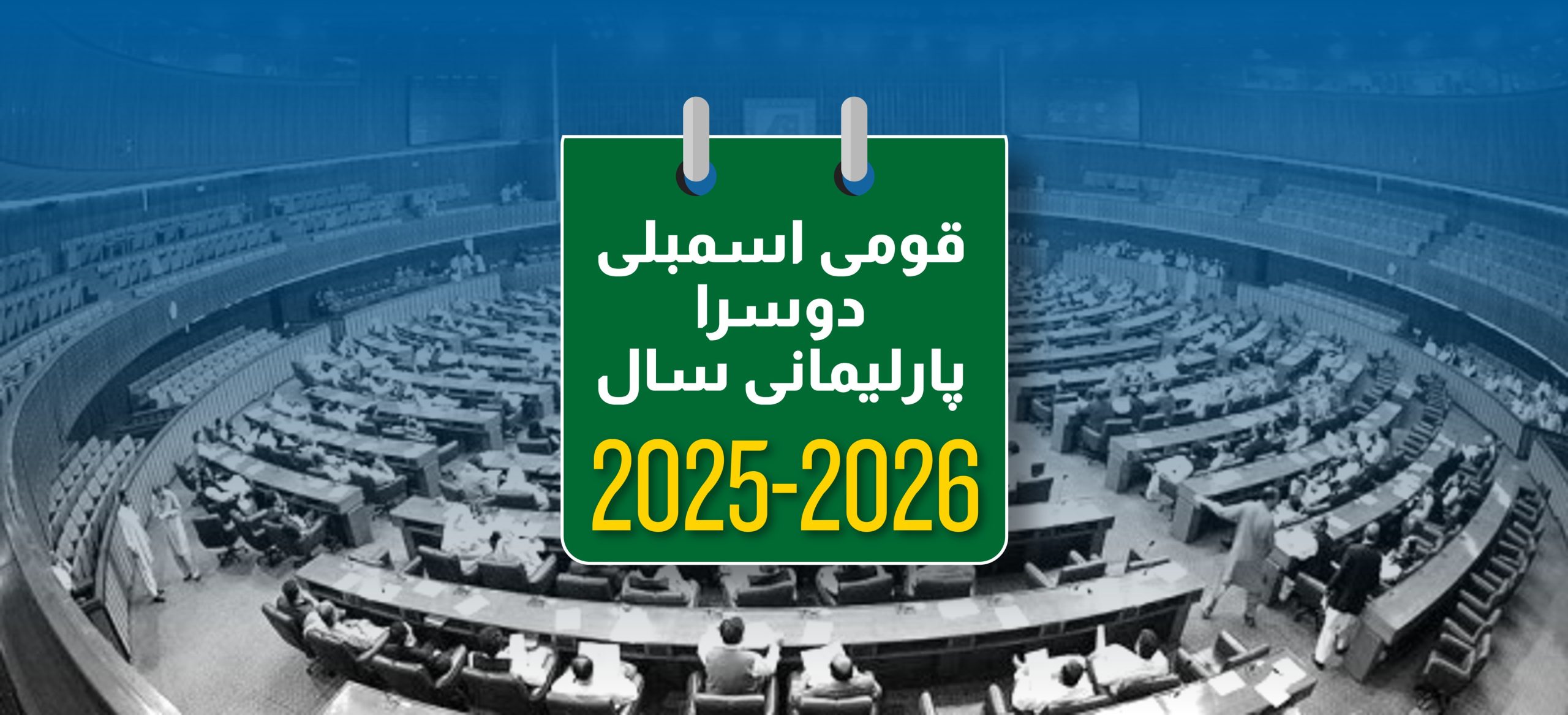
How much time did Pakistan’s National Assembly actually spend working in its second year? The numbers are in. Between sessions 14 and 24, the House met for a total of 263 hours and 22 minutes across 84 sittings.
But not all that time was productive. FAFEN’s data shows that proceedings were suspended for 32 hours and 55 minutes—that’s 12% of the total time. These suspensions were primarily for Namaz (prayer breaks) and delays caused by a lack of quorum, a recurring issue that can grind parliamentary business to a halt.
When you strip away that lost time, the House’s actual working hours drop to 230 hours and 27 minutes.
Meeting the Constitutional Mark
Despite the disruptions, the National Assembly did meet its constitutional requirement. Article 54(2) of the Constitution mandates 130 working days. The House hit this target by the end of the 24th session on February 16, 2026.
It’s important to note that “working days” is a broad term. It includes the 84 days the House actually sat, the three joint sittings with the Senate, and crucially, 44 days of breaks between sittings. The Constitution counts a break of up to two days between sittings as a “working day,” which is how the total reached 130.
Dive Deeper into the Data
These numbers tell a story of a Parliament that met its legal minimums but lost significant time to interruptions. For a more detailed breakdown of the second parliamentary year, check out our other stories:
- Only One NA Sitting Began on Time During 2nd Parliamentary Year
- NA Committees Lag in Mandatory Performance Reporting
- Quorum Shortfall Disrupts 9 NA Sittings During 2nd Year
- Female MNAs Attendance Remains Higher Than Male MNAs
- Least Regular MNAs During 2nd Parliamentary Year
- Most Regular MNAs During 2nd Parliamentary Year