Pakistan’s elections include constituencies where the threat of electoral violence, booth capturing, or other serious irregularities is well-documented. The Elections Act 2017 contains a specific legal response to this elevated risk.
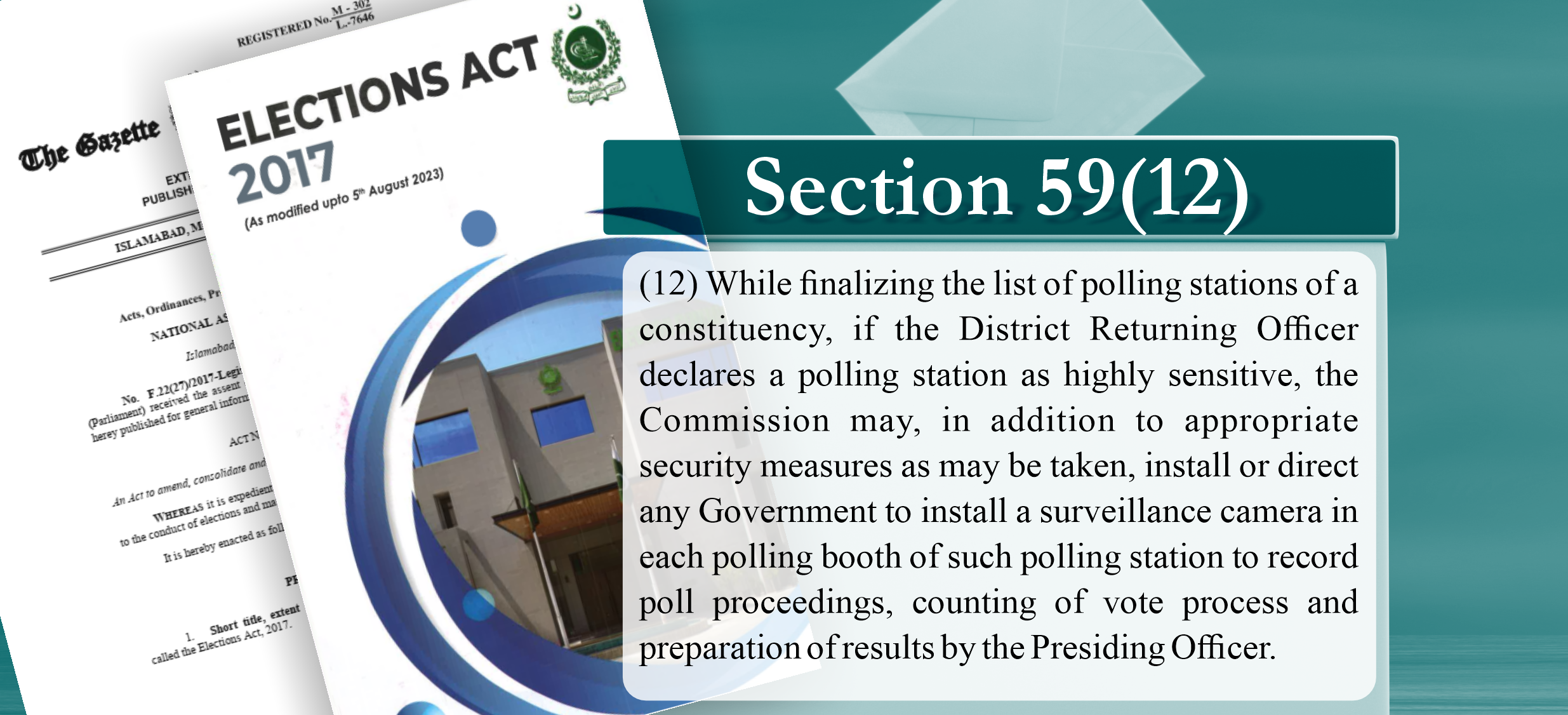
The Act allows installing surveillance cameras inside polling booths given that the polling station where the booths are situated is declared ‘highly sensitive’ by the District Returning Officer.
What does the law say?
Section 59(12) of the Elections Act 2017 provides that if the District Returning Officer declares a polling station highly sensitive, the Election Commission of Pakistan (ECP) may, in addition to appropriate security measures, install or direct any government to install surveillance cameras in each polling booth of that station. The cameras will record the poll proceedings, the counting of votes, and the preparation of results by the Presiding Officer.
Why does this matter?
Surveillance cameras in polling booths can deter electoral violence and provide a verifiable record of proceedings. But they also carry a risk that the law does not explicitly address, i.e. if a camera is angled in a way that captures the marking on ballot papers behind the secrecy screen, it compromises the very vote secrecy that Article 226 of the Constitution guarantees.
Citizens and observers present at highly sensitive polling stations should be alert to how cameras are positioned. If a camera appears to be recording inside the secrecy screen, that is a legitimate objection to raise with the Presiding Officer.
 Source: Elections Act 2017, Section 59(12).
This post is part of FAFEN’s series on electoral literacy. Read more of this series here.