Access to a polling station is restricted by statute. A Member of Parliament, a local councillor, a journalist, or a family member of a voter has no automatic right to be inside. The Elections Act 2017 establishes a closed list of permitted persons.
What does the law say?
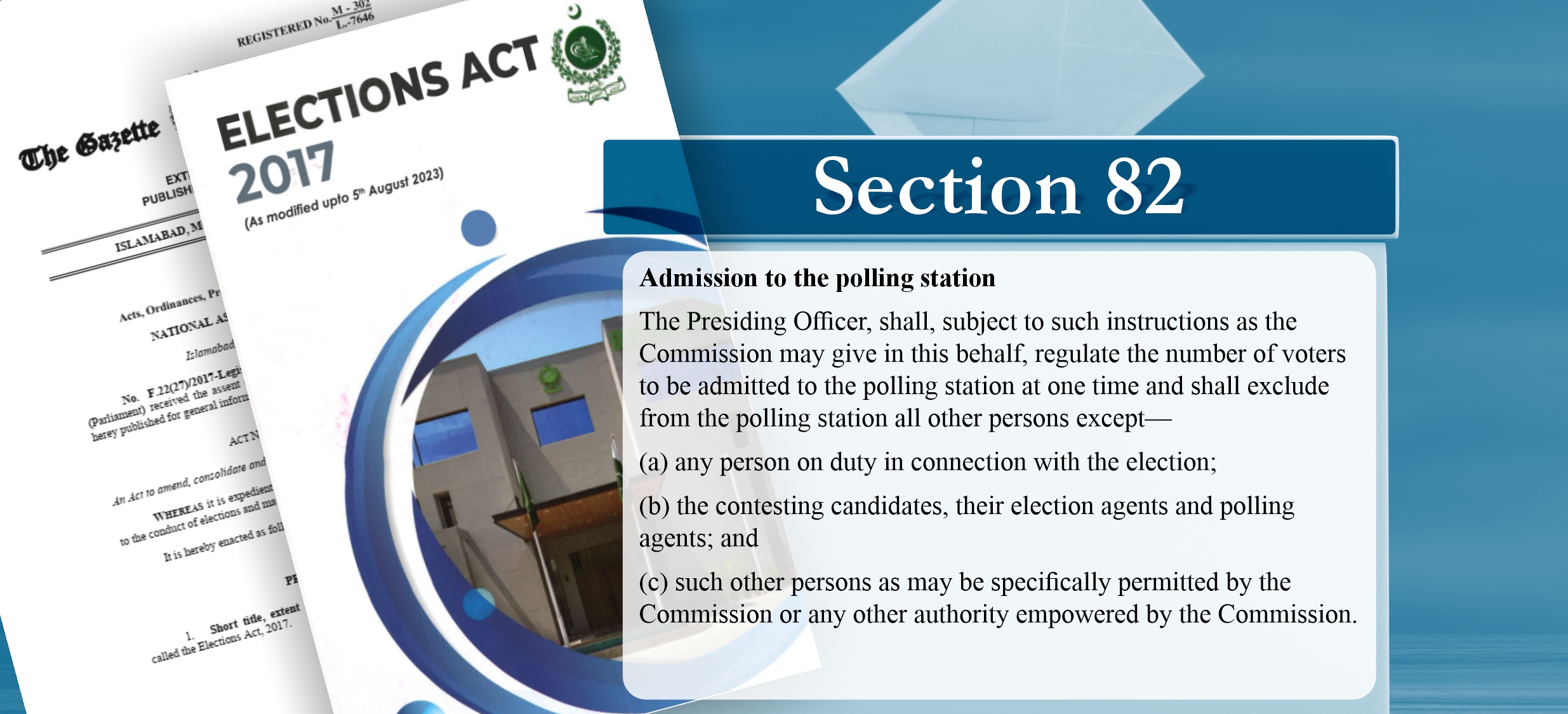
Section 82 of the Elections Act 2017 requires the Presiding Officer to regulate the number of voters admitted at any one time and to exclude from the polling station all persons except:
- persons on duty in connection with the election;
- contesting candidates, their election agents, and polling agents; and
- persons specifically permitted by the Election Commission of Pakistan (ECP) or any authority the ECP has empowered to grant such permission.
The sitting Members of Parliament, except if they are candidate in the election or agent of another candidate, have no statutory right to enter the polling station premises. Journalists are not included unless specifically accredited by the ECP under clause (c) as observer. Local leaders, community elders, and family members of voters wait outside.
Why does this matter?
Section 82’s closed list protects the secrecy of the ballot and the orderly conduct of the poll. Overcrowding inside a polling station — by party workers, local strongmen, or uninvited officials — creates conditions for voter intimidation, observation of how people vote, and interference with Presiding Officers.
Voters who feel pressured or observed while inside a polling station can know that the persons present without one of the three authorisations are there without legal basis. The Presiding Officer has the authority — and the duty — to remove them. Under Section 83, the Presiding Officer may remove or cause to be removed any person who misconducts themselves or fails to obey lawful orders.
Source: Elections Act 2017, Section 82.
This post is part of FAFEN’s series on electoral literacy. Read more of this series here.