Before each election, candidates submit nomination papers along with a substantial package of supporting documents including their National Identity Card, a declaration of assets and liabilities for themselves, their spouse, and dependent children, a statement of their party affiliation, and a bank statement for their designated election account. These nominations along with all the attachments are not private filings. They are public records. The Elections Act entitles any person to inspect these attachments and obtain certified copies.
What does the law say?
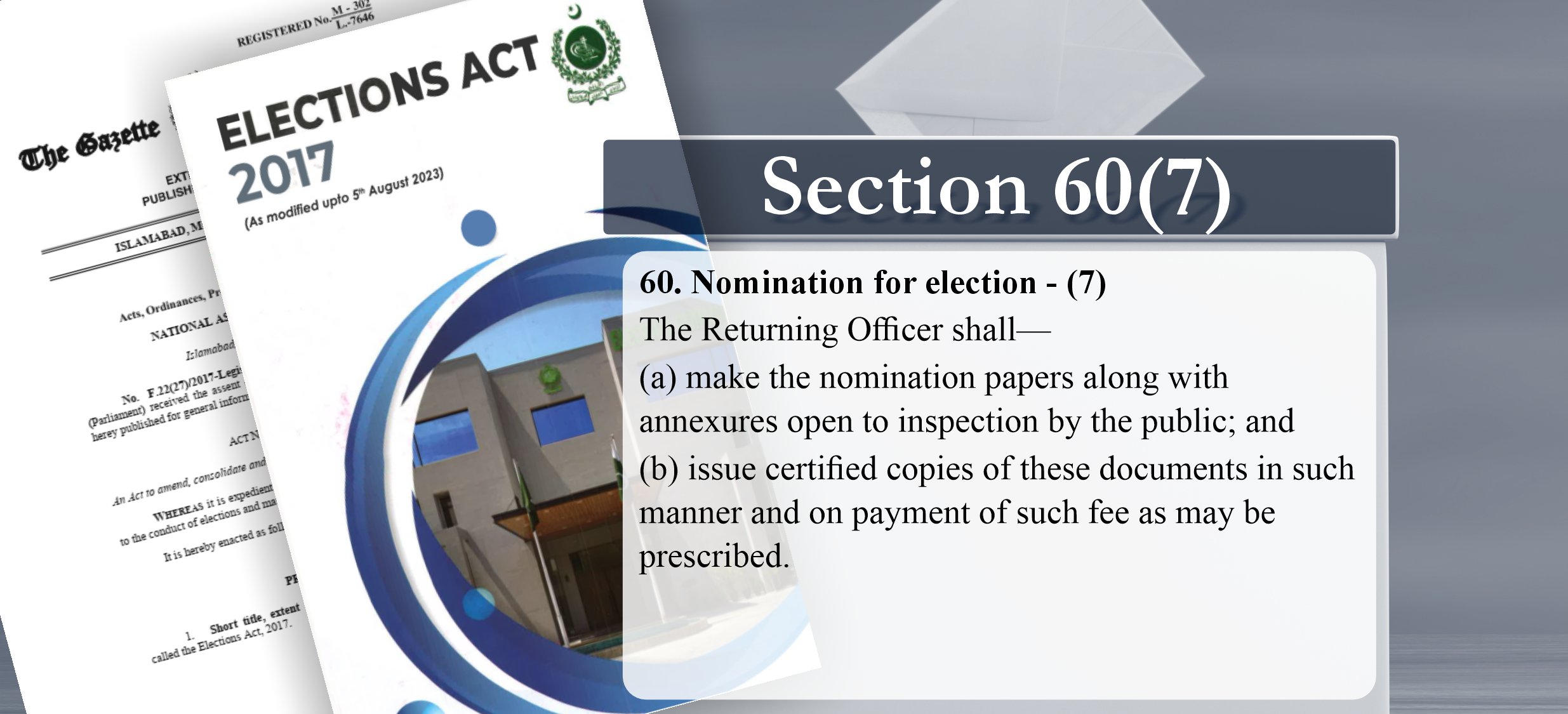
Section 60(7) of the Elections Act 2017 requires the Returning Officer to make all nomination papers and their annexures open to public inspection. Certified copies of these documents must be provided in the manner and on payment of the fee prescribed by the Rules. These are unambiguous requirements.
The asset declaration component is particularly significant. Form B, which candidates must attach, requires disclosure of assets and liabilities as of the preceding 30 June, covering the candidate’s own holdings as well as those of their spouse and dependent children. This information is accessible to any person who asks for inspection or a certified copy.
Why does this matter?
The public inspection right in Section 60(7) is a transparency mechanism that can only work if people know it exists. Any voter in a constituency can visit the Returning Officer during the nomination period and inspect the papers of all candidates. Any journalist covering an election can request certified copies of asset declarations and compare them against candidates’ public lifestyle or known business interests. FAFEN has been documenting the status of compliance with this requirement during its election observation.
During the scrutiny period and beyond, the inspection right remains available. Certified copies can be used in formal objections filed under Section 62, in reporting, and in evidence before Appellate Tribunals.
Source: Elections Act 2017, Section 60(7).
This post is part of FAFEN’s series on electoral literacy. Read more of this series here.