The controversy surrounding reserved seats in the National and Provincial Assemblies has drawn tremendous media, judicial, political, and public attention. Yet, most of the debate has revolved around who gets what, instead of asking a deeper question that what does the Constitution actually envisage, and is it not inherently absurd?
The absurdity of the constitutional provisions governing reserved seats needs not only to be debated but also addressed in any future amendment to avoid similar turmoil in the future.
Reserved seats for women and minorities are allocated to political parties under Article 51(3) and (4) of the Constitution. However, several aspects of this arrangement defy logic and fairness.
Absurdity #1: Low vote share, high seat share
Reserved seats are distributed among political parties based on the number of general seats they win, not the number of votes they receive. This means the Constitution discards the total votes polled to a political party in determining its share in the reserved seats, and only factors in the votes that are translated into seats.
FAFEN’s previous analysis has shown how Pakistan’s election system skews translation of votes into seats by discarding the majority of votes in a constituency. Allocation of reserved seats on the basis of general seats further intensifies this skewing.
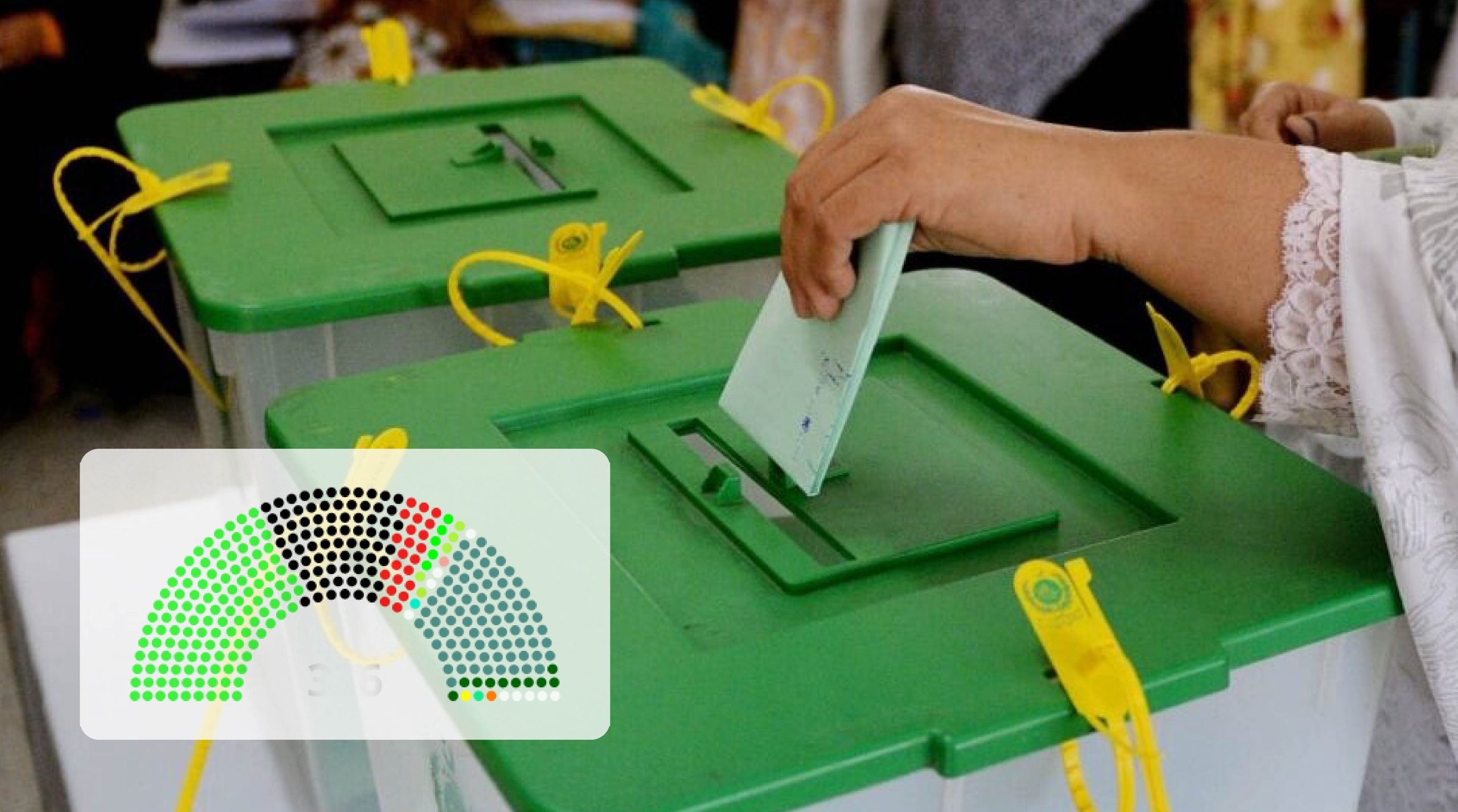
This anomaly benefits the parties that receive higher seat share in the Assemblies despite receiving lower vote share in the polls. For instance, Pakistan Peoples Party Parliamentarians received 14 percent of the votes polled in the National Assembly constituencies, but it received 20 percent general seats and 26 percent women-reserved seats in the Assembly during the General Elections 2024. On the other hand, Tehreek-e-Labaik Pakistan (TLP) received more than 2.9 million votes but failed to win a single general seat. Consequently, it was excluded from any share of reserved seats as well.
Absurdity #2: All for one, even if it wins only one constituency
The Constitution allows reserved seats to be allocated only to political parties, irrespective of how many seats they have won.
In a strictly legal sense, if independent candidates were to win 261 of 266 National Assembly seats, and the remaining five seats were won by a single political party (one each in four provinces and ICT), all 60 women’s and 10 minority reserved seats would still go to that one political party, in utter disregard of the will of the people.
Absurdity #3: Independents that inflate party strength
The Constitution’s Article51(6)(d) allows independent candidates to join any political party within three days of being notified in the Gazette as returned candidate.
This provision disregards the voter choice at the hustings who deliberately chose independents over political parties. Moreover, every independent who joins a party inflates that party’s general seat count, thus increasing its entitlement to reserved seats. This way, post-election maneuvering earns bigger rewards than the actual voter support.
What can be done?
These constitutional absurdities can be resolved through a simple amendment. Reserved seats for women and minorities should be allocated based on the total votes polled by a political party in a general election, rather than the number of general seats it wins.
This, at least, will take a little edge off the unrepresentativeness of the elected Assemblies.