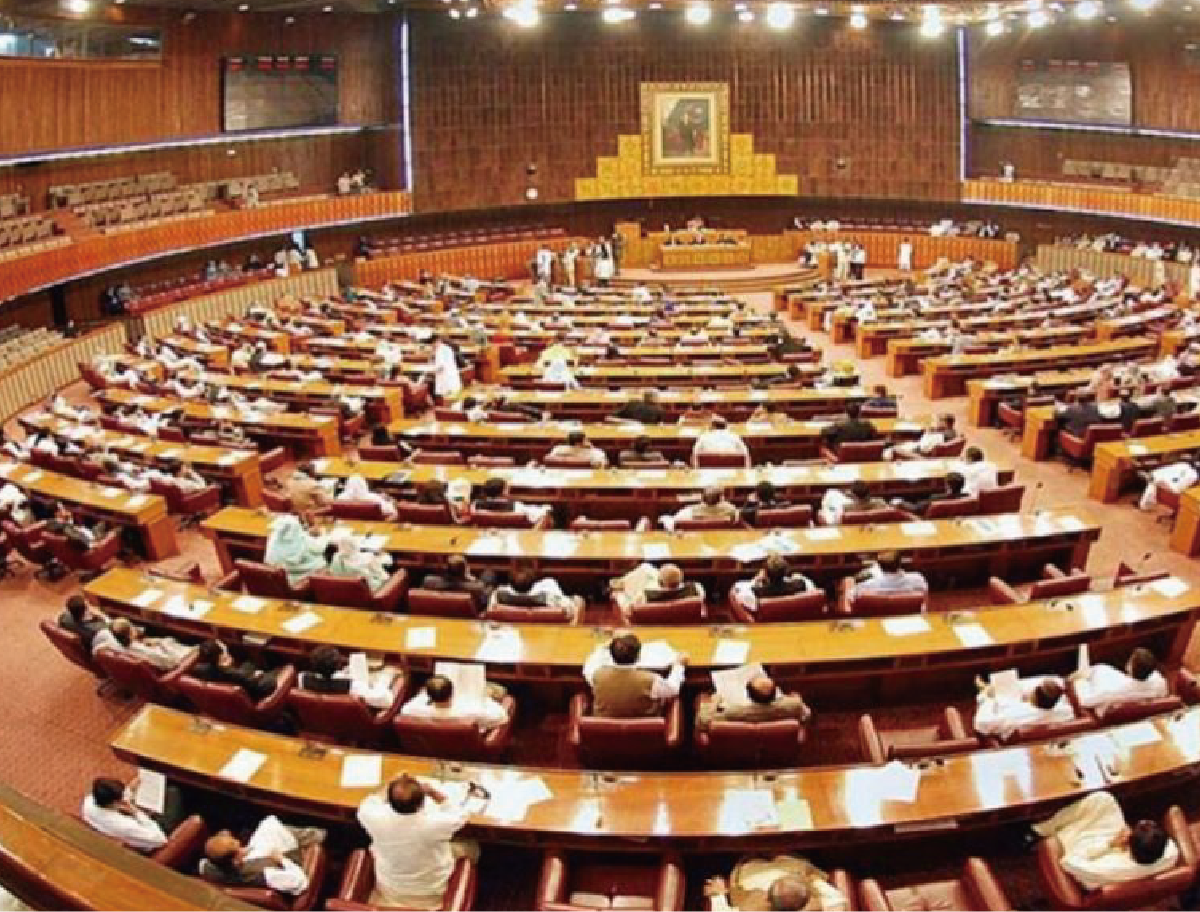
Since Pakistan came into being on 14 August 1947, 28 individuals have served as Prime Minister. Together, they account for 33 tenures — because three of them returned to office more than once. Only 20 of these tenures were reached through a parliamentary vote.
That figure — drawn from seven decades of constitutional history — captures something essential about how power has transferred at the top of Pakistan’s government since independence in 1947. Of 28 individuals who have held the office, 20 entered through electoral processes and 13 through appointment, including eight caretaker administrations formed specifically to oversee transitions between elected governments.
The method of selecting the Prime Minister has never been fixed. It has shifted with each constitutional framework — moving between executive appointment, presidential selection, and parliamentary election depending on which legal order was in force at the time.
The colonial inheritance: appointment by the Governor-General
At independence, Pakistan operated under the Government of India Act, 1935 — an inherited colonial framework that vested executive authority in the Governor-General. No constitutional mechanism existed for parliamentary election of a Prime Minister. The head of state directly appointed the head of government, and executive discretion determined leadership succession. This arrangement continued until Pakistan adopted its first constitution.
The 1956 Constitution: parliament elected, president appointed
The first Constitution of Pakistan, adopted in 1956, introduced elected representation in the legislature. Any elected member of the National Assembly was eligible to become Prime Minister — but it was the President who made the appointment, choosing the person most likely, in his opinion, to command the confidence of the majority of members. The path to the premiership thus ran through democratic election to parliament, followed by executive appointment to the office itself. No prime minister was appointed under the constitution.
The 1962 Constitution: the office abolished
The Constitution of Pakistan, 1962 replaced parliamentary governance with a presidential system and eliminated the office of Prime Minister entirely. After this constitution lapsed in 1969 and Martial Law was imposed, executive authority was centralised under military leadership. The Legal Framework Order, 1970 was enforced. During this period, the office of Prime Minister briefly re-emerged through direct appointment to manage political transition — without electoral involvement.
The 1973 Constitution: parliamentary election restored
The Constitution of 1973, promulgated in August of that year, re-established parliamentary rule and made the Prime Minister the Chief Executive of the Federation under Article 90. Under this framework, executive authority rests with a Prime Minister elected by the legislature — though Article 90 specifies that this authority is exercised in the name of the President, reflecting the constitutional role of the head of state even within a parliamentary system. Provisions were also created for caretaker administrations — appointed temporarily to supervise general elections whenever elected assemblies completed or lost their mandates.
Twenty-five Prime Ministers have held office under the 1973 Constitution. Seventeen were elected by the legislature. Eight served as caretakers under Article 224, with the specific mandate of holding elections.
Prime Ministers who held office multiple times
Three individuals have held the office of Prime Minister on more than one occasion, accounting for six of the 33 tenures recorded since 1947.
Mian Mohammed Nawaz Sharif holds the record, having served four separate tenures. He first took office in November 1990 and served until July 1993, when his government was dismissed. He returned briefly in the same year — from July to October 1993 — following a Supreme Court order restoring his government, before stepping down ahead of fresh elections. His third tenure ran from February 1997 to October 1999, when it was ended by a military coup. He returned to office for a fourth time in June 2013 and served until July 2017, when he was disqualified by the Supreme Court.
Mohtrama Benazir Bhutto served two tenures. She first took office in December 1988 — becoming Pakistan’s first woman Prime Minister — and served until August 1990, when her government was dismissed. She returned to office in October 1993 and served until November 1996, when her second government was also dismissed.
Mian Muhammad Shehbaz Sharif has served two tenures. He first took office in April 2022, following a vote of no confidence against the previous government, and served until August 2023. He returned to office in March 2024 and continues to serve.
Following table has the period and tenure length of each prime minister:
| # | Prime Minister | Period | Tenure Length
(Y/M/D) |
Status |
| 1 | Liaquat Ali Khan | 1947–1951 | 4y 2m 1d | Appointed (M. Ali Jinnah) |
| 2 | Khawaja Nazimuddin | 1951–1953 | 1y 6m | Appointed (Ghulam Muhammad) |
| 3 | Muhammad Ali Bogra | 1953–1955 | 2y 3m 25d | Appointed (Ghulam Muhammad) |
| 4 | Chaudhry Mohammed Ali | 1955–1956 | 1y 1m 1d | Appointed (Iskander Mirza) |
| 5 | Hussain Shaheed Suharwardi | 1956–1957 | 1y 1m 6d | Elected (Iskander Mirza) |
| 6 | Ibrahim Ismail Chaundrigar | 1957 | 1m 28d | Elected (Iskander Mirza) |
| 7 | Feroz Khan Noon | 1957–1958 | 9m 21d | Elected (Iskander Mirza) |
| — | No Prime Minister (1962–1971) | — | — | Presidential Rule |
| 8 | Nurul Amin | 1971 | 13 days | Appointed (Yahya Khan) |
| 9 | Zulfiqar Ali Bhutto | 1973–1977 | 3y 10m 21d | Elected |
| 10 | Muhammad Khan Junejo | 1985–1988 | 3y 2m 6d | Elected |
| 11 | Mohtrama Benazir Bhutto | 1988–1990 | 1y 8m 4d | Elected |
| 12 | Ghulam Mustafa Jatoi | 1990 | 3m | Caretaker |
| 13 | Mian Mohammed Nawaz Sharif | 1990–1993 | 2y 5m 12d | Elected |
| 14 | Mir Balakh Sher Mazari | 1993 | 1m 8d | Caretaker |
| 15 | Mian Mohammed Nawaz Sharif | 1993 | 1m 12d | Elected |
| 16 | Moin Qureshi | 1993 | 3m 11d | Caretaker |
| 17 | Mohtrama Benazir Bhutto | 1993–1996 | 3y 17d | Elected |
| 18 | Malik Meraj Khalid | 1996 | 3m 11d | Caretaker |
| 19 | Mian Mohammed Nawaz Sharif | 1997–1999 | 2y 7m 25d | Elected |
| — | Military Rule (1999–2002) | — | — | — |
| 20 | Mir Zafarullah Khan Jamali | 2002–2004 | 1y 7m 3d | Elected |
| 21 | Chaudhary Shujaat Hussain | 2004 | 1m 27d | Elected |
| 22 | Shaukat Aziz | 2004–2007 | 3y 2m 18d | Elected |
| 23 | Muhammad Mian Soomro | 2007–2008 | 4m 8d | Caretaker |
| 24 | Yousaf Raza Gillani | 2008–2012 | 4y 1m | Elected |
| 25 | Raja Pervez Ashraf | 2012–2013 | 9m 2d | Elected |
| 26 | Mir Hazar Khan Khoso | 2013 | 2m 11d | Caretaker |
| 27 | Mian Mohammed Nawaz Sharif | 2013–2017 | 4y 1m 23d | Elected |
| 28 | Shahid Khaqan Abbasi | 2017–2018 | 9m 30d | Elected |
| 29 | Nasir-ul-Mulk | 2018 | 2m 17d | Caretaker |
| 30 | Imran Khan | 2018–2022 | 3y 7m 23d | Elected |
| 31 | Mian Muhammad Shehbaz Sharif | 2022–2023 | 1y 4m 3d | Elected |
| 32 | Anwaar-ul-Haq Kakar | 2023–2024 | 6m 18d | Caretaker |
| 33 | Mian Muhammad Shehbaz Sharif | 2024–Present | Ongoing | Elected |