Voters, candidates, and journalists often refer to Election Programme timelines as if they were set by the ECP at will. In fact, they have been set by the law itself. The Elections Act 2017 specifies each stage with binding intervals that the Commission must observe.
What does the law say?
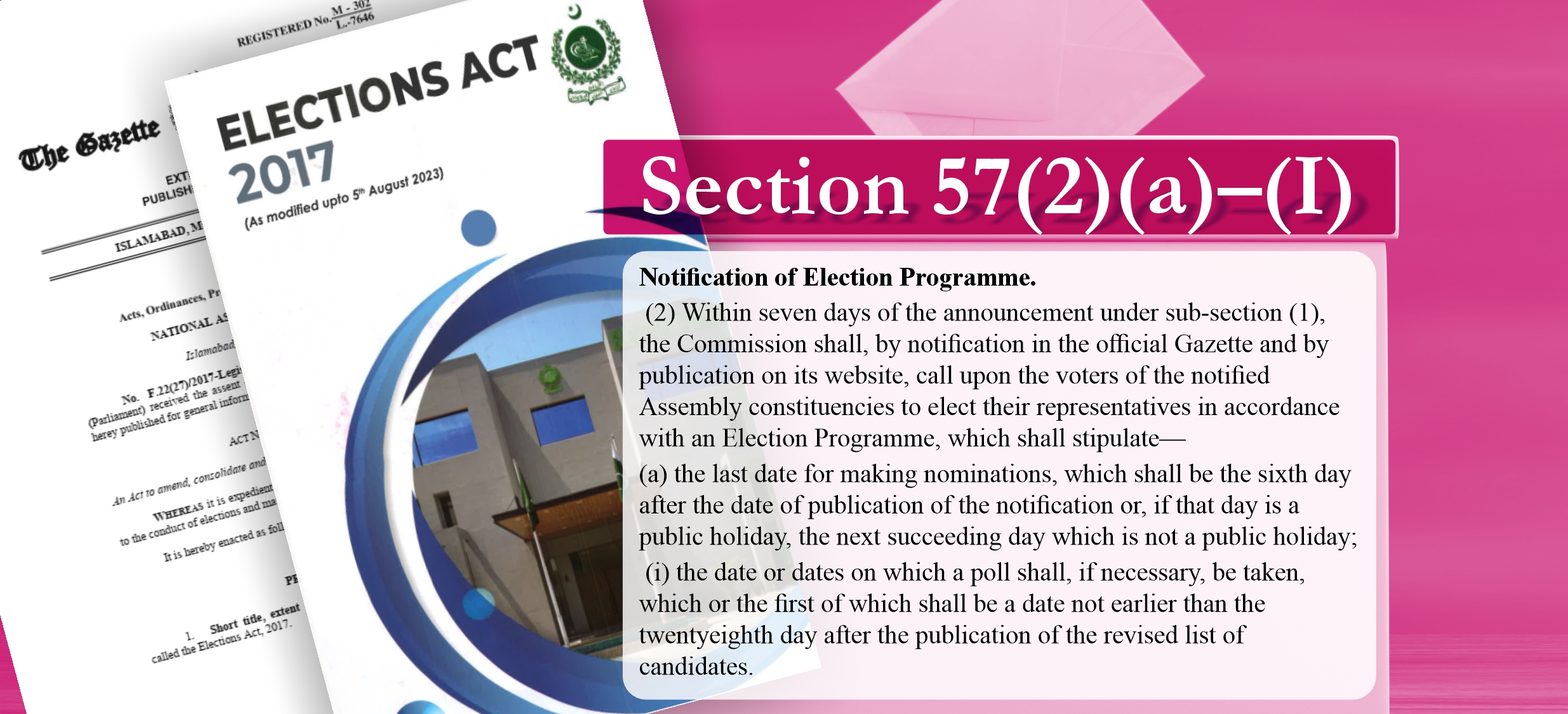
Section 57(2) of the Elections Act 2017 defines the Election Programme as a notification specifying various stages in sequence. Nomination closes on the sixth day after the notification is published (or the next working day if that day is a holiday). The list of nominated candidates is published the day after nomination closes. Scrutiny closes on the eighth day after the last nomination date. Appeals against scrutiny decisions are filed by the fourth day after scrutiny closes. Appeal decisions are given by the seventh day after the appeal filing deadline. The revised list of candidates is published the day after appeal decisions. Withdrawal of candidature closes the day after the revised list. Symbol allocation occurs the day after withdrawal day. Polling must be held no earlier than the 28th day after the revised list of candidates is published.
Why does this matter?
Every voter, candidate, and journalist covering an election should have this sequence at hand. Â The 28-day minimum before polling exists to give candidates adequate time for their campaigns. Deviations from any stage require written justification under Section 58 and are a legitimate election observation finding.
Source: Elections Act 2017, Section 57(2)(a)–(i).
This post is part of FAFEN’s series on electoral literacy. Read more of this series here.