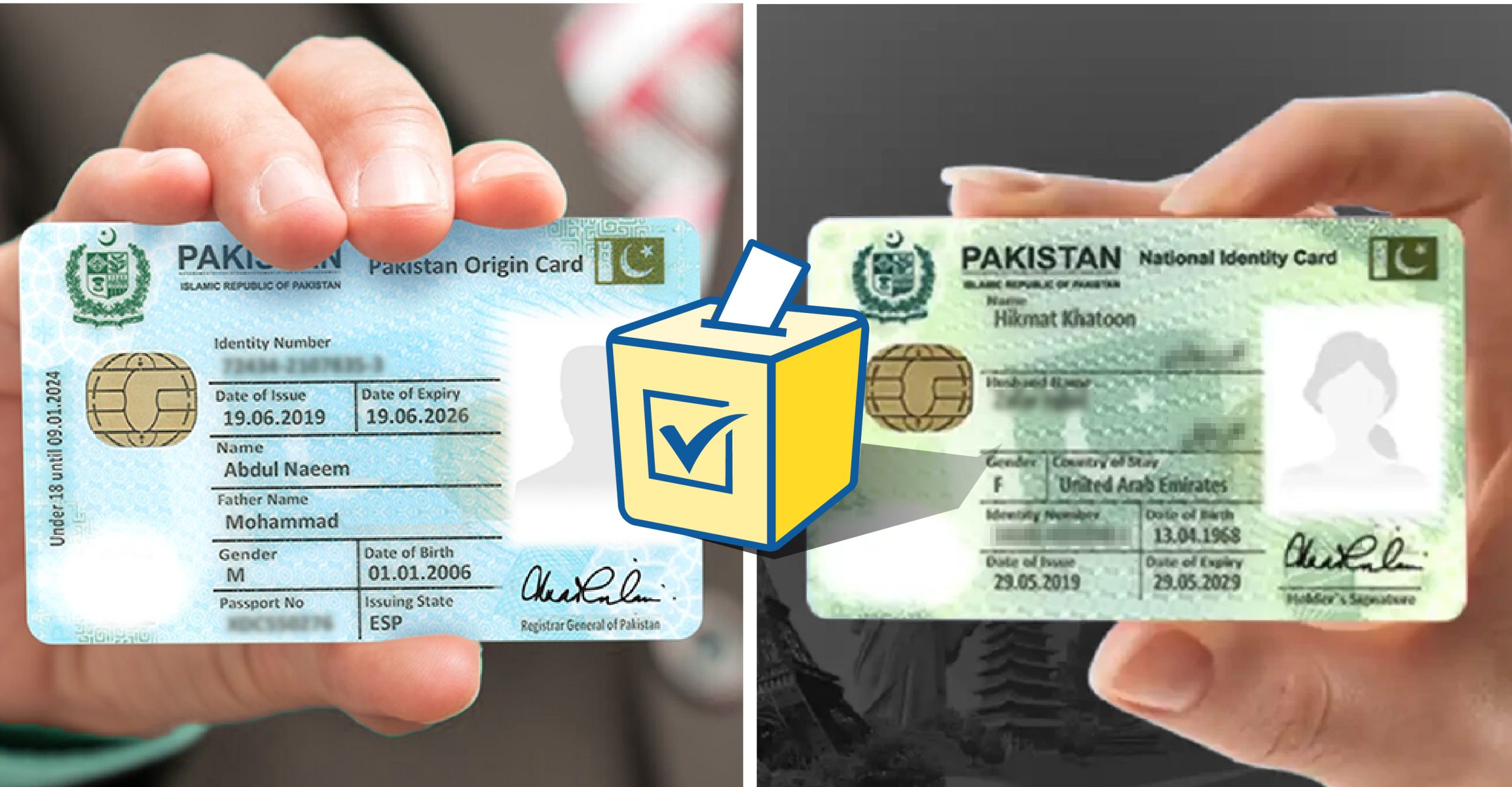
Pakistan issues different identity documents to its citizens depending on their citizenship status and place of residence. The National Identity Card (NIC), the National Identity Card for Overseas Pakistanis (NICOP), and the Pakistan Origin Card (POC) may look similar, but they serve different legal purposes.
As the number of overseas Pakistanis increases with more Pakistanis settling abroad every year, understanding these distinctions is important, especially in debates on overseas voting, dual nationality, and civic rights. The type of card a person holds determines not only their legal status, but also their political rights and obligations in Pakistan.
When was the citizen registration system initiated?
As mentioned by Associated Press of Pakistan, the foundation for the citizen registration system was laid in 1951 with the conduct of Pakistan’s first population census. In 1973, a formal registration system was introduced, followed by the manual issuance of NICs in 1974, which became mandatory for citizens 18 years and older.
According to NADRA’s website, the National Database Organization (NDO) was established in 1998 and later evolved into the National Database and Registration Authority (NADRA) on March 10, 2000. NADRA operates under the National Database and Registration Ordinance, 2000.
Below is how NIC, NICOP, and POC differ.
What is NIC?
The NIC is the primary identity document for Pakistani citizens residing within the country. It is mandatory for all citizens aged 18 and above. The NIC is also a pre-requisite for being registered as a voter and for casting a vote during elections. Additionally, it is required for opening bank accounts, obtaining higher education, buying or selling property, obtaining a Pakistani passport for travelling abroad, and accessing public services such as health, education, and social security.
NADRA digitized Pakistan’s citizen registration system. Despite initial challenges, NADRA established a computerized identification system in the year 2000, and 13-digit computerized NICs began replacing the old 11-digit manual cards in 2001-2002.
What is NICOP?
NICOP is issued to Pakistani citizens who are living abroad, whether temporarily or permanently, as well as intending emigrants. Legally, a NICOP holder is still a Pakistani citizen under the Pakistan Citizenship Act, 1951 and has all the entitlements of a citizen, including voting in elections. The key difference is residence abroad.
Like Pakistani citizens, the NICOP holders can enter Pakistan without a visa, can own property in Pakistan, can open bank accounts, and can register as voters. A NICOP holder may also have a dual nationality if their second country is among the 22 countries with which Pakistan has dual nationality arrangements. Therefore, NICOP serves as proof that a person is a Pakistani citizen residing overseas.
What is POC?
POC is issued to foreign nationals of Pakistani origin. The issuance of POC to eligible foreigners of Pakistani origin was launched in 2002.
Those who are eligible for POCs are former Pakistani citizens who have renounced citizenship, children or spouses of Pakistani citizens who are foreign nationals, and individuals with ancestral links to Pakistan. POC holders are not Pakistani citizens. However, they enjoy certain benefits such as visa-free entry into Pakistan, permission to buy and sell property (with some conditions), the ability to open bank accounts, and a long-term stay in Pakistan. However, unlike NIC or NICOP holders, POC holders cannot vote and do not enjoy full constitutional rights of citizenship.