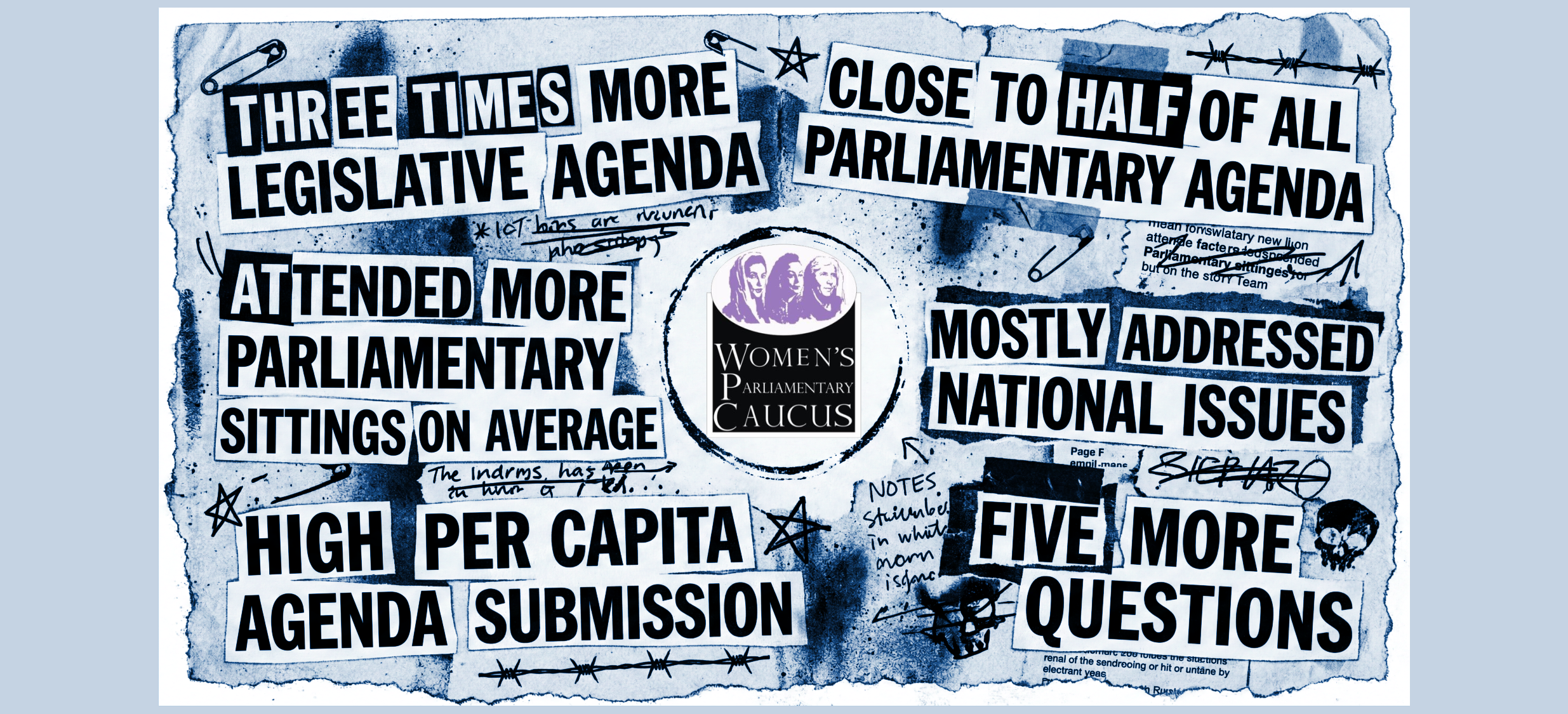
Female MNAs sponsored approximately 48% of the regular plenary business of the National Assembly during the second parliamentary year of the 16th National Assembly (2025–2026). Female MNAs hold 21.7% of National Assembly seats. Their share of agenda contribution is therefore more than twice their proportional membership.
How this is measured
FAFEN records every agenda item placed before the National Assembly’s plenary sittings during the reporting period. Items are categorised by sponsor — female MNA, male MNA, or jointly sponsored — and the female MNA share is calculated as a proportion of all agenda submitted by individual members. Government-initiated business is tracked separately. The reporting period covers 1 March 2025 to 28 February 2026 and encompasses all 84 sittings held during the year.
Why this matters in parliamentary terms
The volume of agenda a member or group of members contributes to the House reflects their active engagement with the institution. When a group holding 21.7% of seats contributes 48% of the agenda, it indicates that individual members within that group are working at a significantly higher intensity than their proportional representation would predict. This finding is particularly significant in Pakistan’s parliamentary context, where female MNAs face structural constraints including limited floor time, party gatekeeping, and the social and cultural pressures that accompany political life for women in Pakistan. The figure of 48% also shows a decline from 55% in 2024–2025, when 19 reserved seats were vacant because of litigation. That contextual shift is important: the 55% figure reflected a smaller denominator, not greater activity. The current 48% is therefore a more accurate baseline for assessing female MNAs’ legislative share.
Source: FAFEN Women Parliamentarians Performance Report 2025–2026, Executive Summary. Data period: 1 March 2025 – 28 February 2026.