Election petitions — formal challenges to election results — are decided by Election Tribunals, not by ordinary courts. Understanding how these tribunals are constituted is essential for anyone who intends to file a petition or respond to one.
What does the law say?
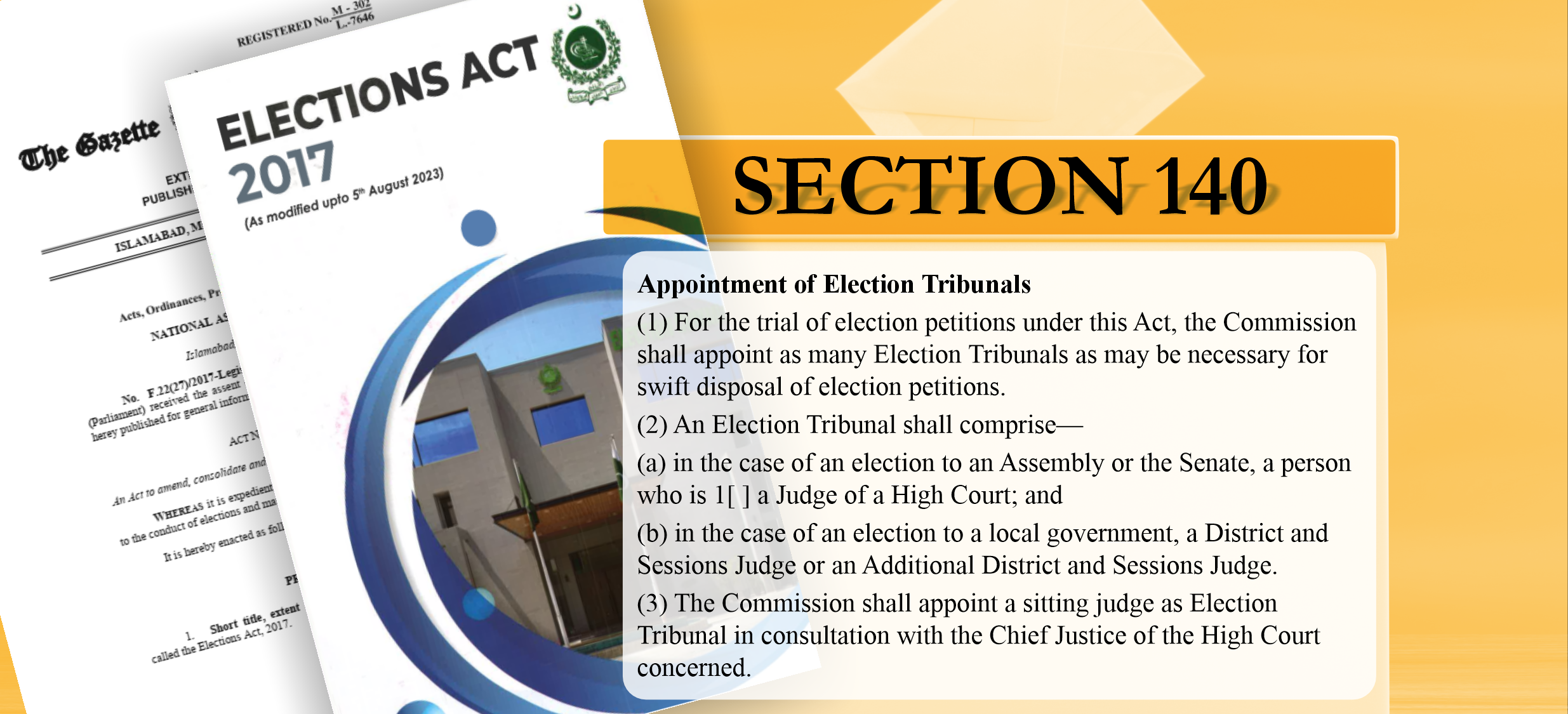
Section 140(1) of the Elections Act 2017 requires the Election Commission of Pakistan (ECP) to appoint Election Tribunals for the trial of election petitions. While, the total number of tribunals is left for the Commission to decide, the composition of these tribunals is described in Section 140(2), which has been amended twice in 2023 and 2024. The current version requires that each tribunal for the election to an Assembly or the Senate must be composed of a person who is a Judge, or has been a Judge, of a High Court. For appointment of a sitting judge as the tribunal, consultation with the Chief Justice of the relevant High Court is mandatory under Section 140(3).
Why does this matter?
The ECP publishes Election Tribunal compositions following each election. Civil society organisations and legal practitioners monitoring election petitions should verify these compositions against the Section 140 standard at the beginning of any petition process.
 Source: Elections Act 2017, Section 140.
This post is part of FAFEN’s series on electoral literacy. Read more of this series here.