In direct elections to the National and Provincial Assemblies, an uncontested result is rare. In Senate elections — where the electorate is a fixed group of Assembly members voting by a single transferable vote — uncontested elections are more common, particularly in elections where party negotiations have produced a consensus candidate.
 What does the law say?
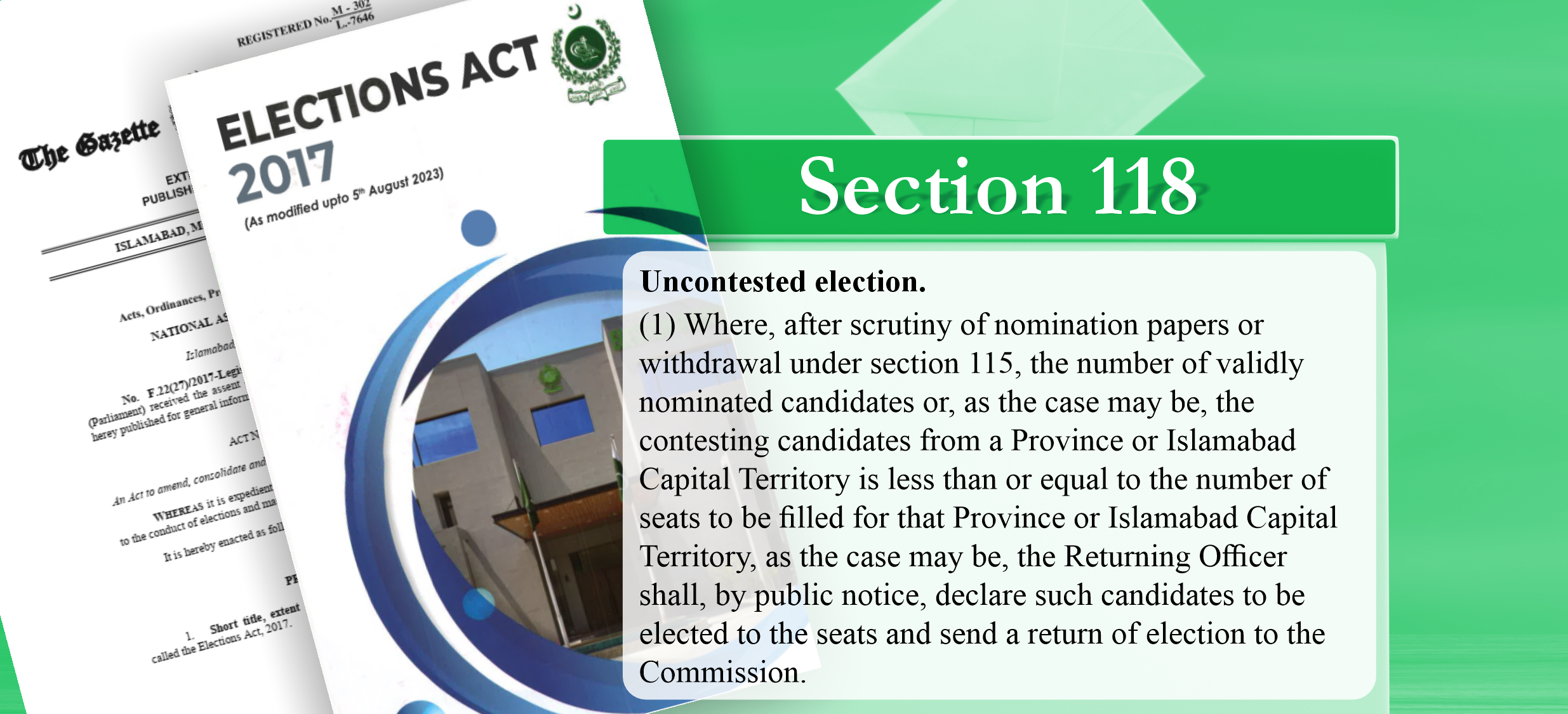
Section 118 of the Elections Act 2017 provides that where, after scrutiny of nomination papers and any withdrawals, only one candidate validly remains for a particular Senate seat, the Returning Officer declares that candidate elected by public notice — without holding any poll. The declaration is made in the same manner as any other election result.
This mirrors the general uncontested election provision in Section 75 for the National and Provincial Assemblies elections, adapted to the Senate context. No voter — including Assembly members who would have cast Senate votes — participates in the outcome.
 Why does this matter?
An uncontested Senate seat raises transparency questions that contested elections do not. When all potential candidates except one have withdrawn — or when only one was ever nominated — it is legitimate to ask what negotiations produced that outcome and whether Assembly members who would have voted on the seat had any meaningful input into the decision.
The public notice declaring the uncontested winner is the only formal record of the process.
 Source: Elections Act 2017, Section 118.
This post is part of FAFEN’s series on electoral literacy. Read more of this series here.