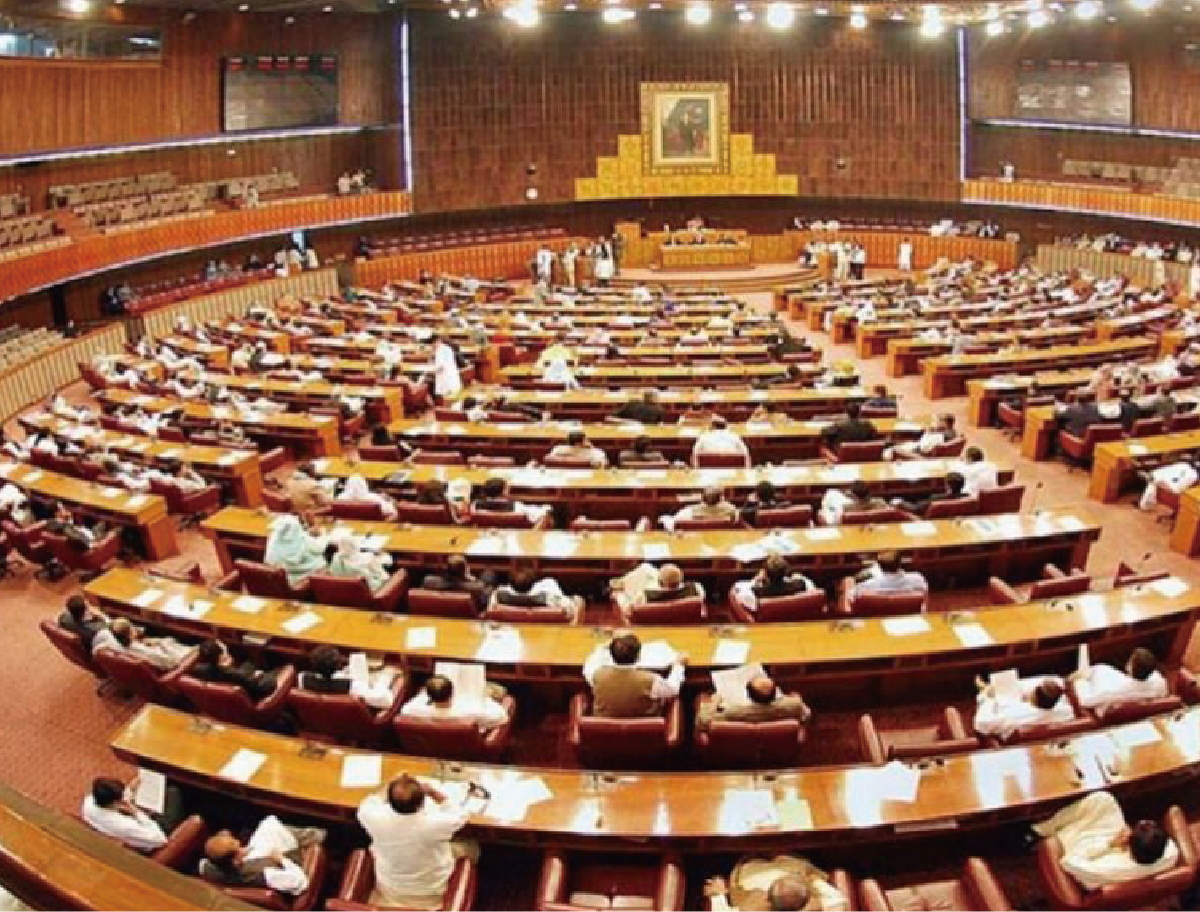
Constitutionally mandated reporting to Parliament on the implementation of the Principles of Policy is delayed by more than one year, according to FAFEN’s review of parliamentary proceedings and relevant constitutional and regulatory provisions.
Article 29(3) of the Constitution requires the President and Provincial Governors to cause reports to be prepared and laid before Parliament and the respective Provincial Assemblies regarding the federal and provincial governments’ observance and implementation of the Principles of Policy set out in Articles 31 to 40.
At the federal level, Rule 26 of the Rules of Business operationalizes this requirement. It provides that the Cabinet Division shall prepare an annual report on observance and implementation of the Principles of Policy, and the Law and Justice Division shall lay the report before both Houses of Parliament.
Rule 26(3) further requires that the report be prepared and submitted to members of the federal cabinet within 90 days of the close of the financial year.
The most recent report laid before the National Assembly was presented in December 2025 and covered financial years 2021–22 and 2022–23. On the other hand, the Cabinet Division website provides access to reports only up to financial year 2020–21. The reports for financial years 2023–24 and 2024–25 have not yet been laid before the National Assembly and are overdue.
What are the principles of policy?
Articles 31 to 40 of the Constitution set out ten Principles of Policy to guide state organs and authorities in the exercise of their functions. While these principles are not enforceable by courts and are subject to the availability of resources, they provide policy direction on key governance objectives.
These include:
- Enabling Muslims to order their lives in accordance with Islamic principles;
- Promoting local government institutions;
- Discouraging parochial, racial, tribal, sectarian, and provincial prejudices;
- Ensuring full participation of women in national life;
- Protecting marriage, family, mother, and child;
- Safeguarding the legitimate rights and interests of minorities;
- Promoting social justice and eradicating social evils;
- Advancing the economic and social well-being of the people;
- Enabling people from all parts of Pakistan to participate in the armed forces; and
- Strengthening bonds with the Muslim world and promoting international peace and security.
The delay in placing updated reports before Parliament limits legislative oversight on the government’s progress toward these constitutionally articulated policy objectives.