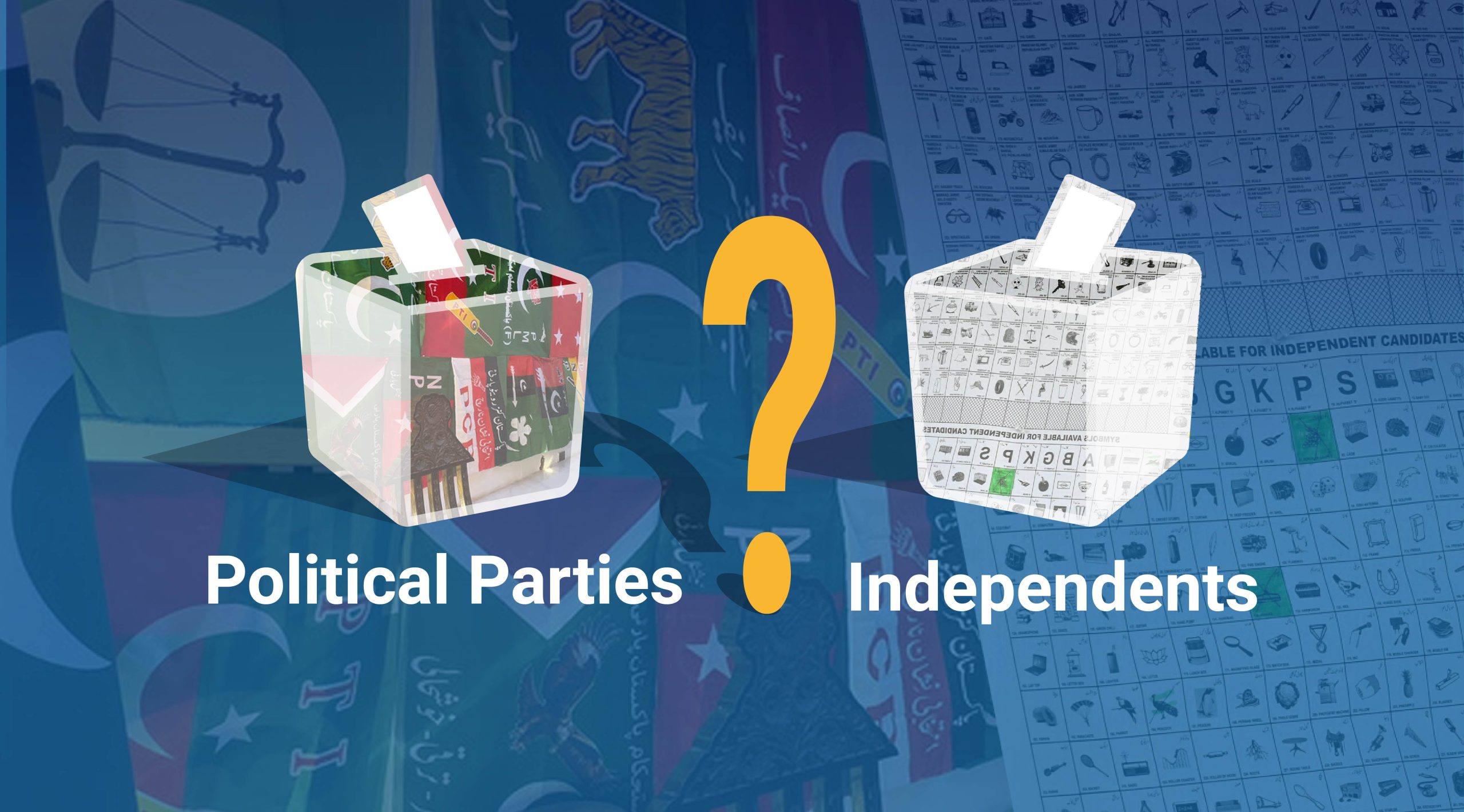
The Punjab Local Government Act, 2025 (PLGA) remains ambiguous on whether the upcoming local government elections in the province will be held on a party basis.
Enacted on October 20, 2025, the Act does not include any explicit provision allowing political parties to formally nominate candidates before the elections. However, it contains provisions for elected representatives to join political parties after elections, as well as a defection clause that prescribes consequences for voting against the directions of a political party on whose ticket a representative was elected or which party they joined after the election.
What Are Party-Based Elections?
Party-based elections are those in which candidates are formally nominated by political parties enlisted with the Election Commission of Pakistan (ECP) and contest elections using the symbols allocated to those parties.
Under Section 66 of the Elections Act, 2017, contesting candidates may submit their party affiliation certificates to the Returning Officer before the allotment of election symbols. Candidates nominated by political parties are then allotted the symbols reserved for those parties under the law.
What indications of party-based elections are missing in PLGA?
According to Section 55(6) of the PLGA, elected chairpersons, vice chairpersons, and members elected on general and reserved seats in a Union Council may join any political party within 30 days of the issuance of their election notifications.
An elected representative would only join a political party if they had contested as an independent candidate. The generic language of this section, however, appears to address all elected representatives, implying that they were elected as independents in the first place.
While the PLGA allows Union Council representatives to join political parties after elections, it does not explicitly extend this option to representatives elected on reserved seats or as chairpersons and vice chairpersons in town and municipal corporations and municipal committees. The omission of an option for elected representatives in the secondary tier of councils also adds to the confusion.
At the same time, Section 68 of the PLGA, which prescribes consequences for defection from political parties, contains language that suggests political parties may, in fact, award tickets to candidates before elections.
Additionally, while Section 51 of the PLGA provides that the Elections Act, 2017 shall apply “as nearly as possible” to local government elections, it also states that the method of election will be prescribed through rules to be issued by the provincial government. This makes it unclear to what extent the provisions of the Elections Act regarding party affiliation of candidates will apply to local government elections under the PLGA.
This ambiguity is likely to persist until the election rules are notified by the provincial government.
What Do the Courts Say About Non-Party-Based Elections?
Pakistan’s superior courts have consistently held that, under the Constitution of Pakistan, political parties have the right to participate in elections as organized entities, nominate candidates, contest elections under their symbols, and form governments if they secure a majority.
The courts have also repeatedly declared non-party-based elections to be unconstitutional. Prominent judicial precedents affirming this include Muhammad Nawaz Sharif vs. Federation of Pakistan; Benazir Bhutto vs. Federation of Pakistan; Pakistan Peoples Party vs. Government of Punjab; Owais Younus vs. Federation of Pakistan; and Akram Khan Durrani vs. Provincial Government of Khyber Pakhtunkhwa. – Written by Akram Khurram, Advocate, High Court