Constituency-level overseeing of election processes in Pakistan depends critically on the Returning Officers. These are the officials who manage nominations, oversee polling, and consolidate results in each constituency. The Elections Act 2017 creates a specific timeline for when they must be in place.
What does the law say?
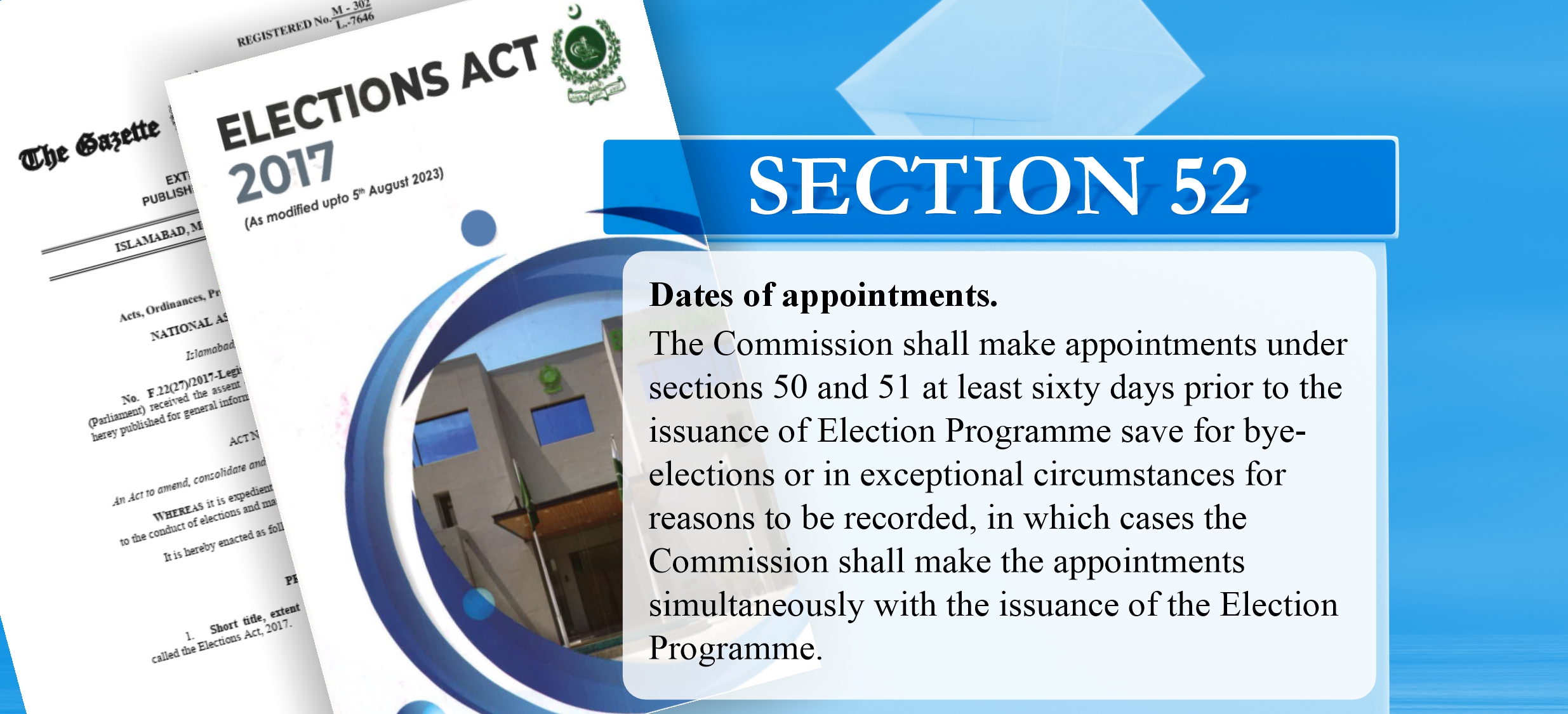
Section 52 of the Elections Act 2017 requires the Election Commission of Pakistan (ECP) to appoint District Returning Officers and Returning Officers at least 60 days before the issuance of the Election Programme. The exception is bye-elections or genuine exceptional circumstances. In either case, written reasons must be recorded when the 60-day requirement is not met. For bye-elections specifically, the appointments are made simultaneously with the Election Programme itself.
Election Programme is the schedule of various processes of an election including nomination, scrutiny and finalization of candidates, allocation of symbols and polling day.
The 60-day window exists because election administration cannot be improvised at the last moment. Returning Officers need time to verify polling station lists, coordinate with district administration, manage nomination scrutiny, and prepare logistics for polling day. An officer appointed on short notice — without adequate preparation time — is more likely to make procedural errors, and more susceptible to external pressure.
Why does this matter?
The 60-day rule creates a measurable compliance benchmark. Late appointments, particularly in competitive constituencies, are a legitimate election observation finding. When they occur without recorded justification, they raise questions about the administrative preparation for the election and the adequacy of the Returning Officer’s time to familiarise themselves with the constituency’s requirements.
 Source: Elections Act 2017, Section 52.
This post is part of FAFEN’s series on electoral literacy. Read more of this series here.