
Notwithstanding the validity of Election Commission’s decisions despite vacancies, a single member conducting hearing on an electoral complaint is not allowed by the law.
The Commission functions as benches to hear and decide the complaints or applications that it receives. Unlike the courts, the Commission is not legally permitted to form single-member benches.
What does the law say?
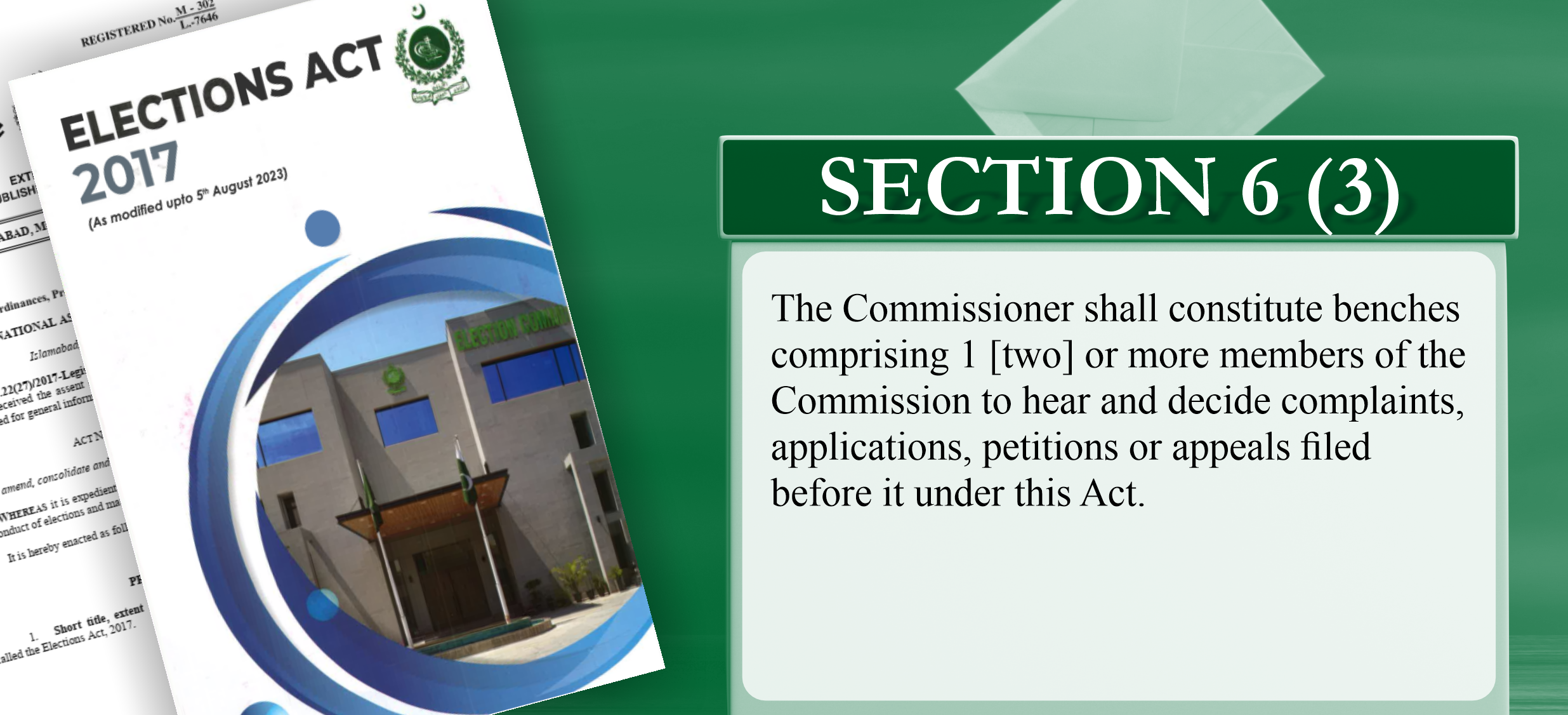
Section 6(3) of the Elections Act 2017 requires the Commissioner (Chief Election Commissioner) to constitute benches of two or more members of the Commission to hear and decide complaints, applications, petitions, or appeals filed before the Commission under the Act.
Hence, the minimum bench size prescribed under the law is two members. This was explicitly set at two by the Elections (Amendment) Act 2019, which reduced the earlier requirement of three.
Where a bench of two members disagrees, the matter does not end there. Under Section 3, a tied bench triggers a reference to the full Commission for decision.
Why does this matter?
Bench composition is a fairness guarantee, not a procedural technicality. A single decision-maker can act arbitrarily, be subject to undocumented pressure, or give no visibility into the reasoning behind a decision. A bench of at least two requires consensus for any outcome. It introduces a second perspective into every adjudication and makes dissent visible.
For anyone approaching the ECP with a complaint, petition, or appeal, this provision is a right worth knowing.
 Source: Elections Act 2017, Section 6(3), as amended by Elections (Amendment) Act 2019.
This post is part of FAFEN’s series on electoral literacy. Read more of this series here.