
Most voters are familiar with the concept of withdrawal from elections i.e. a candidate pulling out before the list of contesting candidates is finalised. Retirement happens after symbol allocation and closer to the polling day. Both are distinct legal scenarios under the Elections Act.
What does the law say?
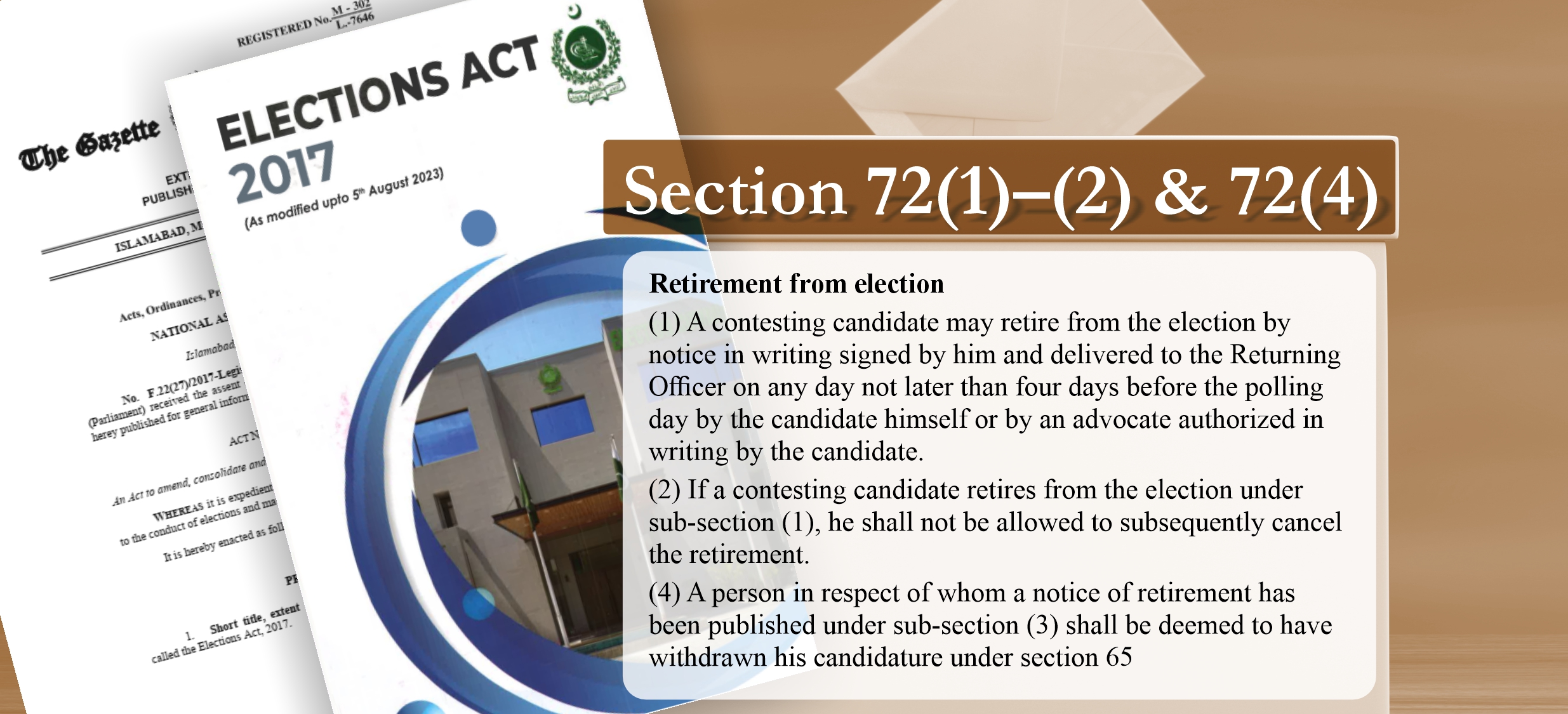
Section 72(1) of the Elections Act 2017 allows a contesting candidate, one who has already been allocated an election symbol, to retire from the election by giving signed written notice to the Returning Officer. The notice must be delivered no later than four days before polling day, either by the candidate personally or by an advocate with formal written authorisation from the candidate. Section 72(2) makes retirement, like withdrawal under Section 65, irrevocable.
Under Section 72(4), a candidate who has retired is deemed to have withdrawn their candidature under Section 65. This means the legal effect of retirement and withdrawal are equivalent.
Why does this matter?
The key difference between the two processes is on the ballot paper. A candidate who withdrew before the final list was published does not appear on the ballot paper at all. A candidate who retired after symbol allocation does, their name remains printed on the ballot even though they are no longer in the race.
FAFEN’s election observation found that the retired candidates received over 200,000 votes during the General Election 2024. It remains a theoretical possibility that a retired candidate could even receive the highest number of votes in a constituency but those votes would have no legal effect on the result.
The four-day deadline for retirement is absolute. A retirement notice delivered more than four days before polling day is valid. One submitted fewer than four days before has no legal effect and the candidate remains a contesting candidate.
Source: Elections Act 2017, Sections 72(1)–(2) and 72(4).
This post is part of FAFEN’s series on electoral literacy. Read more of this series here.