
Before each election, it is common to see reports that major candidates have filed multiple nomination papers. Some voters interpret this as an attempt to game the system. It is not. Filing multiple nomination papers is legally permissible under the Elections Act 2017 and is, in fact, a deliberate protection against rejection on technical grounds.
What does the law say?
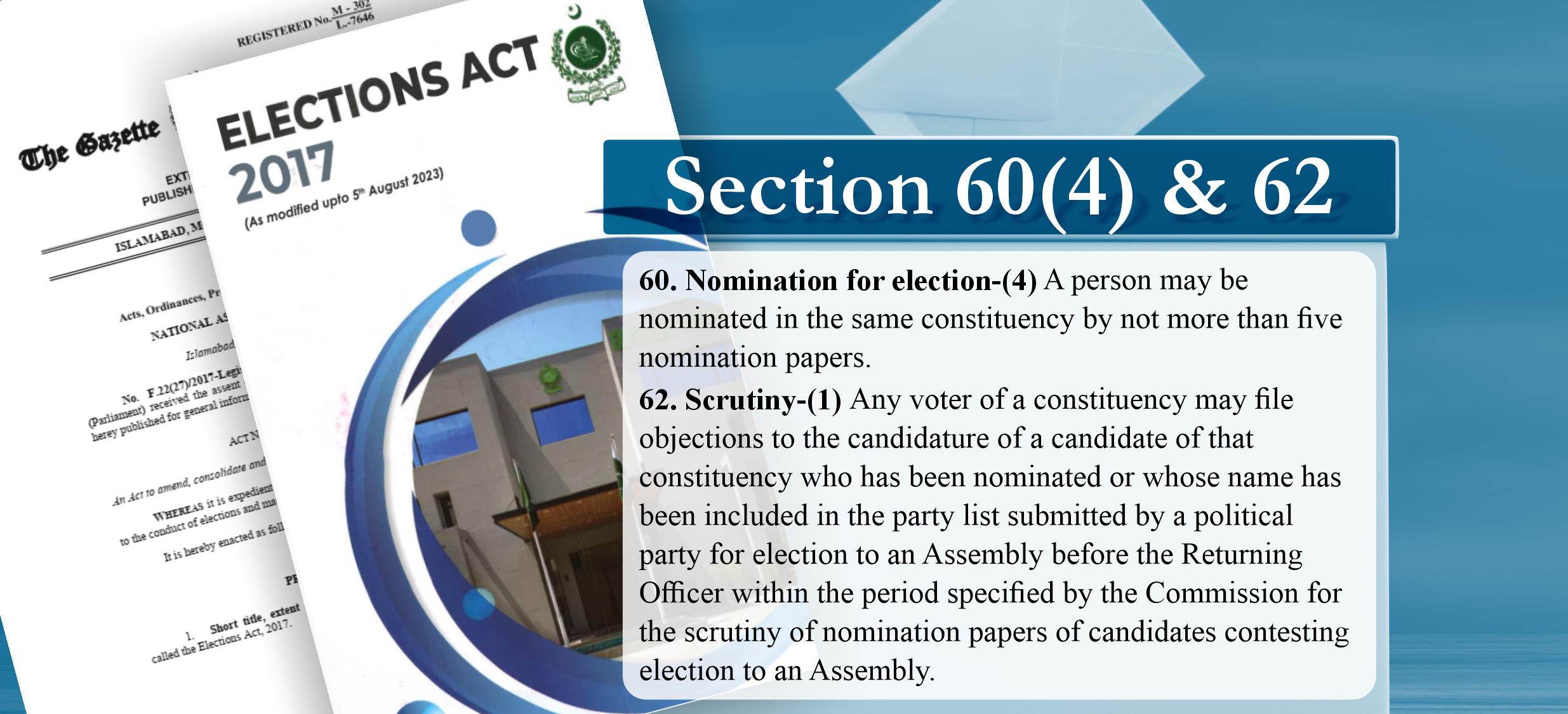
Section 60(4) of the Elections Act 2017 permits a candidate to file up to five nomination papers in the same constituency. Each paper requires a proposer and a seconder who are registered voters in that constituency, and each must be submitted separately.
The protective function of this provision becomes clear when read alongside Section 62, which governs scrutiny. A Returning Officer may reject a nomination paper for defects in the proposer’s or seconder’s voter registration, omission of required documentation, or failure to meet other legal requirements. Section 62(9)(ii), however, provides that rejection of one nomination paper does not invalidate the candidacy if any other valid paper has been filed. Multiple papers provide multiple chances for at least one to survive scrutiny.
Why does this matter?
Candidates with limited legal knowledge — particularly first-time contestants — would be well advised to file more than one nomination paper unless they are certain every requirement has been met. Filing up to the permitted five improves their chances of remaining in the race beyond the scrutiny stage.
Citizens should also be careful when they come across news or social media posts reporting rejection of a nomination. In many cases, it is the rejection of just one of several papers filed, and the candidate may still be in the running.
Source: Elections Act 2017, Sections 60(4) and 62.
This post is part of FAFEN’s series on electoral literacy. Read more of this series here.