The standard process for preparing Pakistan’s electoral rolls is detailed in the Elections Act. But, Section 49 creates a lawful route to deviate from it, albeit only with transparency.
Electoral roll preparation in Pakistan follows a prescribed sequence involving the steps below:
- Registration Officers compile preliminary rolls on the basis of data transmitted by NADRA
- a 30-day objection window is opened
- Revising Authority decides claims and objections
- Final electoral roll is published
However, in exceptional circumstances, this process may be deviated from.
What does the law say?
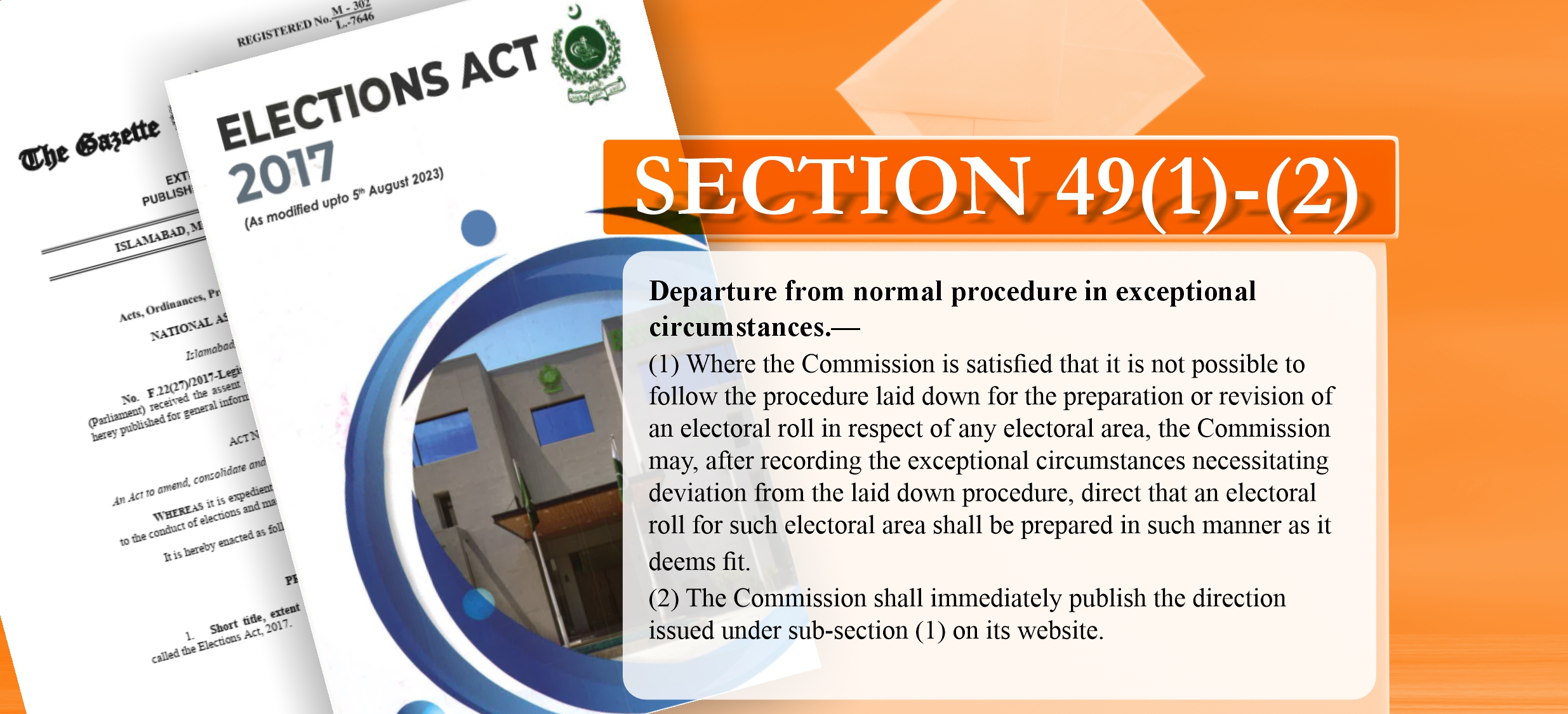
Section 49(1) of the Elections Act 2017 allows the Election Commission of Pakistan (ECP) to direct that an electoral roll for any electoral area be prepared in whatever manner it deems fit, when the Commission is satisfied that it is not possible to follow the standard procedure. The Commission must, before issuing such a direction, record the exceptional circumstances that make the deviation necessary.
Still, section 49(2) adds an immediate transparency requirement that the Commission must publish the official directions to disregard the due process on its website without delay including the exceptional circumstances that necessitate such directions.
Why does this matter?
Section 49 exists for situations where standard roll preparation is genuinely impossible. Post-disaster constituencies, areas with limited registration facilities, or areas where civil unrest has disrupted normal administrative processes are the kinds of circumstances the provision envisages. The provision also underscores that electoral processes should continue even in exceptional circumstances.
The immediate publication requirement in Section 49(2) is the safeguard. It prevents the ECP from using Section 49 quietly and without accountability.
Source: Elections Act 2017, Sections 49(1)–(2).
This post is part of FAFEN’s series on electoral literacy. Read more of this series here.