
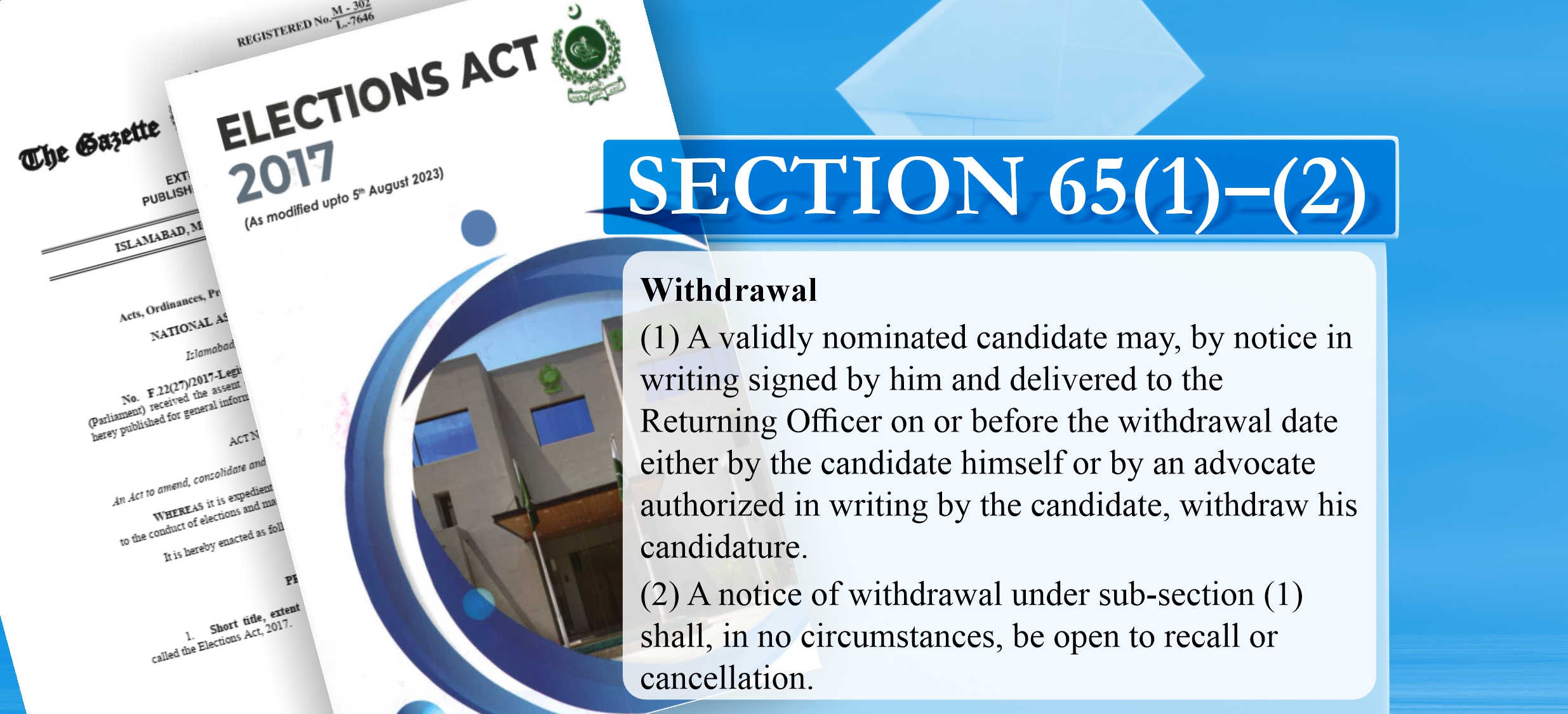
In every election cycle, many a candidates withdraw even before the final list of candidates is published. While the Elections Act 2017 permits validly nominated contestants to withdraw their candidature at this stage, it also makes the decision absolute and irrevocable.
What does the law say?
Section 65(1) of the Elections Act 2017 allows a validly nominated candidate to withdraw their candidature by written notice signed by them and delivered to the Returning Officer on or before the withdrawal date as notified in the Election Programme. The notice must be delivered either by the candidate personally or by an advocate who has been formally authorised in writing by the candidate.
Section 65(2) unambiguously provides that a notice of withdrawal shall in no circumstances be open to recall or cancellation. Once submitted and acknowledged by the Returning Officer, the withdrawal is legally final.
Why does this matter?
Section 65(2) is one of the most consequential provisions for candidates who are subjected to election-time coercion. Candidates who are pressured to withdraw and who sign the withdrawal notice cannot undo the legal effect of that signature.
The practical protection for candidates under pressure is to not sign. Section 65(1)’s requirement that the notice be personally signed by the candidate — or by a specifically authorised advocate — means that no one else can validly submit a withdrawal on a candidate’s behalf without written authorisation. Any person who delivers a withdrawal notice claiming to represent a candidate, without written authorisation, has no standing to do so and the notice has no legal effect.
Source: Elections Act 2017, Section 65(1)–(2).
This post is part of FAFEN’s series on electoral literacy. Read more of this series here.