
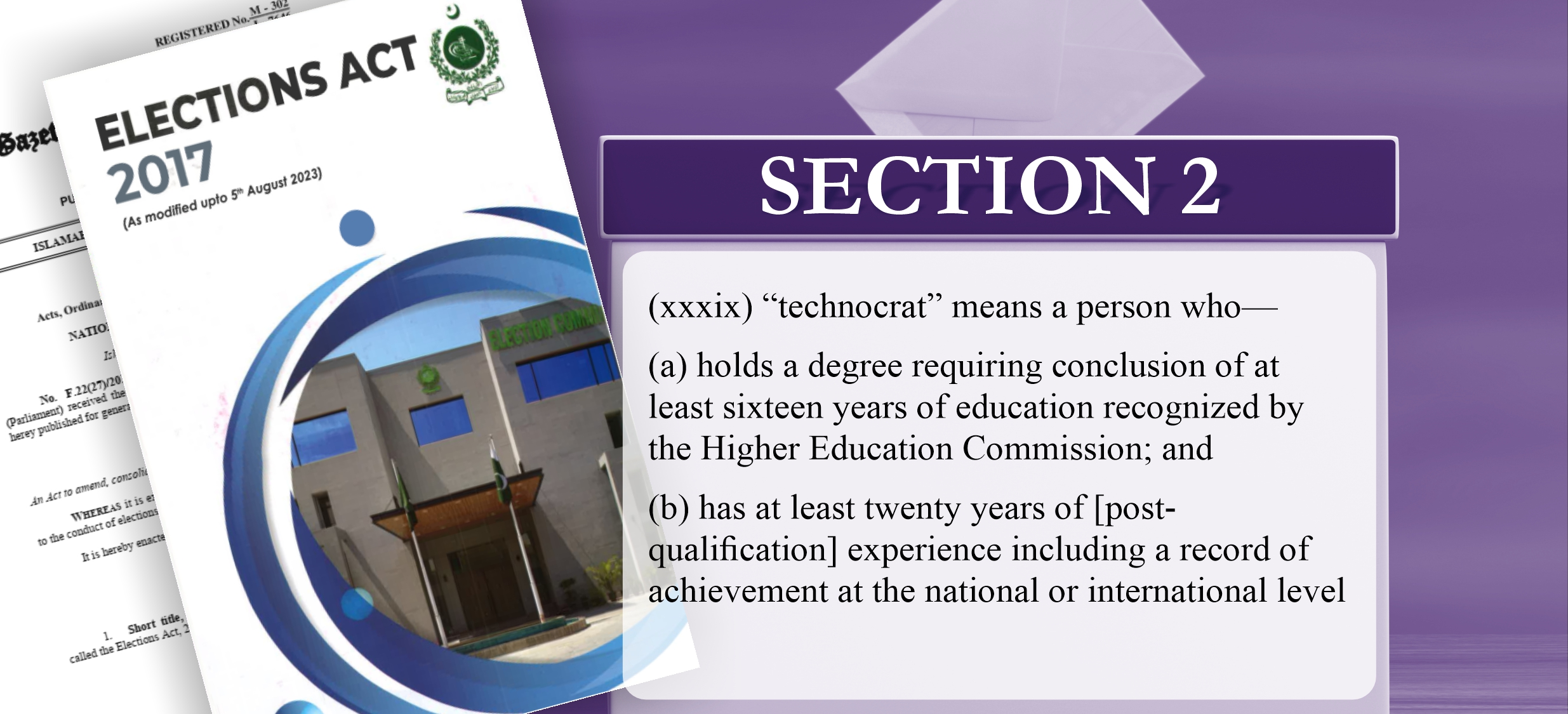
The 2023 amendment to the Elections Act inserted one word into the technocrat definition — “post-qualification” — and that word changes everything.
Pakistan’s Senate includes seats for technocrats — specialists in fields such as economics, medicine, engineering, and technology. The rationale is to bring professional expertise into the Upper House of the Parliament. The Elections Act 2017 defines this category with greater specificity than most candidates realize.
What does the law say?
Section 2(xxxix) of the Elections Act 2017 defines “technocrat” as a person who holds a degree requiring at least 16 years of education recognized by the Higher Education Commission (HEC), and who has at least 20 years of post-qualification experience including a record of achievement at the national or international level.
The Elections (Second Amendment) Act 2023 inserted the word “post-qualification” in this definition to clarify that the 20-year experience clock starts from the date the qualifying degree was completed — not from birth, not from the beginning of any education, and not from unrelated earlier work.
The “record of achievement at the national or international level” is a second substantive requirement. A candidate who has worked in their field for 20 years but cannot document recognizable achievement — publication, award, significant appointment, or comparable evidence — may not meet the definition.
Why does this matter?
Reserved Senate seats for technocrats are designed to bring specialized knowledge into the Parliament, not simply to reward professional longevity. The dual threshold — degree plus post-qualification experience plus documented achievement — is meant to distinguish genuine specialists from candidates who happen to hold professional qualifications.
As with the aalim definition, nomination papers for technocrat seat candidates are public documents accessible under Section 60(7). Voters and journalists can inspect the credentials submitted and measure them against the Section 2(xxxix) standard. The 2023 insertion of “post-qualification” signals that Parliament considered the existing definition too easily satisfied and tightened it.
Source: Elections Act 2017, Section 2(xxxix); Elections (Second Amendment) Act 2023.
This post is part of FAFEN’s series on electoral literacy. Read more of this series here.