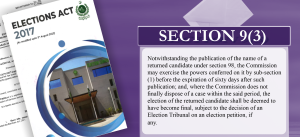
Winning an election in Pakistan is not the same as being confirmed as a Member. Between announcement of polling result and publication of the winner’s name in the official Gazette — which is the act that formally constitutes them a Member — stands the legal requirement of filing an election expense return.
What does the law say?
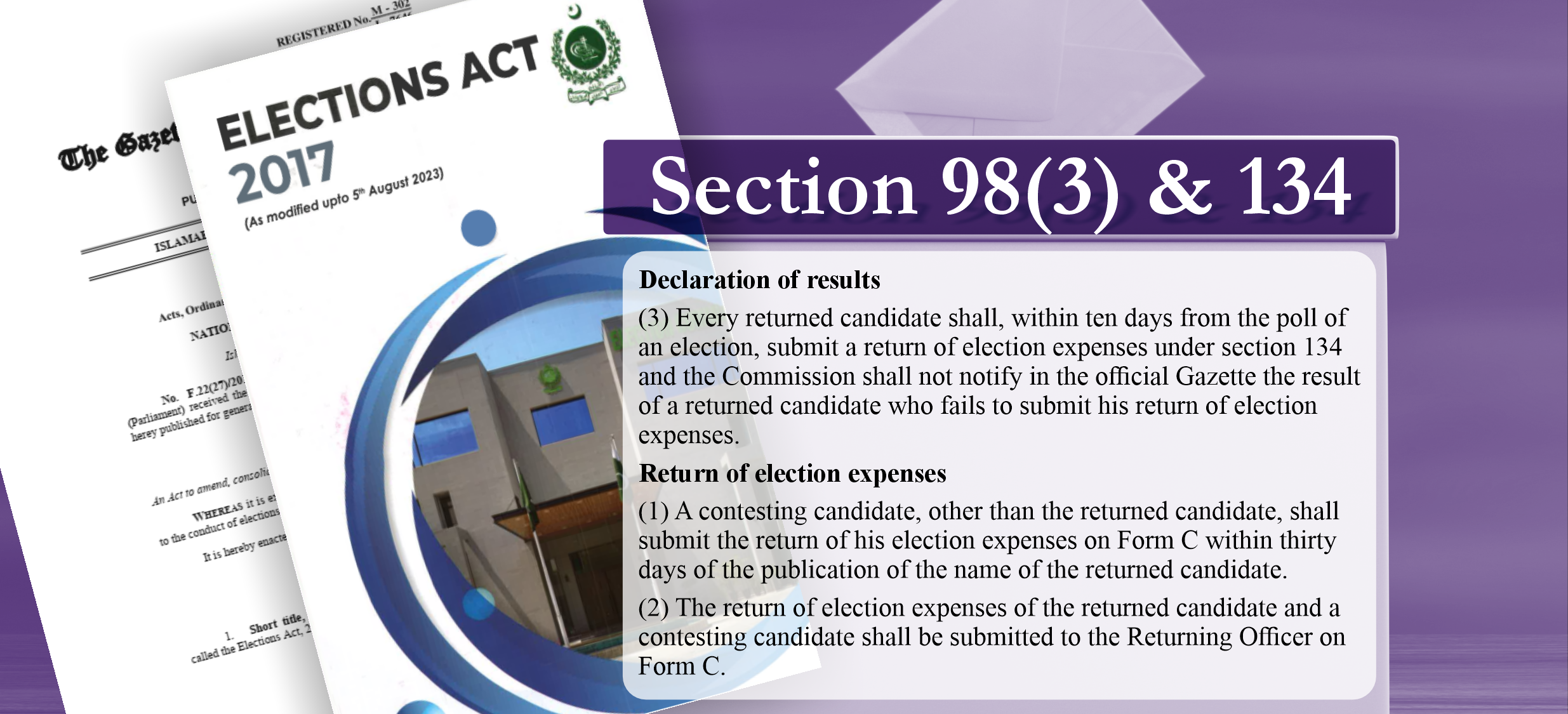
Section 98(3) of the Elections Act 2017 prohibits the Election Commission of Pakistan (ECP) from publishing in the official Gazette the result of a returned candidate who has not submitted their election expense return within 10 days of the poll. Without Gazette publication, the candidate is not yet formally a Member. The expense return must be submitted within 10 days of polling day — not 10 days from the announcement of the result. The timeline begins on polling day itself.
Filing election expense returns is not only for the winning candidates but for all the candidates. However, their timelines differ. Losing candidates have to submit these returns within 30 days of the date of gazette notification of returned candidate. Section 134 provides the process for submission of these returns.
Why does this matter?
 This requirement creates a direct financial accountability mechanism. The ECP’s formal confirmation depends on the expense return being filed.
For voters, this provision means that the official Gazette notification of a winner’s name — which can be checked on the ECP’s website — is the definitive confirmation that the expense return was filed on time. If a result has been announced but the name has not appeared in the Gazette after more than 10 days, the expense filing timeline may be the explanation.
 Source: Elections Act 2017, Sections 98(3) and 134.
This post is part of FAFEN’s series on electoral literacy. Read more of this series here.