Election petitions are public-interest proceedings. The Elections Act limits the petitioner’s control over unilateral withdrawal by conditioning it to the tribunal’s permission and payment of costs to respondents. The law also stipulates provisions in case of death of petitioner(s) or a respondent.
What does the law say?
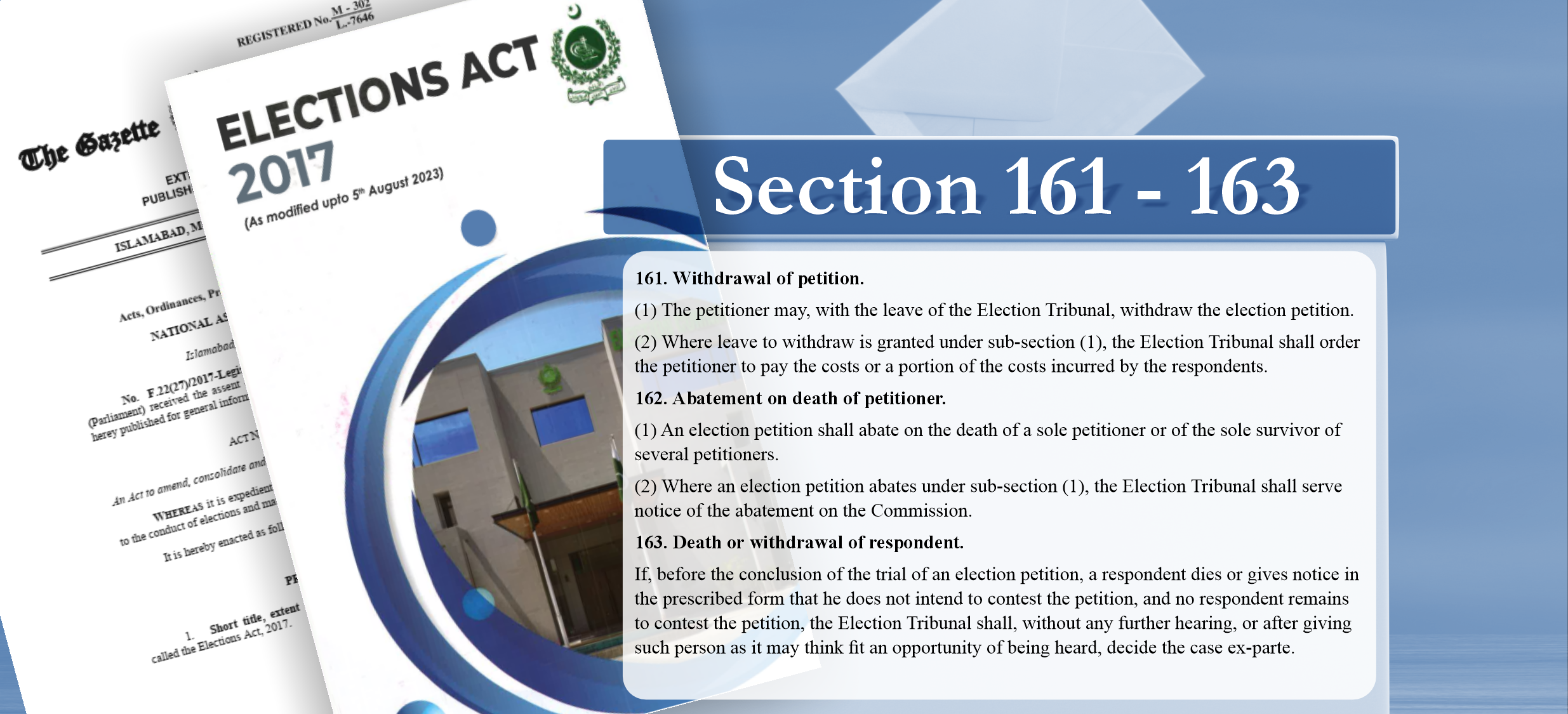
Section 161(1) of the Elections Act 2017 requires the petitioner to obtain the leave — formal permission — of the Election Tribunal before withdrawing the petition. The tribunal is not required to grant leave automatically. Section 161(2) requires the tribunal to order the petitioner to pay costs, either full or a portion, to the respondents if leave to withdraw is granted.
Section 162(1) provides that where the petitioner dies, the election petition abates if the petitioner was the sole petitioner or the last surviving one. However, Section 162(2) requires the tribunal to serve notice of abatement on the ECP.
Section 163 covers the respondent’s side by providing that if a respondent withdraws or dies before conclusion of the trial, the petition continues against any remaining respondents.
Why does this matter?
The election of a Member of Parliament or Provincial Assembly affects every voter in the constituency, not only the petitioner. The restrictions on withdrawal and the abatement notice requirement prevent election petitions from being settled or abandoned without accountability, at least legally.
 Source: Elections Act 2017, Sections 161–163.
This post is part of FAFEN’s series on electoral literacy. Read more of this series here.