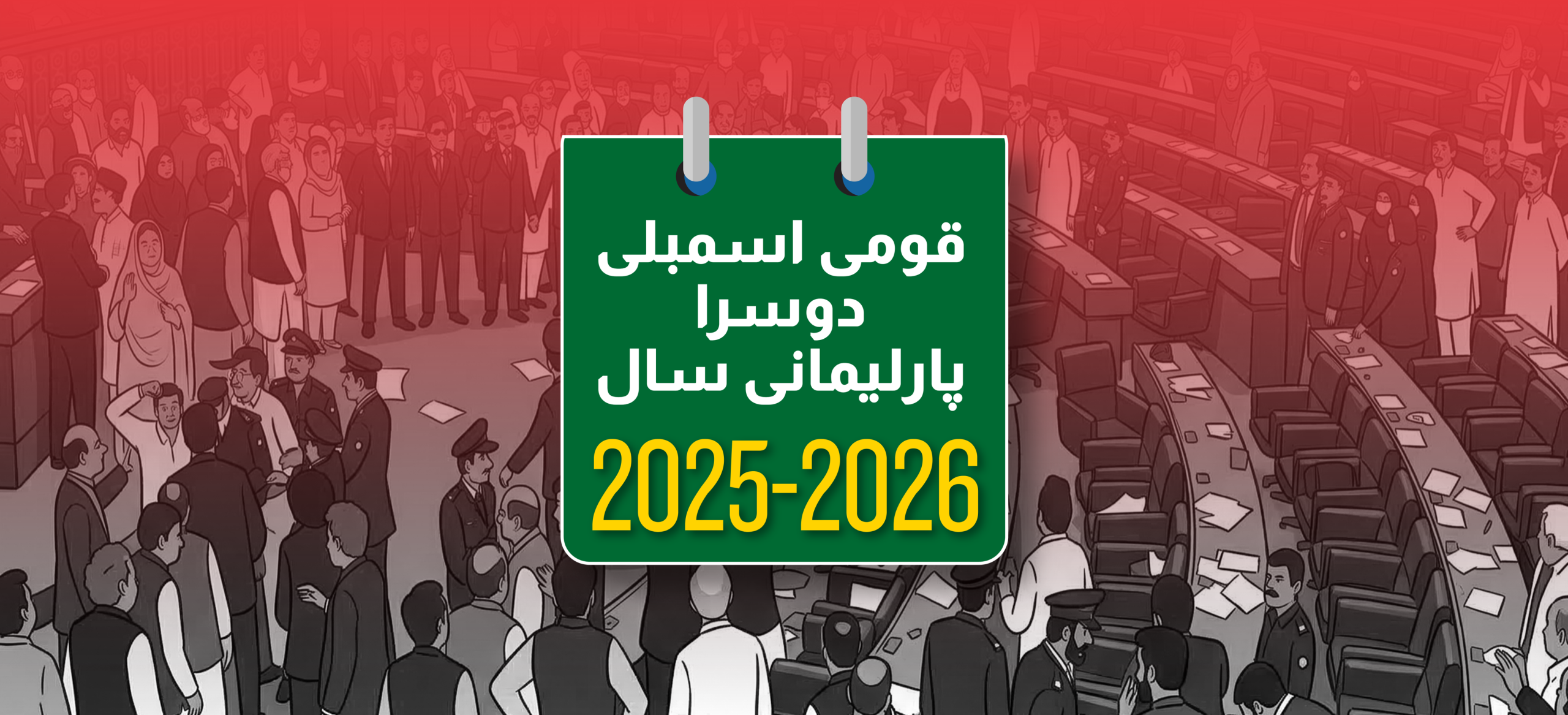
Pakistan’s National Assembly saw at least 16 separate incidents of protests, walkouts, and disruptions during its second parliamentary year, according to Free and Fair Election Network (FAFEN) data. The overwhelming majority of these—13 incidents—were staged by independent candidates backed by the Pakistan Tehreek-e-Insaf (PTI), operating under the Sunni Ittehad Council (SIC).
The disruptions weren’t just noise; they frequently stopped the House from functioning. Protesters tore up papers, gathered around the Speaker’s dais, and chanted slogans during key proceedings, including the Budget 2025-26 speech by the Finance Minister.
What Were the Protests About?
Reasons for the walkouts varied, highlighting the political tensions of the year:
- The Budget:Â The Finance Minister’s budget presentation and his winding-up speech were both interrupted.
- Legislation: Protests erupted over the proposed and passed Twenty-Seventh Constitutional Amendment.
- Ministerial Absence:Â Members of the Jamiat Ulema-e-Islam (JUI-F) walked out to protest that no ministers were present in the House to answer questions.
- Unresolved Issues: The Pakistan Peoples Party Parliamentarians (PPPP) staged two walkouts—one citing unresolved issues from a previous sitting, and another against the government’s use of an Ordinance.
- Media Freedom:Â In a rare show of solidarity, journalists covering the Assembly walked out three times. These protests were against an alleged incident of misbehaviour outside Adiala Jail and the termination of journalists by media houses without following proper procedure.
Recurring Disruptions
The SIC’s protests were the most persistent. In one sitting, members not only chanted slogans and thumped desks but also pointed out the lack of a quorum, a procedural move that can halt proceedings. In another heated moment, lawmakers made speeches unrelated to the House business, prompting the Deputy Speaker to warn that he would proceed according to the Constitution and Rules.
The data paints a picture of a House frequently at odds with itself, where legislative business was repeatedly interrupted by political point-scoring and protests.