
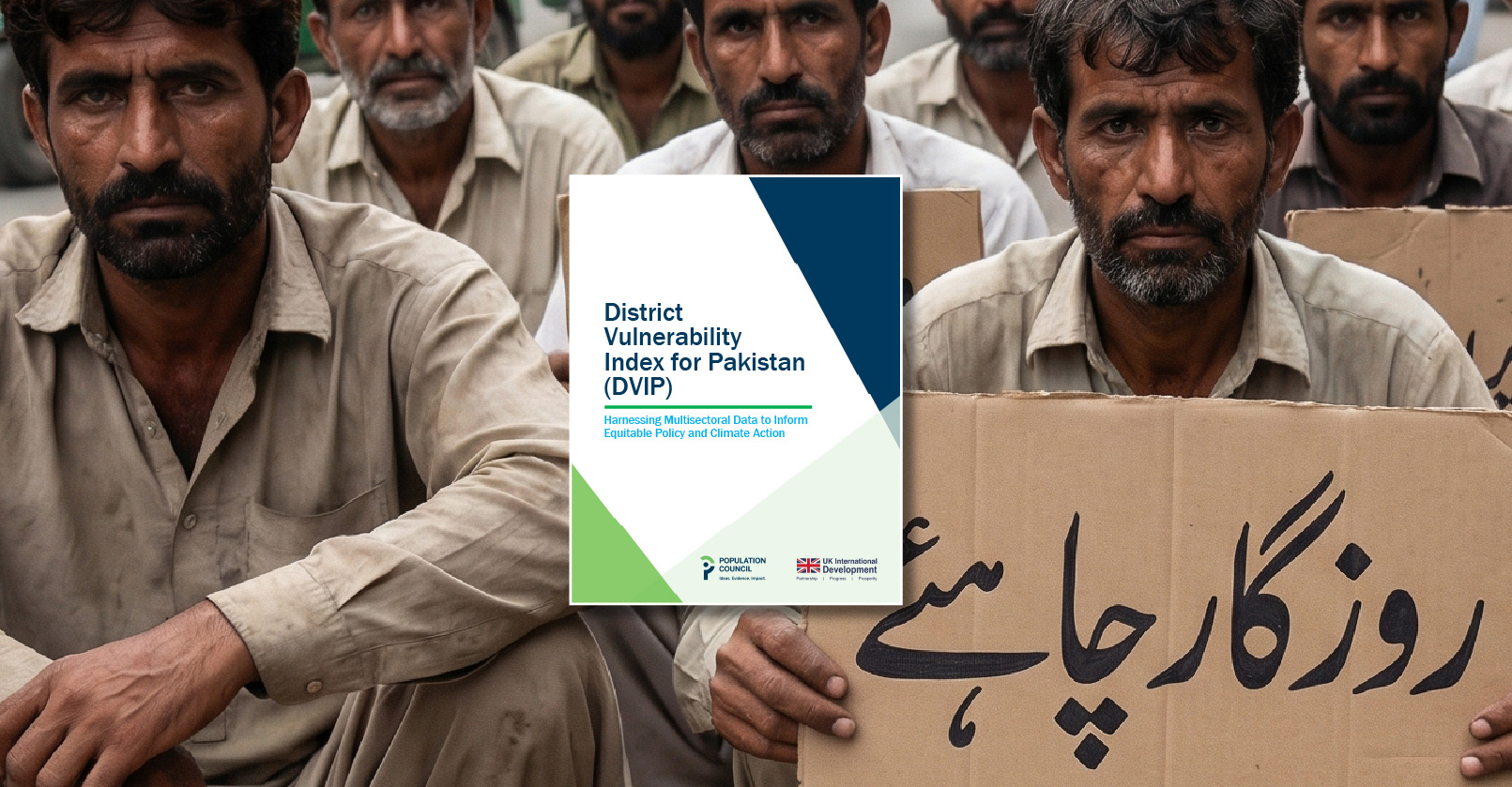
According to the District Vulnerability Index Pakistan (DVIP) 2025 report by the Population Council, 36 out of 129 districts in Pakistan have an unemployment-to-population ratio exceeding 20 percent.
Among these districts, Panjgur in Balochistan recorded the highest unemployment-to-population ratio at 36 percent, while Karachi Central in Sindh had the lowest ratio nationally at approximately six percent.
What is the unemployment-to-population ratio and how does it differ from the unemployment rate?
What we usually hear as the measure of unemployment in a country is its unemployment rate, which is different from unemployment-to-population ratio.
The unemployment rate, which stood at 7.1 percent according to the latest Labour Force Survey conducted by the Pakistan Bureau of Statistics, measures the proportion of unemployed persons within the “labour force”.
In contrast, the unemployment-to-population ratio measures the proportion of unemployed persons within the “potential working-age population”, irrespective of labour force participation. While the working-age population represents the total potential pool of workers, the labour force includes only those who are employed or actively seeking work.
According to the 2023 population census, Pakistan’s working-age population (10 to 64 years) exceeds 163 million, whereas the labour force comprises approximately 83.1 million individuals, or about half of the working-age population.
Which provinces and districts record higher unemployment-to-population ratios?
In Balochistan, 31 districts recorded unemployment-to-population ratios ranging from 12.5 percent in Sohbatpur to 35.9 percent in Panjgur. Six districts fell between 10.1 percent and 20 percent, 21 districts between 20.1 percent and 30 percent, and four districts exceeded 30 percent. No district in the province reported a ratio below 10 percent.
Punjab’s 36 districts recorded ratios ranging from 6.8 percent in Gujrat to 17.2 percent in Muzaffargarh. Twelve districts fell below 10 percent, while the remaining 24 districts ranged between 10.1 percent and 20 percent. No district in Punjab exceeded the 20 percent threshold.
In Sindh, the unemployment-to-population ratio ranged from 5.7 percent in Karachi Central to 22.7 percent in Sujawal. Six districts recorded ratios below 10 percent, 22 districts fell between 10.1 percent and 20 percent, and one district fell between 20.1 percent and 30 percent.
Khyber Pakhtunkhwa’s 32 districts recorded ratios ranging from 9.4 percent in Abbottabad to 29.5 percent in North and South Waziristan. One district fell below 10 percent, 21 districts recorded ratios between 10.1 percent and 20 percent, and 10 districts fell between 20.1 percent and 30 percent. No district exceeded 30 percent.
In the Islamabad Capital Territory, the unemployment-to-population ratio stood at 8.4 percent.