Improving Pakistan’s election laws is not just a matter of political will. The ECP is legally obligated by the Elections Act to examine the legal framework governing elections and recommend amendments to the government.
Public debate on electoral reform typically centers on Parliament, political parties, and civil society. What is less commonly known is that the Elections Act 2017 places a direct statutory obligation on the Election Commission of Pakistan (ECP) to examine election laws and propose improvements — independently, and on its own initiative.
What does the law say?
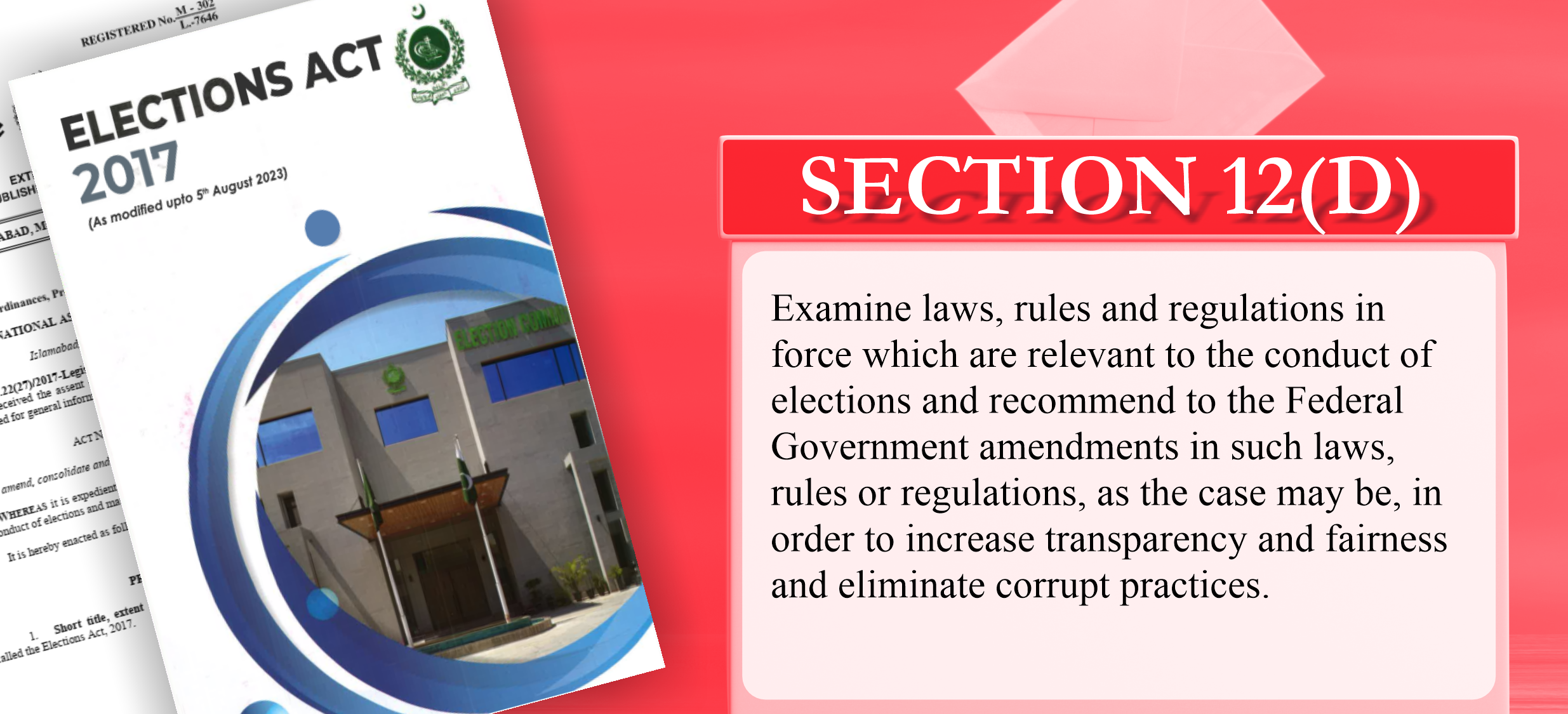
Section 12(d) of the Elections Act 2017 requires the Commission to examine laws, rules, and regulations in force that are relevant to the conduct of elections and to recommend to the Federal Government such amendments as would increase transparency and fairness and eliminate corrupt practices. The law, however, leaves it up to the Commission to determine the periodicity of this exercise.
This is a mandatory function, not a discretionary one as the Section 12 uses the word “shall” in describing the activities to be carried by the Commission “from time to time” in a manner “as it may deem fit”. The section also requires the ECP to conduct voter awareness campaigns, train election officials, and advise educational institutions on electoral knowledge programmes.
Why does this matter?
Citizens, civil society organisations, and journalists can use this provision as a basis for accountability. The ECP’s annual report — published each year under Section 16 and available on the Commission’s website — is the document where evidence of this function should appear. Citizens reading that report can look specifically for whether the Commission has used Section 12(d) and what legislative changes, if any, it has recommended to the Federal Government. Tracking this over successive reports builds a public record of whether the Commission is meeting its own statutory obligations on electoral reform.
 Source: Elections Act 2017, Section 12(d).
This post is part of FAFEN’s series on electoral literacy. Read more of this series here