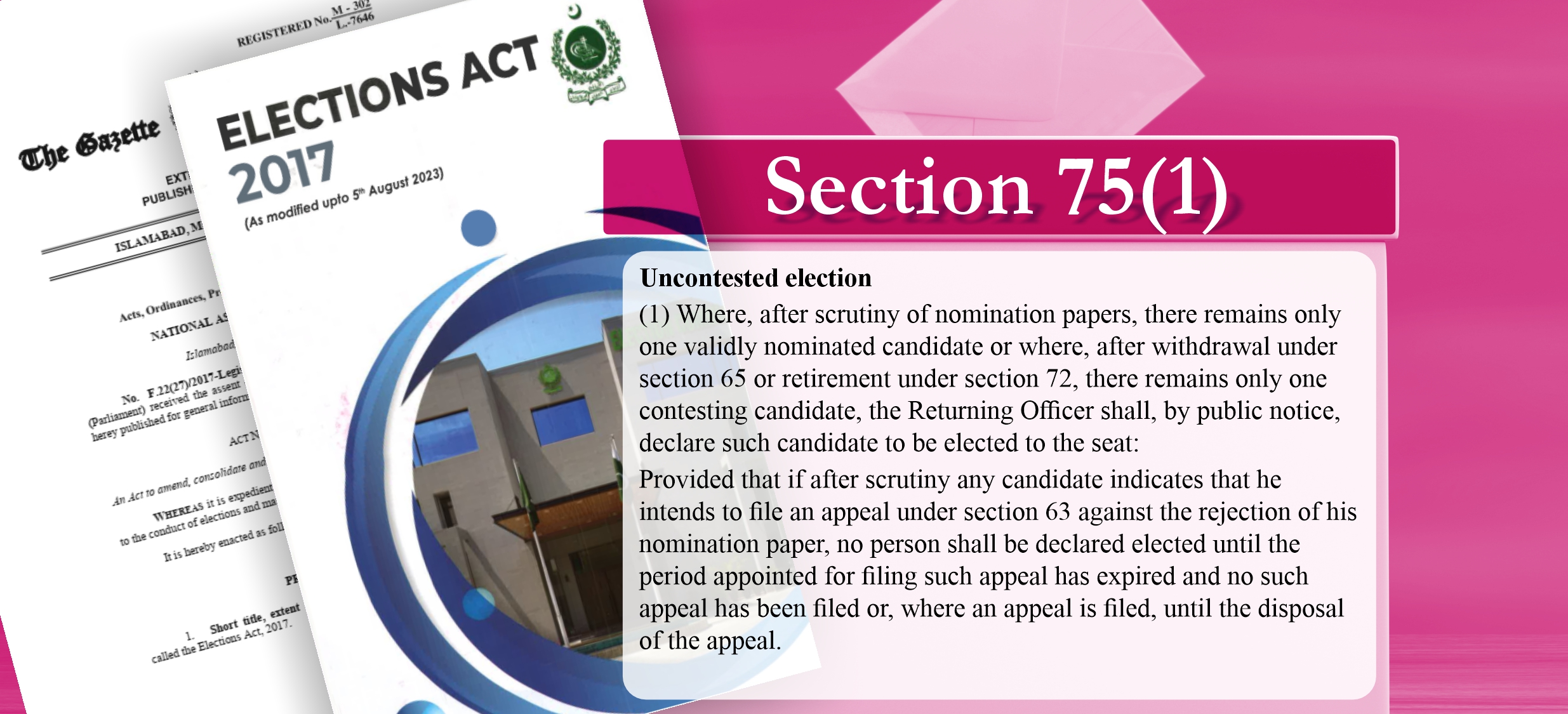
An uncontested election — where only one candidate validly remains after scrutiny and withdrawals — might appear to be a simple administrative formality. Section 75 of the Elections Act 2017 makes it clear that even in this scenario, procedural protections cannot be bypassed. If any of the nominated candidates indicates an intention to file an appeal against rejection of his or her nomination paper, the uncontested election cannot be finalised until the appeal duration is over, or if appeal is filed until it is resolved.
What does the law say?
Section 75(1) of the Elections Act 2017 provides that where, after scrutiny, only one validly nominated candidate remains, or where withdrawals reduce the field to one contesting candidate, the Returning Officer shall declare that candidate elected by public notice. However, the proviso to Section 75(1) imposes a hold where any rejected candidate has indicated an intention to file an appeal against the scrutiny decision , the Returning Officer cannot declare the sole remaining candidate elected until the appeal period has expired and no appeal has been filed, or where an appeal is filed until the appeal is disposed of.
The appeal period under Section 63 is fixed by the Commission as part of the Election Programme. Only after this window closes — or after the Appellate Tribunal decides any filed appeal — can the Returning Officer proceed to declare the uncontested candidate elected.
Why does this matter?
The proviso in Section 75(1) protects the rights of rejected candidates to challenge their exclusion through a formal legal process. An uncontested candidate cannot leverage the absence of other valid nominees to accelerate their own declaration and foreclose the appeal process.
For voters, this provision means that an uncontested election may still take several days to finalise — depending on whether appeals are filed and how quickly the Appellate Tribunal decides them. The absence of competition does not mean the absence of due process.
 Source: Elections Act 2017, Section 75(1) and its proviso.
This post is part of FAFEN’s series on electoral literacy. Read more of this series here.