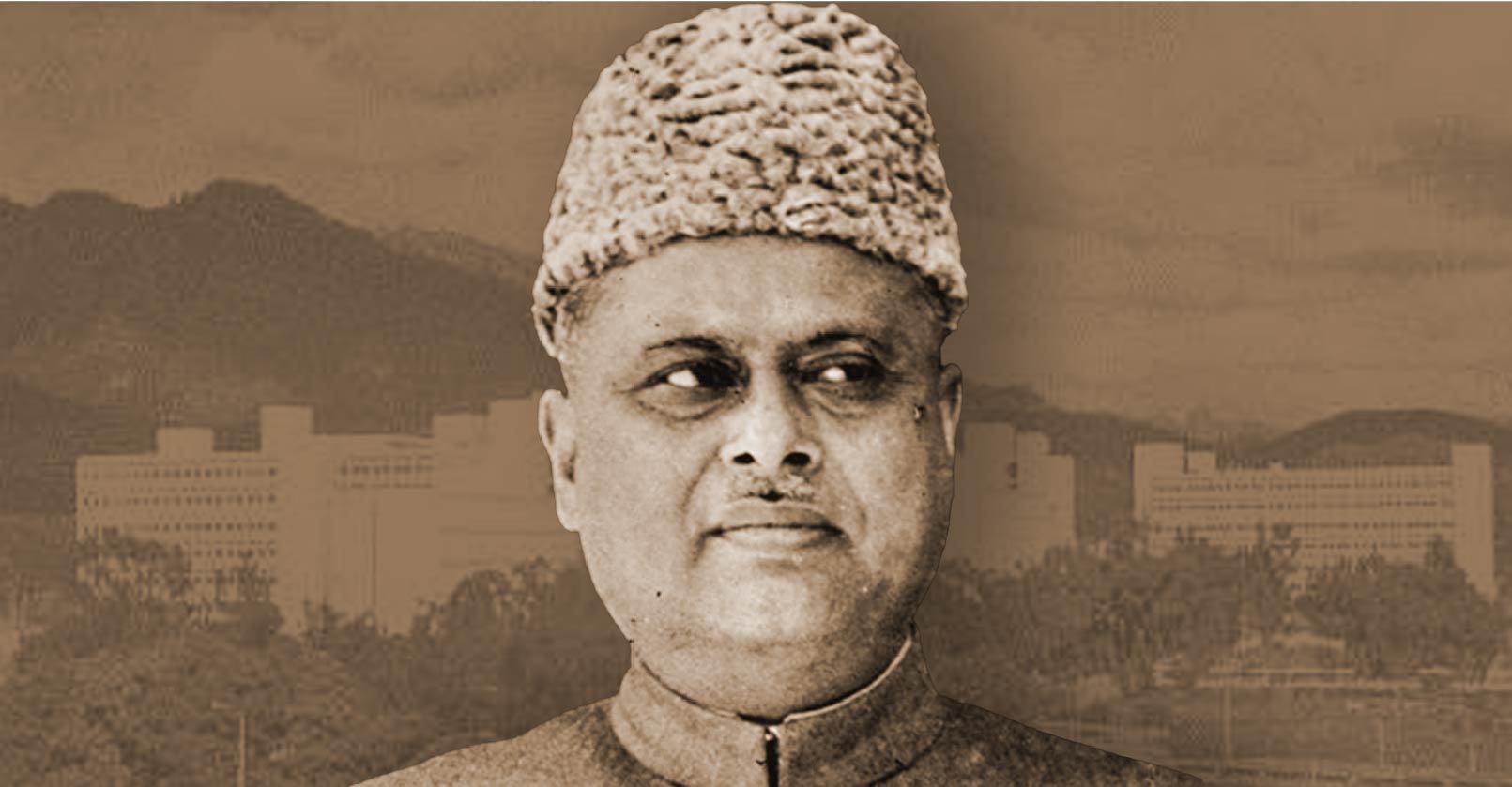
Since August 1947, Pakistan has had 33 Prime Ministers, with an average tenure of around one year and seven months, and none completing a full constitutional term. Even within this tumultuous history, one Prime Minister stands out for an exceptionally brief time in office. He is Nurul Amin, who served as Pakistan’s eighth Prime Minister for only 13 days, from December 7 to December 20, 1971. While in office, he faced the gravest political crises in the country’s history, marked by the final phase of the 1971 Indo-Pak war and the impending secession of East Pakistan.
What were his political credentials?
Hailing from the Mymensingh district of East Bengal, Nurul Amin belonged to the old guard of the All-India Muslim League and its successor, the Pakistan Muslim League. He served as the Provincial President of Muslim League in Bengal. In 1960s, he became part of, and later headed, the National Democratic Front (NDF), which was a political alliance formed under the leadership of Hussain Shaheed Suhrawardy in opposition to the military rule of Ayub Khan. NDF was later merged into Pakistan Democratic Party (PDP).
Before Partition, Nurul Amin served on the Mymensingh District Board and was elected Speaker of the Bengal Legislative Assembly in 1945. After the creation of Pakistan, he was elected to the first Constituent Assembly, where he was at times nominated to the Panel of Chairpersons to preside over proceedings in the absence of the Speaker and Deputy Speaker. He also served as Minister for Civil Supplies.
Nurul Amin also holds the distinction of being the longest-serving Chief Minister of East Bengal, serving from 1948 to 1954. The province was later renamed East Pakistan following the implementation of the one-unit formula. Ideologically, he was critical of Bengali nationalist politics and also opposed the language movement in East Pakistan.
How did he become Prime Minister and Vice President?
In the 1970 general elections, Nurul Amin won from the NE-83 Mymensingh-8 constituency as a PDP candidate, securing more than 78 percent of the vote. His Awami League opponent finished second with about 19 percent of the vote. He was one of only two non–Awami League candidates elected from East Pakistan in the 1970 elections.
The PDP had emerged from the merger of the National Democratic Front led by Nurul Amin, the Nizam-e-Islam Party (an East Pakistan-based faction of Jamiat Ulema-e-Islam), Asghar Khan’s Justice Party, and a faction of the Awami League led by Nawabzada Nasrullah Khan.
On December 7, 1971, the then Chief Martial Law Administrator and President, Yahya Khan, appointed Nurul Amin as the last Prime Minister of undivided Pakistan. At the same time, Zulfikar Ali Bhutto was appointed Deputy Prime Minister. Notably, Nurul Amin was not an elected Prime Minister, as no such office existed under the Legal Framework Order (LFO) of 1970, which governed the general elections and the process of constitution-making. His appointment was made through an executive order during the final days of the 1971 war.
How did his premiership come to an end?
Following the end of war and cessation of East Pakistan, Yahya Khan resigned on December 20, 1971, and so did Prime Minister Nurul Amin and Deputy Prime Minister Zulfikar Ali Bhutto. Subsequently, Bhutto assumed office as President and Chief Martial Law Administrator, and appointed Nurul Amin as Vice President. At the time, the office of Vice President did not exist under the LFO and was created through an executive order.
The post was later provided cover under the Interim Constitution enacted on April 21, 1972. Nurul Amin took a fresh oath under the Interim Constitution and remained Vice President until the office was abolished with the enforcement of the Constitution of the Islamic Republic of Pakistan on August 14, 1973.
Nurul Amin remained a member of the National Assembly until his death on October 2, 1974. He was accorded a state funeral and was buried at the Mazar-e-Quaid (Jinnah Mausoleum) in Karachi.
He is also remembered as one of only two East Pakistani MNAs who chose to remain in Pakistan after the creation of Bangladesh. The other was Raja Tridev Roy, who was elected from the NE-162 Chittagong Hill Tracts constituency as an independent candidate in the 1970 elections.