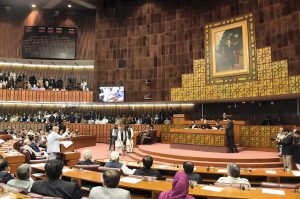
Every person elected as a member of the National Assembly must take an oath before the Assembly — in the form set out in the Third Schedule to the Constitution — before occupying their seat. After taking the oath, the member signs the Roll of Members. No business may be transacted before newly elected members have taken their oaths at the first meeting following a general election.
Through the oath, the members-elect reiterate their allegiance to the state and vow to uphold the Constitution, Islamic Ideology and the national interest.
Why it matters for the National Assembly proceedings?
The oath-taking requirement is not ceremonial. It is the legal act by which an elected person formally becomes a member with the rights and obligations that membership entails — including the right to vote, speak, and move motions in the House.
What is in it for citizens?
After every general election, citizens can follow the progress of oath-taking in the new Assembly. The delay between election and oath-taking is the gap during which the legislature is technically unable to function.
Source: Article 64, Constitution of Pakistan, and Rules 6–7, Rules of Procedure and Conduct of Business in the National Assembly, 2007
The proceedings of National Assembly are governed by the Rules of Procedure and Conduct of Business in the National Assembly, 2007. The current rules were passed on 23 February 2007 and have since been amended 20 times.
This post is part of FAFEN’s series on parliamentary literacy. Read more of this series here.