
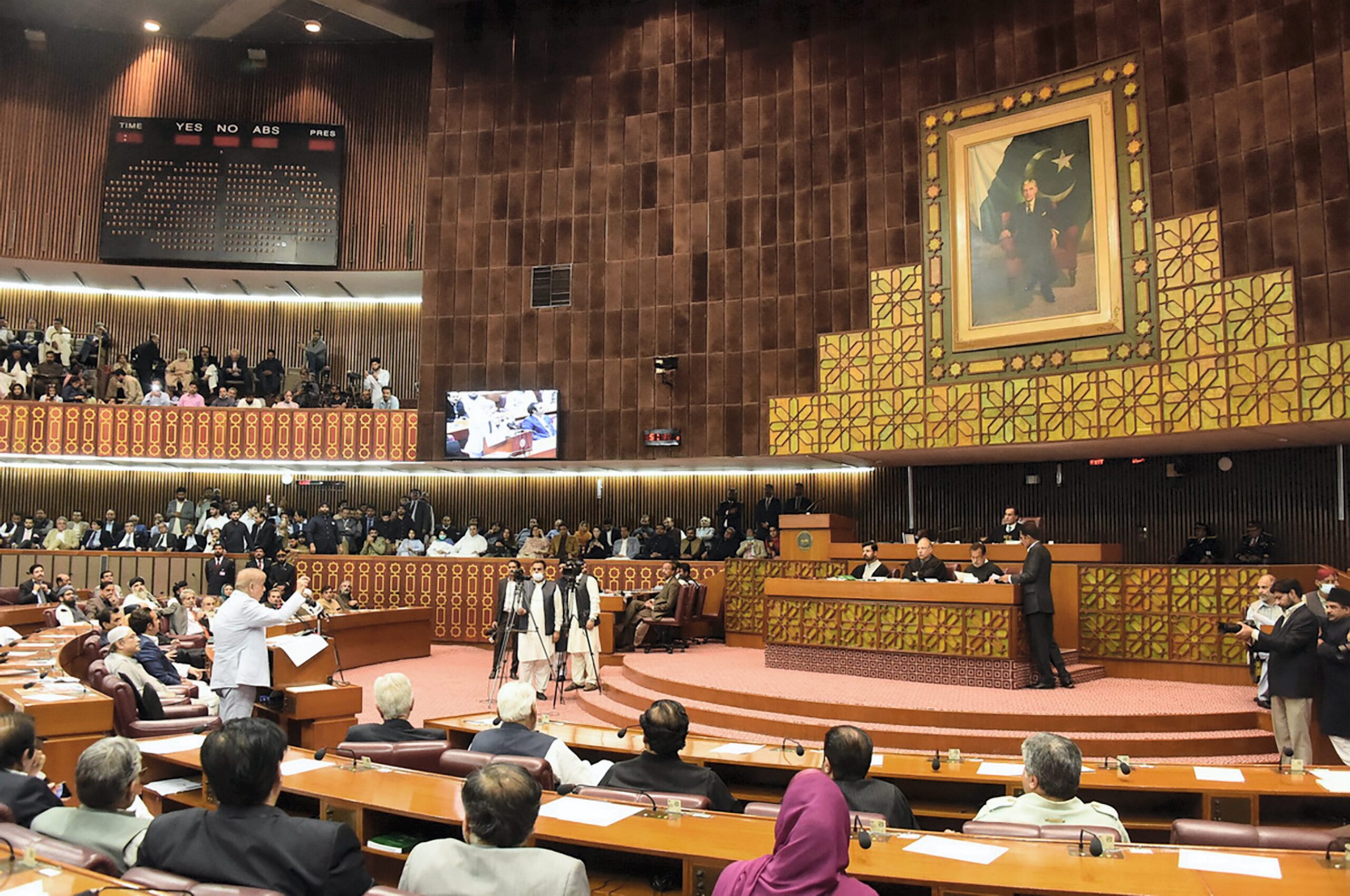
As many as three of Pakistan’s six federal and provincial legislatures do not disclose cabinet members’ attendance during plenary proceedings.
The National Assembly, Senate, and the Provincial Assembly of Khyber Pakhtunkhwa publish complete plenary attendance records on their official websites, covering attendance of both the cabinet members and private members. In contrast, the Provincial Assemblies of Balochistan and Sindh do not disclose plenary attendance records at all. The Punjab Assembly publishes attendance records of private members; however, these records exclude those who also serve as part of the provincial cabinet.
Who sits on the cabinet and to whom are they responsible?
Under Article 92 of the Constitution, the President appoints federal ministers from among the members of Parliament on the advice of the Prime Minister. The maximum strength of the federal cabinet must not exceed 11 percent of the total membership of both Houses of the Parliament, which translates into 47 ministers under the current strength.
Similarly, under Article 132, the provincial governor appoints provincial ministers from among the members of the respective provincial assembly on the advice of the chief minister. Constitutionally, the number of ministers in provincial cabinet must not exceed 48 in Punjab, 22 in Sindh, 19 in Khyber Pakhtunkhwa, and 17 in Balochistan.
Article 91(6) of the Constitution stipulates that the federal cabinet, comprising the prime minister, federal ministers, and ministers of state, is collectively responsible to both the National Assembly and the Senate. Likewise, Article 130(6) provides that provincial cabinets are collectively responsible to their respective provincial assemblies.
Why is ministers’ presence in assembly proceedings required?
Ministers continue to hold legislative responsibilities alongside their executive roles. Their presence in plenary proceedings is required, among other functions, to answer members’ questions, respond to calling attention notices, and participate in discussions and votes on bills, resolutions and motions of public importance.
Excluding ministers’ attendance from official records therefore presents an incomplete picture of legislative participation and limits an objective assessment of parliamentary performance.
FAFEN has consistently advocated for greater parliamentary transparency, including the public disclosure of plenary and committee attendance as well as voting records. For voters, researchers, and civil society organizations, access to such information remains essential for evaluating legislative performance and accountability.