The ruling Pakistan Muslim League (Nawaz) began its current parliamentary term with 108 seats including 75 general seats, 20 women-reserved seats and four non-Muslim-reserved seats, elected in February 2024. Since then, its numerical strength has changed multiple times then and is now set to reach a total of 132 seats including 93 general seats, 34 women-reserved seats, and five non-Muslim reserved seats. While the mainstream and social media are abuzz about whether or not the party has secured a simple majority following the recent by-election, the actual strength of the party is 39 percent of the total membership of the National Assembly.
FAFEN has traced a timeline of when and how the party’s tally of general and reserved seats has been shifting over the last 21 months.
How many general seats have party gained since February 2024?
- According to the initial Final Consolidated Results (Form-49) of General Election 2024 as uploaded on the ECP website, PML-N won 75 general seats in the National Assembly.
- The first boost came when nine independently elected MNAs, including five from Punjab, two from Balochistan, and one each from Islamabad Capital Territory and Khyber Pakhtunkhwa, were declared to have joined the party within three days of their success notifications under Article 51(6) of the Constitution. This raised the party’s tally to 84.
- On March 17, the ECP declared the PML-N candidate winner from NA-81 after recounting. This increased the party’s general seats to 85.
- On March 22, another recount resulted in an additional general seat, raising the party’s general seats to 86.
- By-elections for five National Assembly seats were held on April 21, 2024. PML-N had vacated two of these seats due to multiple wins in GE-2024 and reclaimed both. Its numerical strength, therefore, remained unchanged.
- On August 30, the PML-N candidate from NA-79 Gujranwala-III, previously declared unsuccessful, was notified as elected after a recount. This increased the party’s general seats to 87.
- In October 2024, the Speaker of the National Assembly sent a disqualification reference to the ECP against PML-N MNA Adil Bazai, who had been elected as an independent and was said to have joined the party. On November 21, the ECP disqualified him, reducing the party’s strength by one to 86. However, the Supreme Court later restored the MNA as an independent after he contested the validity of the affidavit submitted to the ECP.
- In July and August 2025, seven NA seats fell vacant, including six due to the disqualification of PTI-affiliated independent MNAs after convictions in May 9-related cases and one due to the death of a PTI-affiliated MNA. On November 9, the PML-N candidate from NA-66 was elected unopposed after all rivals withdrew, raising the party’s general seats back to 87.
- Once the six newly elected MNAs take oath in the National Assembly, the party’s strength on general seats will increase to 93.
How has the party’s representation on reserved seats evolved?
- On February 22, the Election Commission of Pakistan (ECP) initially allocated 40 of the 60 reserved seats for women and seven of the 10 reserved seats for non-Muslims. PML-N received 24 seats including 20 reserved for women and four for non-Muslims.
- On March 1, the ECP rejected the Sunni Ittehad Council’s (SIC) claim on reserved seats in the National and Provincial Assemblies and ordered to distribute the remaining 20 women and three non-Muslim seats in the National Assembly among other parliamentary parties. As a result, PML-N received 15 additional seats including 14 women’s seats and one non-Muslim seat, raising its strength on the reserved seats to 39.
- The SIC challenged the ECP’s refusal to allocate reserved seats in the Peshawar High Court, which upheld the Commission’s decision. The matter later went to the Supreme Court, which in May 2024 suspended the allocation of additional reserved seats to parliamentary parties, including PML-N. This reverted the party’s strength on reserved seats back to 24. On July 12, 2024, the Supreme Court issued a final judgment declaring the additional allocations null and void.
- Parliamentary parties, including PML-N, later filed review petitions against the Supreme Court’s July 12 order. A Constitutional Bench formed after the 26th Constitutional Amendment set aside the order on June 26, 2025. The restoration of additional seats increased PML-N’s share of reserved seats to 39.
What is a simple majority, when is it needed, and does PML-N have it?
A majority of the total membership of an Assembly is often referred to as ‘simple majority’. It requires one member more than half of the total membership. With the National Assembly comprising 336 members, a party needs 169 to command a simple majority. PML-N remains 37 seats short of this threshold.
A majority of the total membership is generally required for the election of the Prime Minister and for voting on a resolution of no confidence under Articles 91(4) and 95(4) of the Constitution. However, in the event of multiple candidates for the office of the Prime Minister, the Constitution allows the winner to be elected with a majority of members present and voting if no candidate secures a majority of the total membership in the first round.
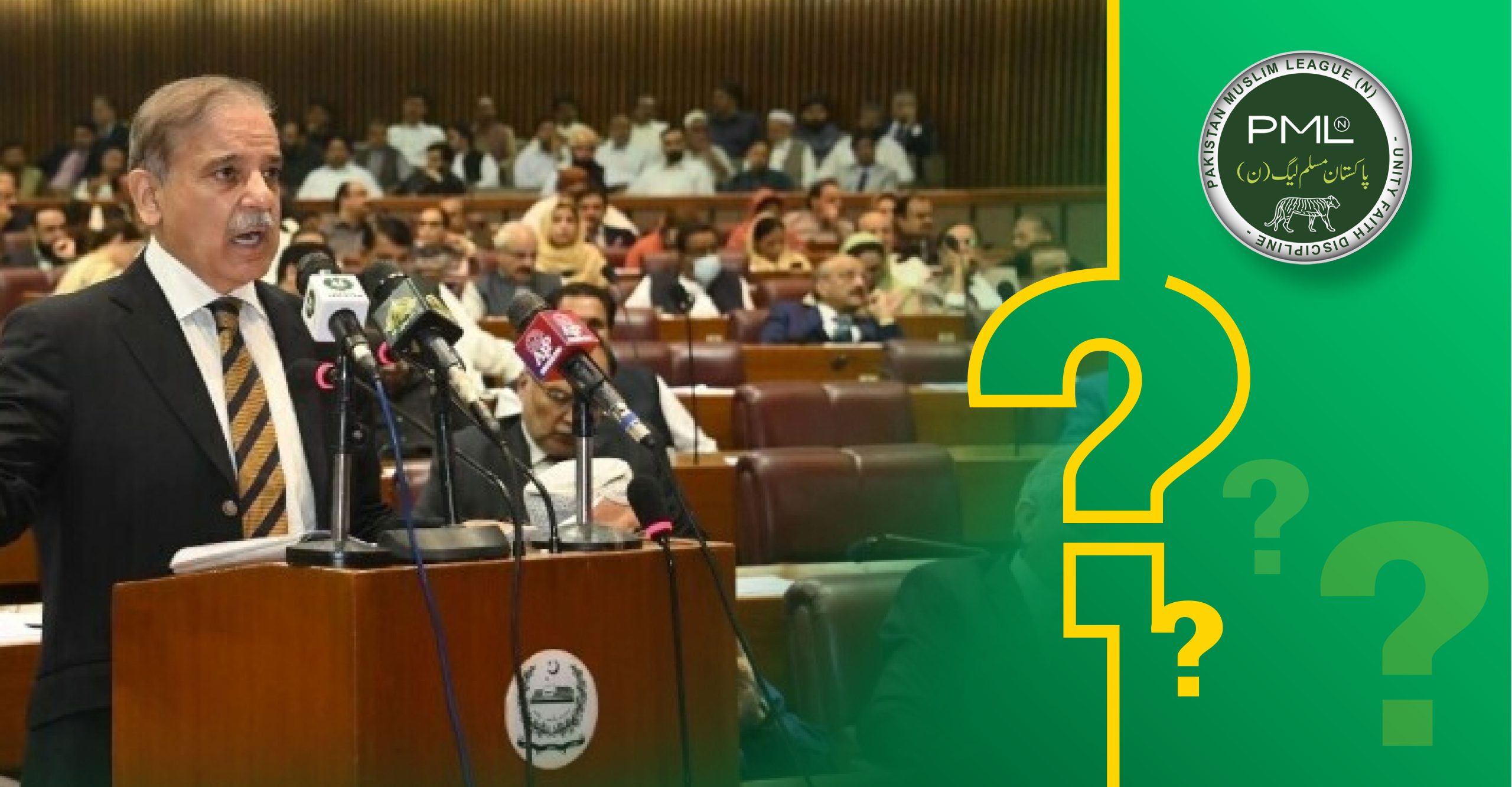
Prime Minister Shehbaz Sharif was elected on March 3, 2025, with the support of PPPP, MQM, PML, IPP, BAP, NP, PML-Z, and four independents. At that time, PML-N had 108 members and required 61 additional votes to meet the constitutional majority threshold. As its strength has grown, its reliance on coalition partners has reduced.
However, the government would continue to rely on major allies, including PPPP, to secure a two-thirds majority in both the National Assembly and the Senate, which is required for constitutional amendments. As many as 224 votes are required for two-third majority in the National Assembly, and 64 in the Senate. In case of joint sitting of both Houses of the Parliament, two-third would mean 288 votes from a cumulative parliamentary strength of 432.