
Yes — when a division is held, the automatic vote recorder produces a record of every member’s individual vote. Voice votes do not produce an individual record. A division is called when the Speaker is in doubt after a voice vote, or when any member demands it.
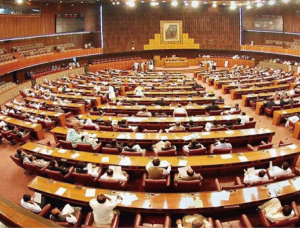
Why it matters for the National Assembly proceedings?
The availability of individual voting records — for divisions — is one of the most important transparency features of parliamentary proceedings. It allows citizens, civil society organisations, and media to track how their representative voted on specific bills, budget demands, and procedural motions. Voting records are a factual, verifiable basis for electoral accountability.
What is in it for citizens?
FAFEN compiles and publishes member voting data from National Assembly division records. Citizens can use this data to see how their member voted on specific issues — and whether those votes are consistent with their publicly stated positions and their constituency’s interests.
Source: Rules 276–277, Rules of Procedure and Conduct of Business in the National Assembly, 2007
The proceedings of the National Assembly are governed by the Rules of Procedure and Conduct of Business in the National Assembly, 2007. The current rules were passed on 23 February 2007 and have since been amended 21 times, most recently on 22 October 2024.
This post is part of FAFEN’s series on parliamentary literacy. Read more of this series here.